
Member states of the European Space Agency (ESA) have approved the Biomass satellite mission.
Said to be the agency’s seventh earth explorer mission, the Biomass satellite programme completed preparatory activities, and is scheduled for launch in 2020.

Discover B2B Marketing That Performs
Combine business intelligence and editorial excellence to reach engaged professionals across 36 leading media platforms.
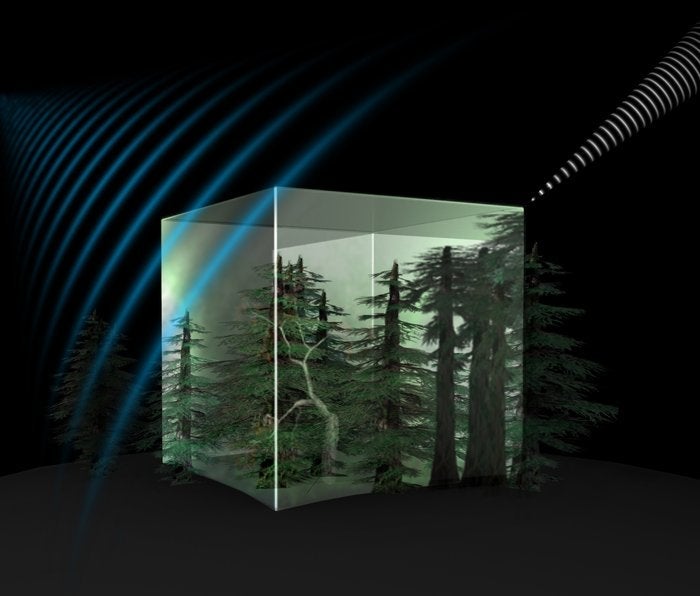
The programme aims to evaluate distribution of above-ground biomass, and measure annual changes in tropical forests.
During the mission, the satellite will measure the amount of biomass and forest height at a resolution of 200m, and forest disturbances at a resolution of 50m. It will allow exploring earth’s surface at the P-band radar frequency from space.
Data collected from the programme will play a key role for sustainable forest management and understanding the climate of the earth, and the role of forests in earth’s carbon cycle and climate change, the ESA said.
The data will also facilitate monitoring the ionosphere, glaciers and ice sheets, as well as used for mapping subsurface geology in deserts and surface topography below dense vegetation.
The Biomass was selected by the ESA’s Earth Observation programme in October 2013 as the earth explorer mission, to map and monitor the planet’s resources.
ESA Earth Observation programmes director Volker Liebig said: "Biomass is an innovative new addition to the Earth Explorer satellite series."
ESA member states include Austria, Belgium, the Czech Republic, Denmark, Finland, France, Germany, Greece, Ireland, Italy, Luxembourg, the Netherlands, Norway, Poland, Portugal, Romania, Spain, Sweden, Switzerland and the UK.
Image: The Biomass programme aims to evaluate distribution of above-ground biomass, and measure annual changes in tropical forests. Photo: courtesy of ESA / AOES Medialab.


