


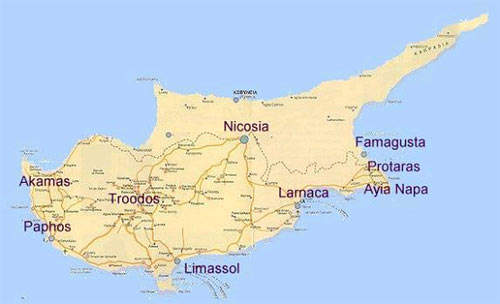
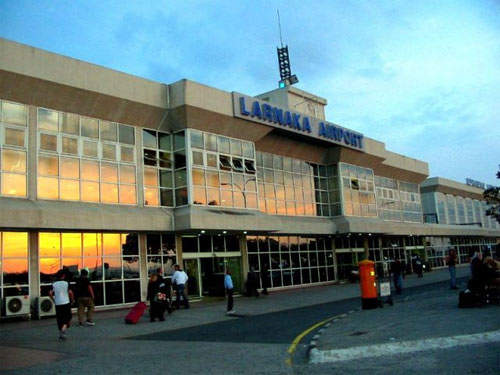
Larnaca Airport is situated in the Republic of Cyprus about 5km south of the City of Lanarca. The airport is undergoing a major expansion to take account of a significant growth in traffic in recent years.
In 2006, Larnaca was handling 800 flights a month and 2.5 million passengers a year but by 2007 this had risen to five million passengers a year. In 2008 the airport handled more than 5.4 million passengers. The airport is the largest in Cyprus and a key destination for holidaymakers going to the popular resort of Ayia Napa, just 46km from the airport.
Recommended White Papers
Recommended Buyers Guides

The airport serves over 30 international airlines and over 30 charter airlines are using it at present. One of the major operators is Cyprus Airways, which has a significant stake in the duty free and retail operations at the airport.
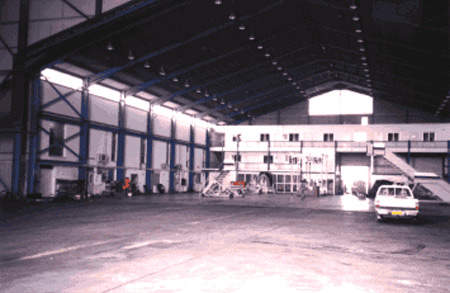
The project to expand and improve the airport includes the construction of a new terminal building about 500m west of the older terminal building (the old terminal building will be converted to a cargo facility). In addition the runway will be extended. The terminal building has been constructed and opened in November 2009.
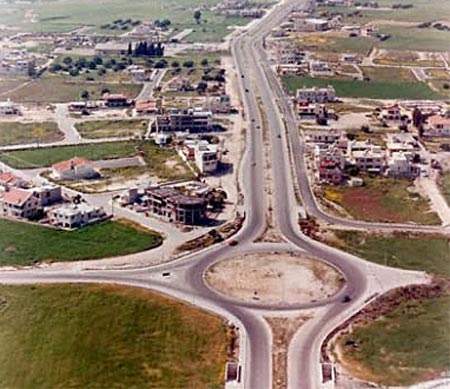
Other facilities already constructed include a new air traffic control tower, a new fire station, the runway extension to 2,980m and improvements to the road infrastructure serving the airport (A3 motorway and B4 road, new junctions to the airport). CYP11m has been spent on the roads.
A new five-star hotel at the airport is being planned by Hermes Cyprus. The construction, costing €200m, would start three months after approval. The design plan has been submitted to the government.
Terminal construction
The deadline of the project to construct the first phase of the new terminal was June 2009 (95,000ft² three-storey building will serve 7.5 million passengers a year). The contract for the construction of the airport was put out to tender in late 2001. At the start of the bidding process 23 consortia had expressed an interest in building the new terminal and operating both Lanarca and Paphos airports for a term of 25 years on a Build Operate Transfer (BOT) arrangement.
By November 2003, negotiations had whittled this down to just three. These were Alterra (originally the preferred bidder), consisting of Barclays Private Equity, Bechtel, Royal Bank of Scotland, Lanitis EC Estates, Amathus Navigation Co Ltd, Cybarco and Caramondi Bros; Hermes, consisting of Aer Rianta (10%), CTC (10%), Charilados Apostolides (construction 5%), Hellenic Mining (10%), Vancouver Airport Services (10%), Egis Projects (20%) and Iacovou Bros (contractor 10%), Bouygues Batiment (22%) and Chambre de Commerce D’Industrie Nice Cote D’Azur (3%); and the Cyprus Airports Group, comprising BAA and J&P.
The government originally negotiated with the Cyprus Airports Group because they were offering the largest portion of the royalties for the airport operation (49%). After six months negotiations fell through because the Cypriot Government could not offer assurances that they would give financial compensation to the operator if international flights were started from the northern, Turkish side of the island. The terminal construction was set back at least 12 months due to the resulting legal wrangling.
The Cypriot government continued negotiations with Hermes, the second preferred bidder, who were only offering 33% royalties and 3.5m a year (Cypriot Government can expect to collect CYP2bn (3.48bn) over the 25 year concession period).
The Hermes negotiations were successful and although construction was only started in 2004 Hermes and the Cypriot government are confident of having the new terminal ready by 2009. Phase two of the terminal, which is due for completion by 2013, will expand the terminal to 112,000ft² and be able to serve nine million passengers a year. The new terminal is being planned for passenger growth of 3.5% to 4% a year.
The Hermes consortium has had to invest 652m in the project as part of the agreement. The new terminal design is a ‘finger’ style with 16 air bridges (resembling a medieval aqueduct) leading into a central concourse. There will be three levels with the third level used for departures and the second level for arrivals.
Outside of the terminal there are plans for a 1,750-space car park for private cars, rental cars, taxis, buses and staff car parking. Currently the airport houses three car parks: one short-term and two long-term. Together they offer space for 860 cars.
The official opening of the new terminal took place on 7 November 2009 and the terminal was accessible to passengers by 10 November. The terminal has 67 check-in desks, eight check-in kiosks and 16 air bridges. It features a 53,800ft² retail store, a joint venture between Aer Rianta International and Cyprus Trading Corp, which is called Cyprus Airports Duty-Free (CTC-ARI).
Runway expansion and airport improvements
In 1999, work was completed on an extension to the runway to 2,980m (the runway is to be extended to 3,500m for the 2013 phase-two expansion), thereby increasing the number of landing slots for a greater variety of aircraft. At that time the check-in area was extended in the terminal, the parking aprons were reconstructed, the parking apron for light aviation was extended and the public car park was extended.
The growth in passenger numbers was still relentless and a master plan was developed by ADP (Aeroports de Paris) and Sofreavia for the development of a new terminal building. The final design was worked on by Forum Architects of Cyprus.
Old terminal development
Development of the old terminal has been successful in improving the existing facilities, and this has alleviated some of the problems associated with the process of airport expansion in the short-term.
In February 2006 as a stop gap measure the arrivals hall of the old terminal was expanded and was enhanced by the addition of a larger lounge, a smoking area and two more luggage belts to bring the total at the airport to six.
Cyprus Airways awarded SITA a five-year contract for a Common Use Terminal Equipment (CUTE) system to enable shared check-in and boarding across 65 workstations (48 check-in stations, nine gates, four transfers and four arrivals).
SITA has provided a complete IT solution, including the software platform, maintenance, the installation of the equipment and initial training.
CUTE provides standardised workstations for airports, enabling the airline or its handling agent to access its application in real-time at positions throughout the airport. Additional benefits include Automated Ticket and Boarding (ATB) technology to speed up check-in and gate reconciliation processes, enabling airlines to switch handling agents and/or terminals. This system has been successful in speeding up processes and increasing airport capacity at check-in and departure for travellers while the new airport terminal was under consideration.
In addition, a new Flight Information Display system (FIDs) has made communication of flight information to the passengers a great deal easier.