

Skyportz has unveiled a new animation showcasing the effects of its patented vertipad design on the development of advanced air mobility (AAM) networks worldwide.
The modular vertipad patent is claimed to address the challenges associated with downwash and outwash in urban environments, a concern highlighted by the Federal Aviation Administration (FAA) in its Engineering Brief 105A issued in January.
The FAA indicated that vertipads must incorporate a wind safety zone extending beyond the landing area, a requirement echoed by air safety regulators globally.
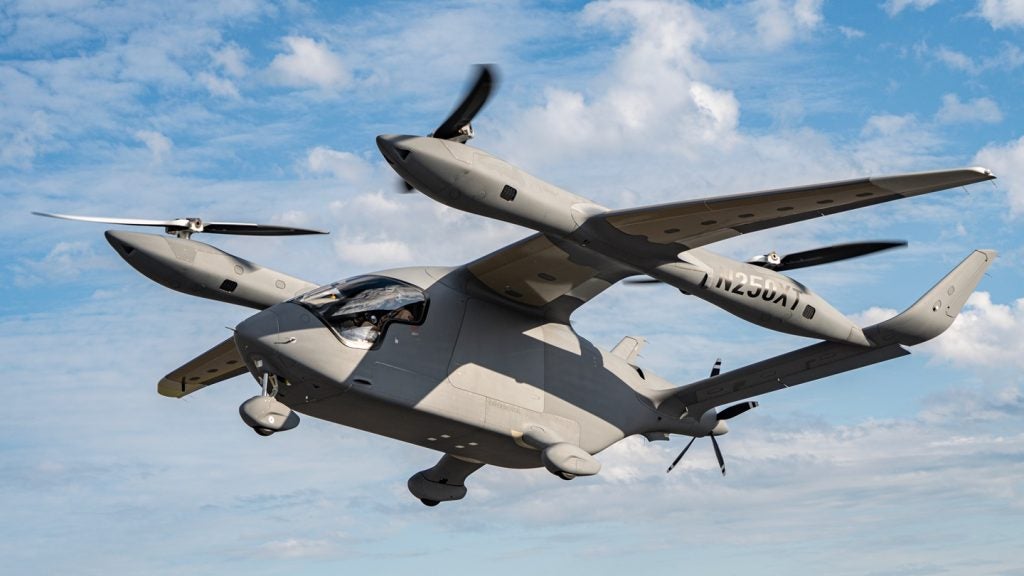
The newly released animation illustrates the differences in wind speed when an electric vertical takeoff and landing (eVTOL) aircraft lands on traditional tarmac compared to the patented vertipad surface.
The design disrupts and disperses the powerful vortices generated during landing, which can pose risks in urban areas, according to the company.
Additionally, the vertipad facilitates air recirculation, thereby diminishing the intensity of outwash.
Skyportz CEO Clem Newton-Brown said: “The Skyportz vertipad patent has some very real applications as cities move to establishing vertiport networks outside of existing airports and helipads.
“Our technology reduces the outwash speed two and a half times faster than landing on a tarmac. It means that with our vertipad you can safely use less land or fit more pads onto smaller sites.”
The vertipad patent is expected to be licensed for use in emerging markets around the world. It was first introduced at the Avalon International Airshow in Australia in March.
Professor Leontini from Swinburne University of Technology's AirHub has been engaged to conduct computational fluid dynamics (CFD) modelling and to test various iterations of the vertipad.
The initial modelling efforts at Swinburne University have explored different landing surface treatments as outlined in the patent.
Leontini said: “Our next step will involve adding different surface treatments and mechanical devices detailed in the patent under and around the vertipad, which we expect will induce a Magnus effect and dissipate energy at an even higher rate while directing flows to desired zones away from waiting passengers.”
The Skyportz vertipad is currently protected under the global Patent Cooperation Treaty, with the national phase of the patent already initiated in Australia, the US, and China.
Last month, Skyportz and FlyNow Aviation partnered to develop integrated vertipad solutions to improve urban air mobility.
This collaboration marks FlyNow as the first original equipment manufacturer (OEM) to work directly with Skyportz and its research partner, Swinburne University.