
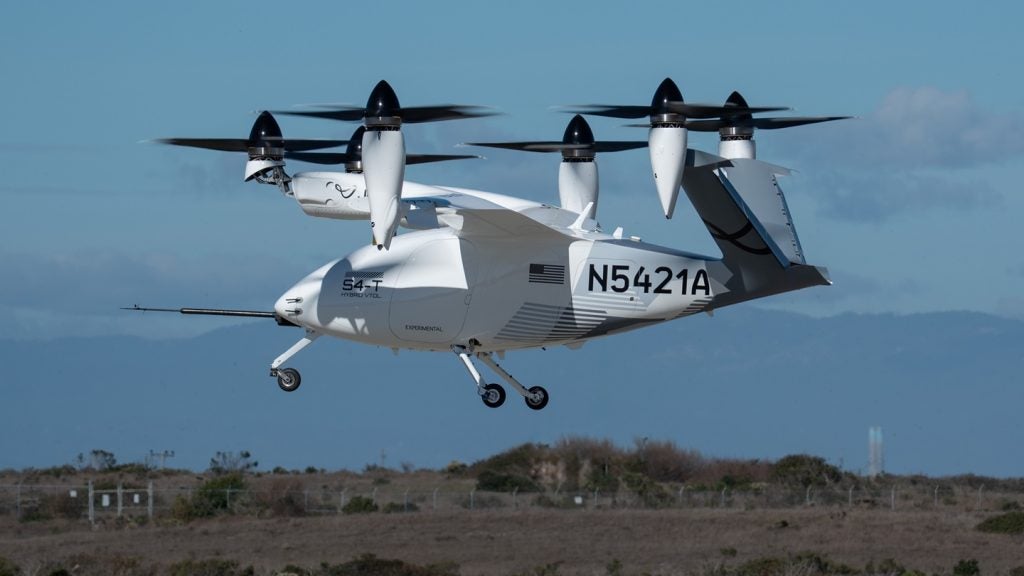
Joby Aviation has completed the inaugural flight of its turbine electric, autonomous vertical take-off and landing (VTOL) demonstrator aircraft at its facility in Marina, California, US.
The aircraft incorporates a hybrid turbine-electric propulsion system and Joby’s SuperPilot autonomy software, building on the company’s previous fully electric air taxi platform.
The addition of hybrid technology aims to extend operational range and payload capacity, targeting broader applications in air taxi services and potential sales to civilian, commercial, and defence sectors.
The company plans to continue ground and flight tests before moving to operational demonstrations with government partners in 2026.
This initial flight comes three months after Joby introduced the hybrid demonstrator aircraft and its partnership with L3Harris Technologies.
L3Harris intends to integrate mission capabilities such as sensors and communication systems for defence-specific roles. These roles include support for contested logistics, “loyal wingman” operations, and low-altitude missions.
Current US government budget proposals include more than $9bn for autonomous and hybrid aircraft development in the coming fiscal year.
The hybrid demonstrator is based on Joby’s electric technology platform, which has recorded over 50,000 miles of flight testing and is undergoing the final phase of FAA Type Certification for commercial use.
Joby CEO and founder JoeBen Bevirt said: “It’s imperative that we find ways to deliver new technology into the hands of American troops more quickly and cost-efficiently than we have in the past.
“Our vertical integration puts us in a unique position to deliver on this goal, moving from concept to demonstration - and from demonstration to deployment - at a pace that is unprecedented in today’s aerospace and defence industry.”
The SuperPilot autonomous stack has been in development for over five years.
In July, Joby participated in the Department of War’s REFORPAC exercise, using a Cessna 208 equipped with this technology. The aircraft logged more than 7,000 miles across 40 flight hours in Hawaii, with operations overseen from Andersen Air Force Base in Guam.
Joby noted that the hybrid system is intended to deliver longer range and flexibility for multi-role missions.
The aircraft’s vertical take-off capability allows deployment from locations without conventional runway infrastructure. The autonomous features rely on the SuperPilot technology.
Joby Aviation recently signed a memorandum of understanding (MoU) with Saudi Arabia’s General Authority of Civil Aviation (GACA) to support the introduction of electric air taxi services in the country.