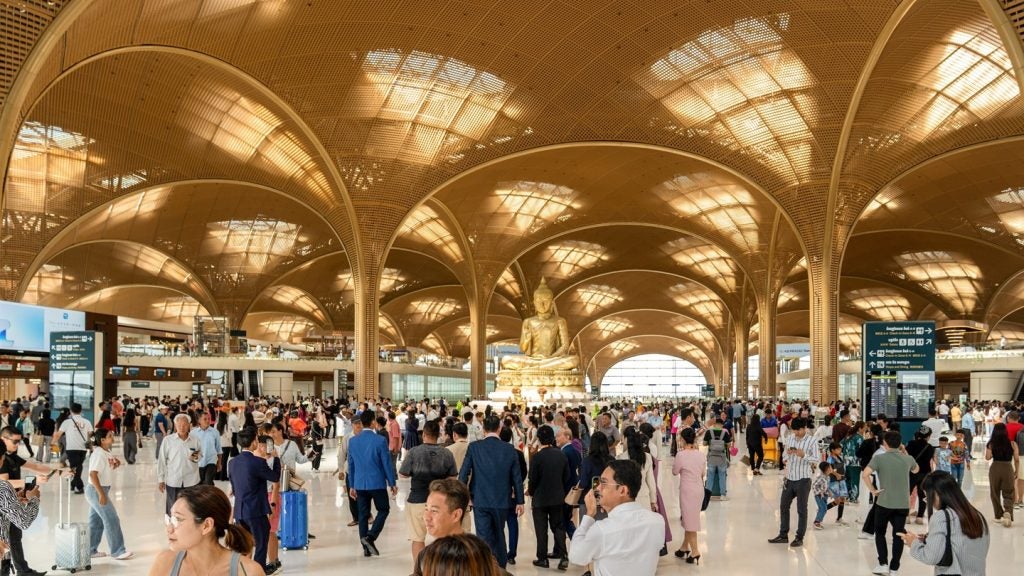

India Prime Minister Narendra Modi has opened Navi Mumbai International Airport (NMIA), marking the entry of a second international airport for the Mumbai Metropolitan Region.
NMIA has been developed as a public-private partnership between Mumbai International Airport Limited (MIAL), part of Adani Airport Holdings, and the City and Industrial Development Corporation (CIDCO).
The new airport is managed by Navi Mumbai International Airport Private Limited (NMIAL), in which Adani Airports Holdings Limited holds a 74% stake and CIDCO holds 26%.
In a statement, Prime Minister Modi said: “The Navi Mumbai International Airport is a project that exemplifies the vision of a developed India.
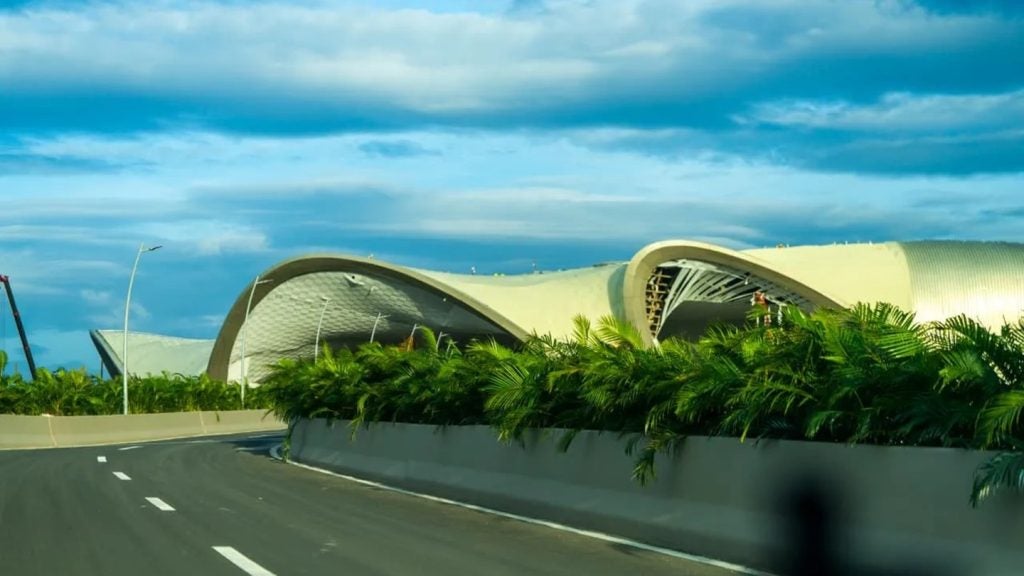
“It is built on the land of Chhatrapati Shivaji Maharaj, and its design, resembling a lotus flower, makes it a living symbol of culture and prosperity.”
Occupying 1,160ha in Navi Mumbai, the airport is designed to operate alongside Chhatrapati Shivaji Maharaj International Airport (CSMIA) under a dual-airport system.
The NMIA will initially handle 20 million passengers annually and aims to expand to a capacity of 90 million passengers once fully operational.
Cargo capacity in the first phase is set at 0.5 million metric tonnes per year. Planned expansion includes four runways, multiple terminals, and dedicated facilities for handling perishables and express cargo.
Connectivity to NMIA is integrated with existing and planned transportation infrastructure. The site links to the Mumbai Trans Harbour Link, Mumbai and Navi Mumbai metro networks, suburban rail lines, and water transport routes.
The Atal Setu sea bridge provides direct access from South Mumbai, and road connectivity extends to Thane, Pune, Raigad, and the Konkan region.
The airport’s design, by Zaha Hadid Architects, is based on the lotus flower, integrating functionality and operational efficiency with elements intended to support sustainable operations such as passive cooling, natural lighting, and plans for renewable energy use.
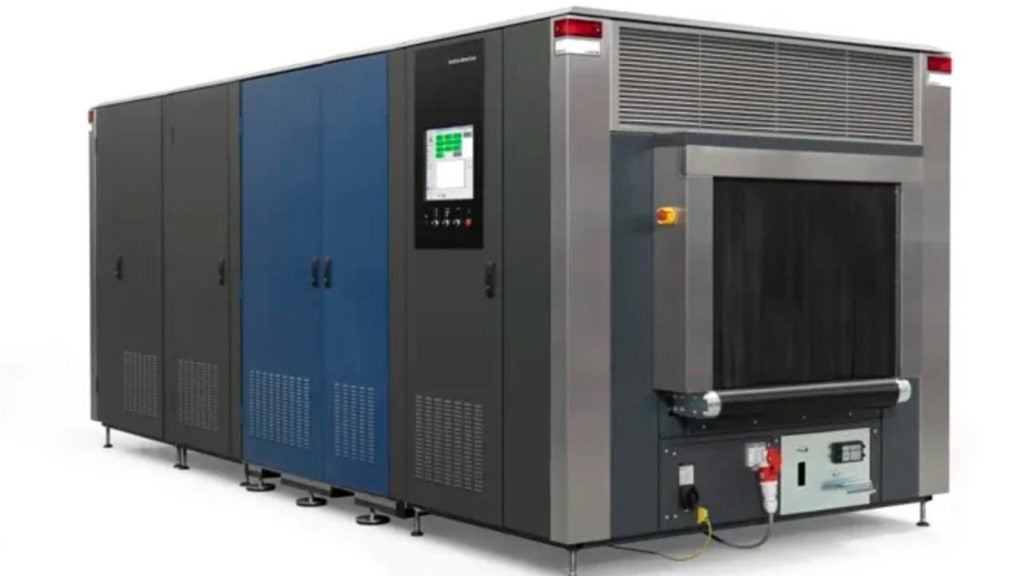
The facility includes automated cargo handling systems, a Pharma Excellence Centre with GDP-compliant cold storage, and a cargo village for perishable goods.
Proximity to Jawaharlal Nehru Port Trust enables further integration of airport and seaport logistics.
Adani Group chairman Gautam Adani said: “In an era where India ascends among the world’s largest economies, we have built more than an airport – we have architected Bharat as a gateway and as one of the world’s most indispensable crossroads.
“This is infrastructure that does not just serve today’s demand, it creates tomorrow’s exponential possibilities.”
The project’s development began after approval from the Union Cabinet in 2007.
The airport has navigated a range of challenges including land acquisition, resettlement, and environmental clearances before construction accelerated in 2022 under the Adani Group’s management.
The facility has completed test landings and is set for phased capacity increases.
The airport is also pursuing non-aeronautical revenue streams, including retail, food and beverage outlets, duty-free shopping, and general aviation stands.
In June this year, Apollo Asset Management finalised a $750m investment-grade financing deal for MIAL. The transaction included funds managed by Apollo and long-term investors.