
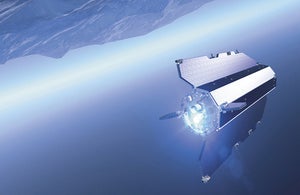
The UK Space Agency and Innovate UK have allocated £2m to support development of new technologies in spacecraft propulsion systems for future space missions.
The agencies are inviting proposals from universities and companies that are engaged in developing spacecraft propulsion systems for large and medium-sized satellite platforms, as well as small/nano-satellites.

Discover B2B Marketing That Performs
Combine business intelligence and editorial excellence to reach engaged professionals across 36 leading media platforms.
Part of the ‘space foundations’ activity, the programme focuses on development of innovative propulsion technology for de-orbiting or orbit-raising, green propellants / clean-space technologies, advanced manufacturing techniques.
The scope of the programme also includes manoeuvring for debris removal and de-orbiting concepts and increased mission capability and new satellite applications.
The projects are estimated to cost around £250,000 to £500,000, and will take around six months to complete.
Innovate UK said that innovation in propulsion could save tens of millions of pounds in launch costs.
Spacecraft propulsion systems play a key role in acquiring initial orbit position and maintaining spacecraft pointing, and safely disposing of the satellite at mission end.
A briefing event for potential applicants will be conducted at the Satellite Applications Catapult in Harwell on 21 January and another event for the small and nano-satellite community will be held in Glasgow on 29 January.
Innovate UK is also offering £1m to prospective businesses, to conduct feasibility studies into new receiver technologies that could be used on Galileo global navigation satellite system.
The European Space Agency and the European Commission have spent over £50m so far in Galileo programme, which is expected to begin full operations by 2020.
Image: GOCE satellite. Photo: courtesy of ESA.


