
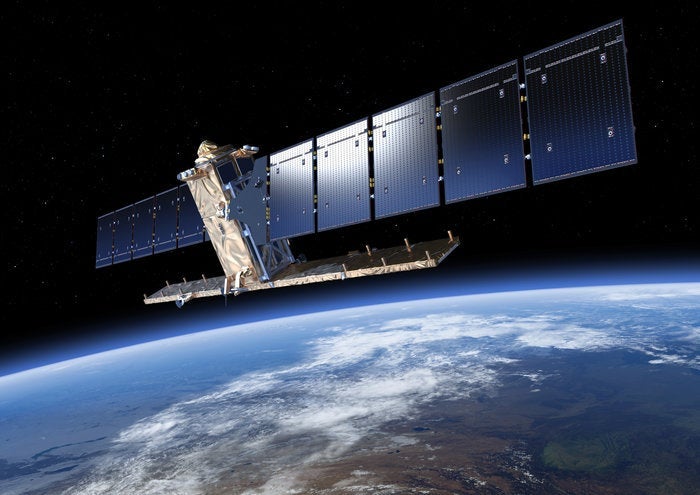
The European Commission has selected the European Space Agency (ESA) to manage the operations of Copernicus ‘space component’ until 2021.
The agreement with the ESA is part of seven-year plan from the European Union (EU) budget, including around €4.3bn for the Copernicus monitoring programme.

Discover B2B Marketing That Performs
Combine business intelligence and editorial excellence to reach engaged professionals across 36 leading media platforms.
Under the €3bn deal, the ESA will assume the role as coordinator of the ‘space component,’ including operation of the Sentinel satellites. It will also be responsible to develop follow-on units which will operate until around 2030.
In addition, the agency will also support R&D for the next-generation of Copernicus.
ESA director general Jean-Jacques Dordain said: "The Copernicus programme is an excellent example of innovation and cooperation in Europe and the signature marks a milestone in the cooperation between ESA and the EU."
With this deal, the EU will take the ownership of Sentinel-1A, the first Copernicus satellite, which was launched in April this year.
US Tariffs are shifting - will you react or anticipate?
Don’t let policy changes catch you off guard. Stay proactive with real-time data and expert analysis.
By GlobalDataSentinel-1A recently completed data quality testing and calibration, and started operations.
The Earth observation satellite is designed to offer radar data for various services such as natural hazards, land and ice monitoring, as well as for scientific research.
The data accumulated will be available to scientists, as well as to value-added companies.
Image: Sentinel-1 is the first in the family of Copernicus satellites. Photo: courtesy of ESA / ATG medialab.



