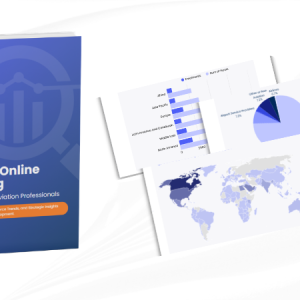
2026 State of Online Learning for Airport and Aviation Professionals
Online learning has become central to how airports manage workforce capability, compliance and operational readiness.

Turning Workforce Planning into a Strategic Advantage

You have successfully submitted your enquiry. Someone from our company will respond ASAP
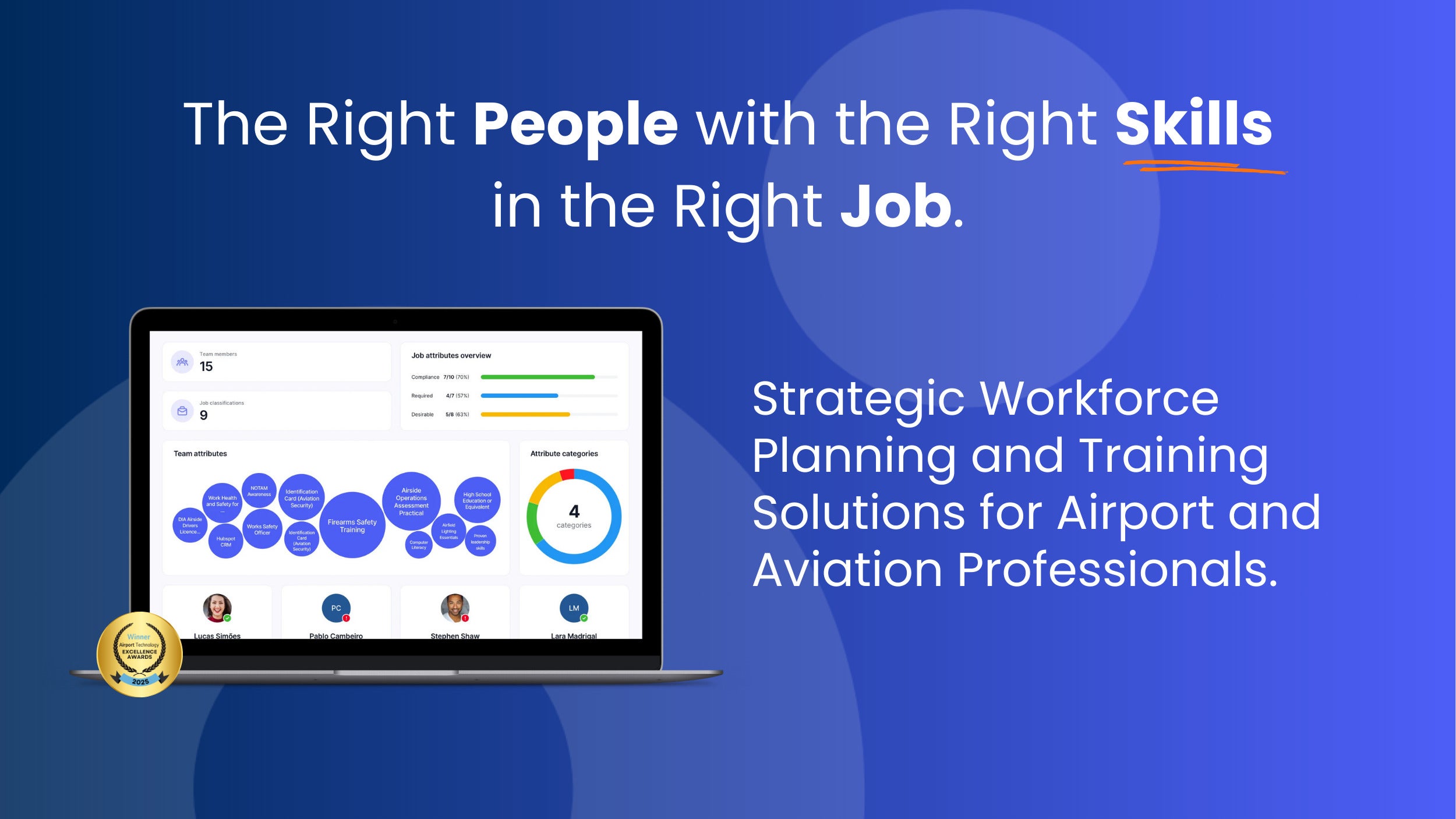
For decades, workforce planning at airports has largely been reactive. Teams respond to vacancies, compliance requirements, or training needs as they arise, job roles evolve organically, certifications are tracked across different systems, and training programmes expand, often without a clear view of how they connect to long-term operational capability.
As airports face growing passenger demand, tighter regulatory expectations, and ongoing workforce shortages, the industry is increasingly recognising that traditional approaches are no longer enough.
The conversation is shifting from managing staff to understanding workforce capability.
This is where Klayo enters the picture.
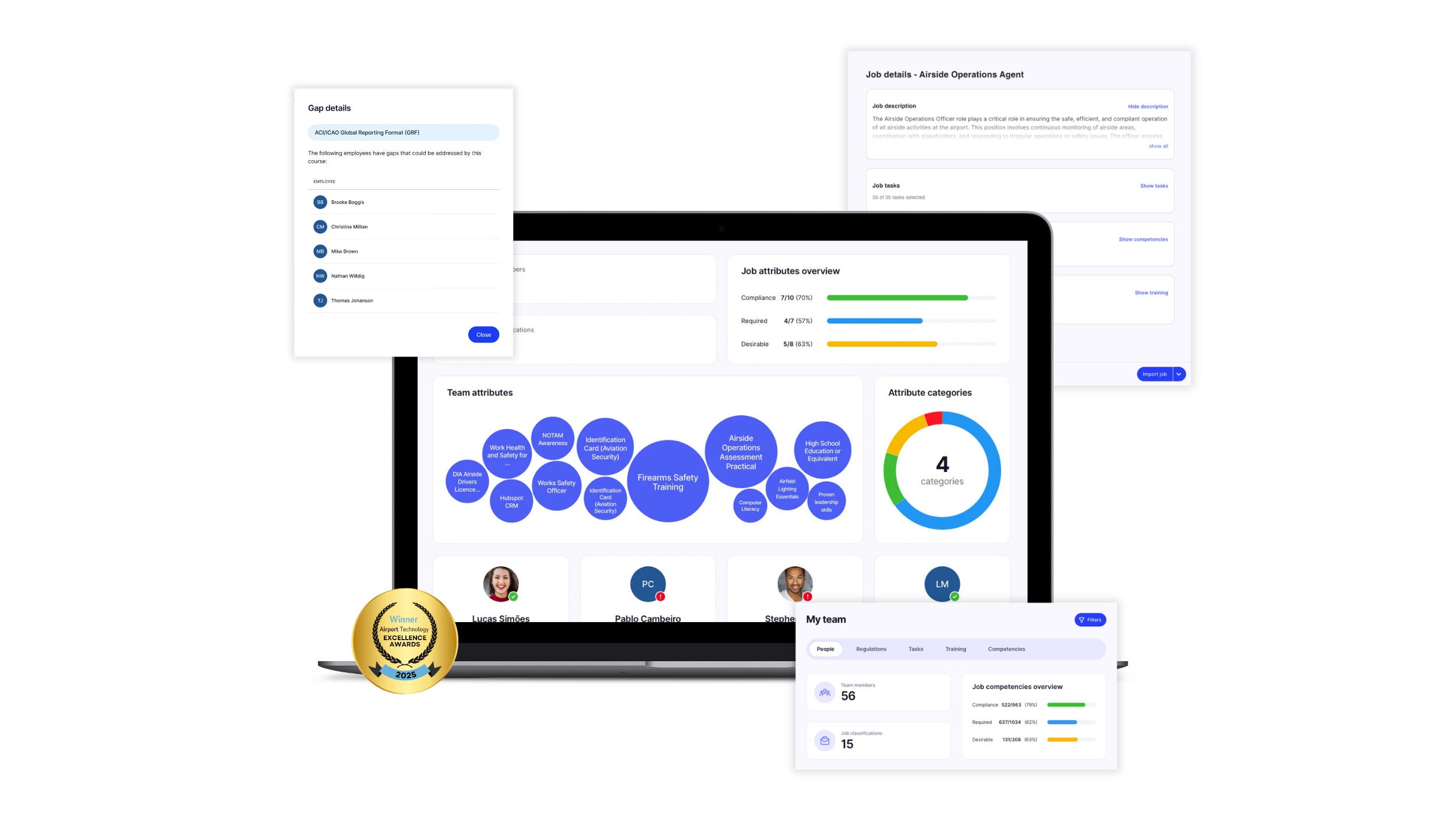
Klayo didn’t start as a software idea, but with a question the aviation industry had been struggling to answer.
For more than 17 years, Ceventas, the company behind Klayo and an ICAO TRAINAIR PLUS member, has worked closely with airports through two major industry training initiatives: the Online Learning Centre and the Canadian Airports Online College, both operated in partnership with Airports Council International (ACI).
Through these programmes, Cerventas supported airports around the world in delivering professional development and operational training to thousands of aviation professionals.
Over time, one pattern became increasingly clear: Airports generally knew what training had been completed, but few airports could confidently answer a more strategic question: What training does our workforce actually need?
Most airports lacked clear visibility into their workforce capability. Without a structured view of roles, skills, and operational requirements, identifying capability gaps or anticipating future workforce needs became extremely difficult.
Ceventas realised that solving this problem required more than better training management. Airports needed a way to connect workforce structure, competencies, training, and compliance into a single, integrated framework.
That insight led to the creation of Klayo.
Klayo was created with a simple premise: airports should be able to see, understand, and plan their workforce capability with the same clarity they apply to infrastructure or operations. Instead of treating job roles, training, certifications, and compliance as separate administrative functions, Klayo connects them into a single framework.
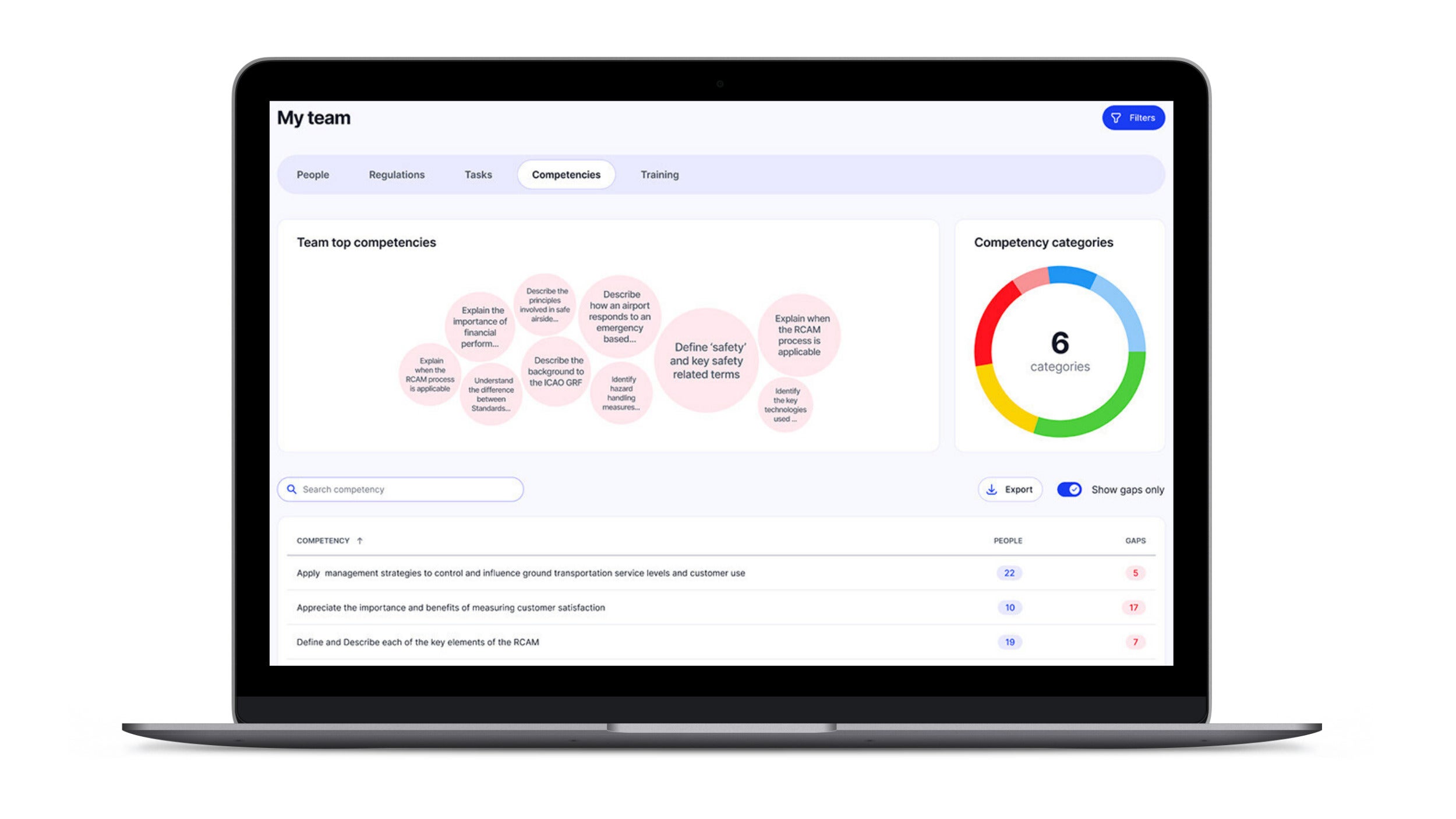
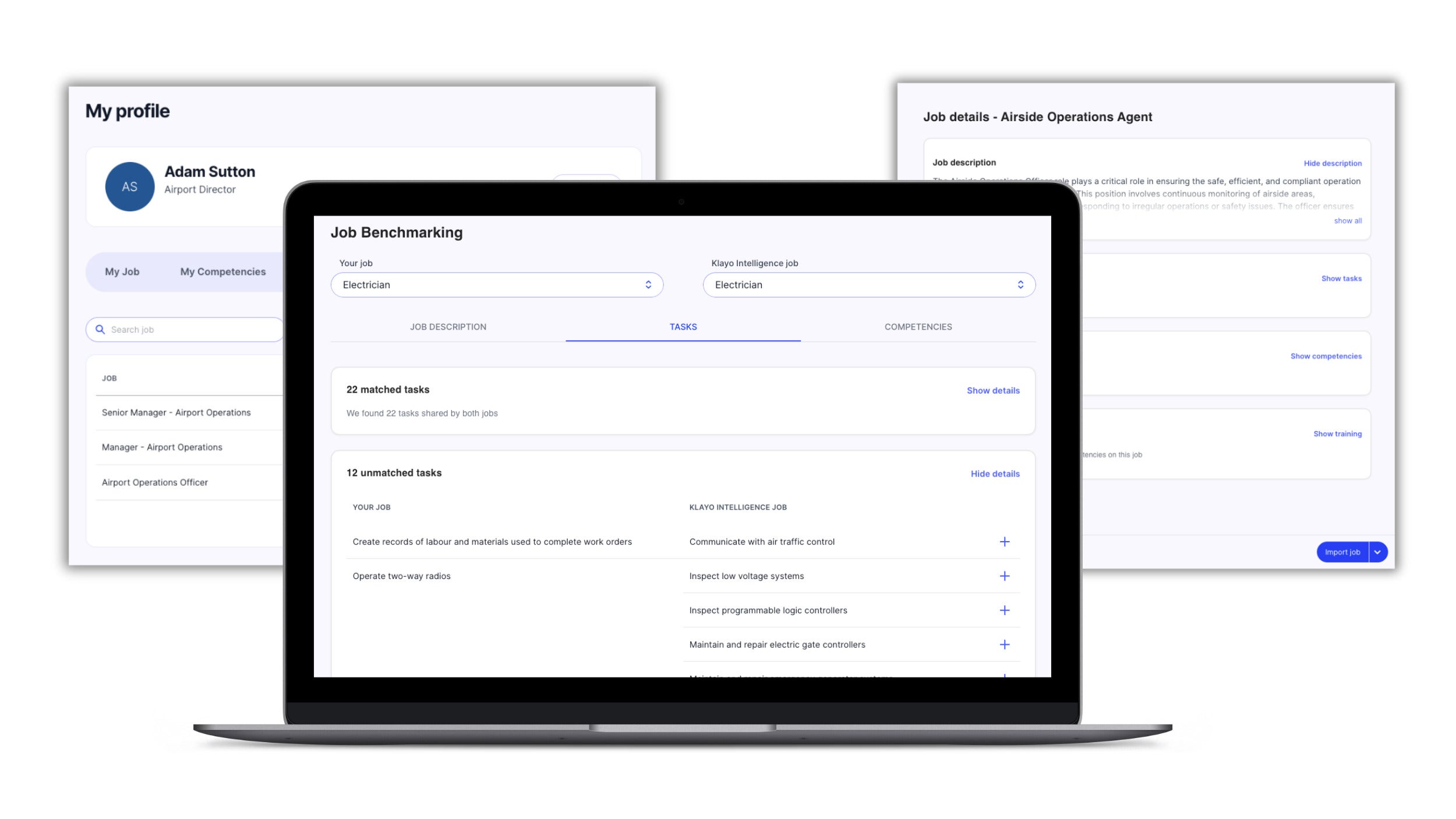
In practical terms, that means airports can clearly define roles, identify the competencies required for each position, link training programmes to those competencies, and track workforce readiness in real time.
The impact of this visibility is significant.
One of the challenges many airports face is that job structures often evolve without a consistent framework: roles expand, responsibilities shift, and training requirements change, but underlying job descriptions and capability models are rarely updated systematically.
This can create confusion around expectations, training requirements, and career progression.
With Klayo, airports can build standardised job profiles aligned with aviation best practices, clearly defining responsibilities, competencies, and required training for each role. This not only improves organisational clarity but also helps ensure consistency across departments. More importantly, it creates a foundation for workforce intelligence.
Once roles and competencies are clearly defined, airports can analyse the gap between current workforce capability and future operational needs.
Maintaining compliance with certification requirements, safety training, and regulatory standards requires constant attention. For many airports, managing these requirements involves significant manual effort, often spread across multiple systems and teams.
Klayo simplifies that process by bringing compliance and capability tracking into one environment, allowing HR, operations, and compliance teams to see the status of training, certifications, and workforce readiness in real time. Potential risks (such as expiring licenses or missing competencies) can be identified early and addressed before they impact operations.
The result is not just improved compliance, but reduced administrative burden.
The aviation sector is entering a period of renewed expansion. Passenger numbers are rising again in many regions, and airports around the world are investing in new infrastructure, expanded terminals, and enhanced passenger experiences.
But infrastructure growth brings a parallel challenge: ensuring the workforce has the skills and capacity to operate increasingly complex environments. This is where strategic workforce planning becomes essential.
Forward-thinking airports are now beginning to address this challenge by mapping their workforce in greater detail, understanding the roles that exist today, the competencies required to perform them, and the skills that will be needed in the future.
Platforms like Klayo provide the structure to support that work, turning workforce data into actionable insight.
For airport executives, workforce planning is increasingly becoming a strategic priority.
Operational resilience, safety performance, passenger experience, and regulatory compliance all depend on workforce capability. Yet, without clear insight into roles, competencies, and development needs, it can be difficult to manage that capability proactively.
The industry is beginning to recognise that workforce data, when structured and connected properly, can become a powerful operational asset.
Instead of simply tracking employees, airports can begin to understand their workforce in the same way they understand infrastructure or financial performance. That shift may prove to be one of the most important developments in airport management over the coming decade.
For the airports already taking steps in that direction, the payoff is clear: greater visibility, stronger compliance, smarter training investment, and ultimately a workforce that is ready for whatever the future of aviation brings.
Online learning has become central to how airports manage workforce capability, compliance and operational readiness.
Staff shortages, rising regulatory pressure and high turnover are putting airport workforces under strain. Yet workforce planning often sits in the background while passenger-facing projects take priority. This paper argues that the approach is becoming risky.
Airport disruptions rarely start with one missing person. They start with small workforce gaps that go unnoticed until they affect operations.
Retention directly affects safety, compliance, and day-to-day operations, yet airports across the world are struggling to keep skilled staff as competition for talent intensifies and workforce expectations evolve.
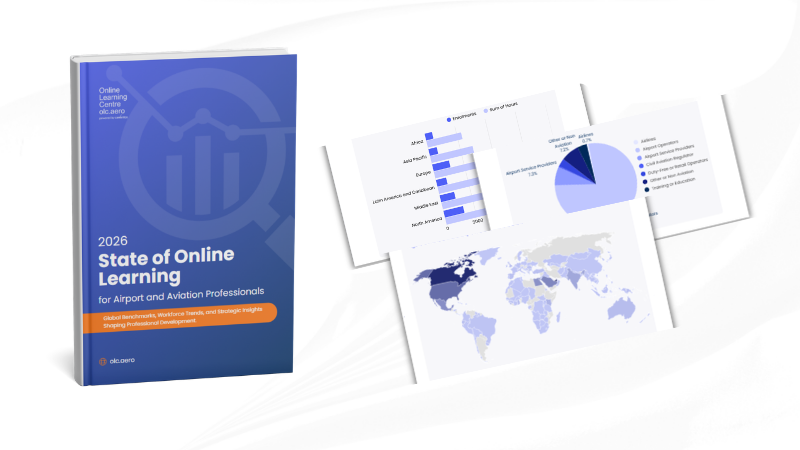
The Online Learning Centre (OLC) in partnership with Klayo has released its 2026 State of Online Learning Report, offering a comprehensive global analysis of how airports are using structured digital training to strengthen workforce capability, improve compliance, and support long-term operational resilience.