
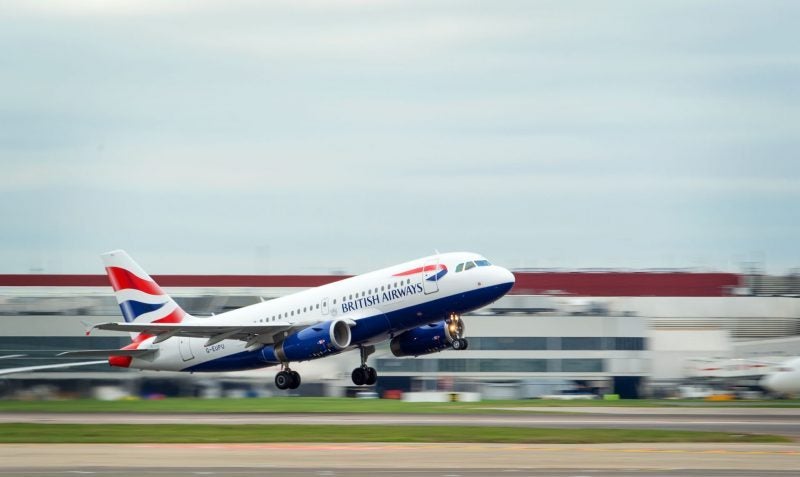
The UK’s Independent Commission on Civil Aviation Noise (ICCAN) has published a report on aviation noise pollution, urging airports to clarify how they monitor and report data.
According to the commission, which was established by the UK Government in January 2019, the assessment, the management and mitigation of noise is inconsistent and not adequate to the impact it has on people living in areas close to airports.
Go deeper with GlobalData


Discover B2B Marketing That Performs
Combine business intelligence and editorial excellence to reach engaged professionals across 36 leading media platforms.
“The aviation industry has been through an uncertain and difficult time. But as planes return to the skies, we’re calling on airports to do more to demystify what metrics mean and make their noise data more readily available for people to access and understand,” said ICCAN head commissioner Rob Light.
In the study, the advisory board has published a review of how airports collect and analyse data on noise pollution and has recommended a few changes.
Suggestions include improving how noise is measured, publishing data on noise pollution online and improving its presentation and explanation. ICCAN is also developing best practice guidance for airports.
“By improving people’s understanding of noise data, they will be more engaged and be able to contribute to the discussions while also making their views heard,” added ICCAN commissioner Simon Khan. “We feel this could go some way towards improving relationships and rebuilding trust between airports and those communities by noise.”
Associations, such as the Aviation Environment Federation (AEF), applauded the recommendations made by ICCAN, asking airports to actually implement them.
“While a better understanding of noise is important, it will only succeed in building trust between airports and communities if it is used to inform effective, long-lasting improvements,” said an AEF spokesperson.
Aviation noise pollution has become a well-known problem, with over a million people in the UK exposed to aircraft noise above levels recommended.
Elevated aviation noises are regarded as a public health issue, as it can lead to children’s memory and learning abilities, disturbed sleep and long-term health issues, including cardiovascular diseases.
A 2013 study, which was carried out by Imperial College London and Kings College London around Heathrow, showed a direct correlation between high levels of aviation noise and higher risks of stroke.
According to the data, there was a 10% to 20% increase in hospital admissions and death from strokes in areas with higher levels of noise.


