
NASA has confirmed contracts for the National Oceanic and Atmospheric Administration’s (NOAA) Joint Polar Satellite System-1 (JPSS-1) operational polar-orbiting satellite, planned to be launched in 2017.
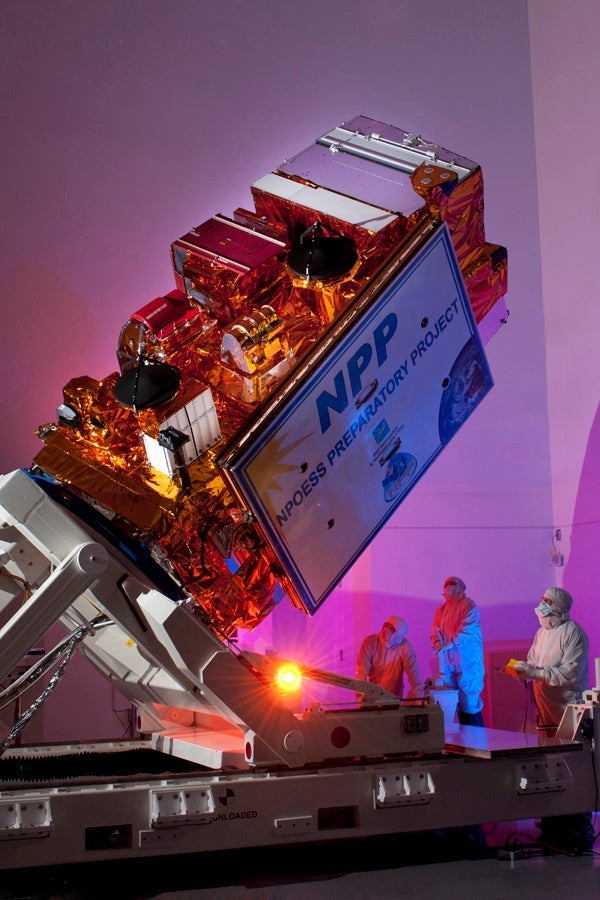
According to the space agency, JPSS-1 will be launched to extend the weather and environmental observations, as a follow on to the previously launched Suomi National Polar-orbiting Partnership (Suomi NPP) satellite.

Discover B2B Marketing That Performs
Combine business intelligence and editorial excellence to reach engaged professionals across 36 leading media platforms.
Data and imagery acquired from JPSS will improve the timeliness, accuracy and cost-effectiveness of NOAA’s public warnings and predictions of weather and climate events, further decreasing the loss of human life and property, NASA said.
During April and June, NASA signed the final contracts with Raytheon Space and Airborne Systems and Northrop Grumman for the satellite’s visible infrared imager radiometer suite (VIIRS) instrument and advanced technology microwave sounder (ATMS) respectively.
NASA also finalised deals with Ball Aerospace, Raytheon Intelligence and Information Systems and ITT Exelis for the JPSS-1 Spacecraft and the Ozone mapping and profiler suite instrument, satellite’s ground system and crosstrack infrared sounder (CrIS) instrument respectively during 2011.
Forming the backbone of space-based observations deployed for weather forecasting and environmental and climate observation, the ATMS and CrIS instruments aboard the satellite will be used as input for arithmetic weather forecast models and vital during weather predictions further than three days.

US Tariffs are shifting - will you react or anticipate?
Don’t let policy changes catch you off guard. Stay proactive with real-time data and expert analysis.
By GlobalDataWhile offering imagery, which is necessary for monitoring severe weather, as well as for tracing volcanic ash and wildfires, the JPSS-1 VIIRS instrument will also collect information on various Earth properties, together with the atmosphere, clouds, radiation budget, clear-air land and water surfaces, as well as sea surface temperature.
Being managed by NOAA with NASA’s Goddard Space Flight Center incorporating the system elements, the JPSS programme is an updated civilian segment of the National Polar-orbiting Operational Environmental Satellite System (NPOESS) programme.
Image: The completion of NPP Satellite development at the Ball Aerospace facility. Photo: Ball Aerospace.


