
Honeywell has unveiled its upgraded IntuVue 3-D weather radar, designed to enhance the in-flight situational awareness and decision-making capabilities of pilots in adverse weather conditions.
Featuring new capabilities to identify hail and lightning well before approaching storm cells are in the aircraft’s flight path, the new IntuVue 3-D radar is claimed to offer pilots enough time to alter course without causing significant delays.

Discover B2B Marketing That Performs
Combine business intelligence and editorial excellence to reach engaged professionals across 36 leading media platforms.
The upgraded radar detects the precise location of heavy rain clouds and allows flights to arrive on time, while enhancing passenger comfort and safety.
Honeywell Aerospace human factors senior chief engineer Dr. Ratan Khatwa said the IntuVue was designed to provide pilots with enhanced information about the location of true weather threats, such as hail and lightning, relative to their aircraft.
"The much simplified weather information and radar operation results in reduced pilot workload levels compared to other radar systems, thus allowing the flight crew to focus on flying the aircraft safely," Khatwa added.
The predictive hail and lightning system of the radar deploys complex algorithms, which examine information secured from constant scanning from ground level to 60,000ft and up to 320nm.
US Tariffs are shifting - will you react or anticipate?
Don’t let policy changes catch you off guard. Stay proactive with real-time data and expert analysis.
By GlobalDataThe execution of captured data through the new algorithms allows radar to detect storm cells with characteristics of hail and lightning and show a hail or lightning icon on top of the respective storm, providing pilots with a clear view of severe weather conditions.
The weather radar also includes the new REACT system, which provides pilots a visible alert on the radar screen when the radar signal is losing strength.
The US Federal Aviation Administration reports that severe weather accounts for about 70% of all aircraft delays, while the US Bureau of Transportation Statistics reveal that turbulence-related incidents cost airlines, on average, nearly $200,000 per incident.
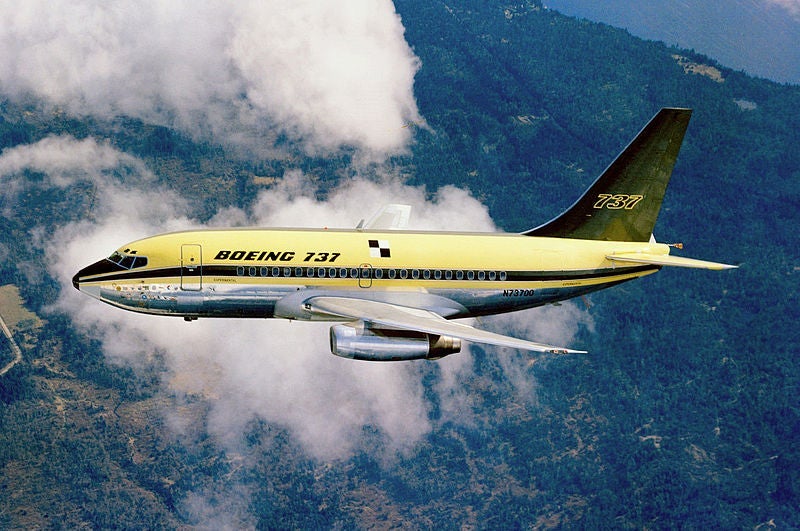
Initially offered as a retrofit option on Boeing 737-NG aircraft, IntuVue 3-D weather radar will subsequently be equipped in aircraft including Boeing’s B777 and B737, Airbus’ A320, A330, A340, A350 and A380, as well as Gulfstream G650 aircraft.
Honeywell said that the new radar has received FAA Supplemental Type Certification (STC) approval and certified to the FAA’s new improved Minimum Operational Performance Standard (MOPS).
Image: IntuVue 3-D weather radar will be initially retrofitted on Boeing 737-NG aircraft. Photo: Boeing Dreamscape.


