
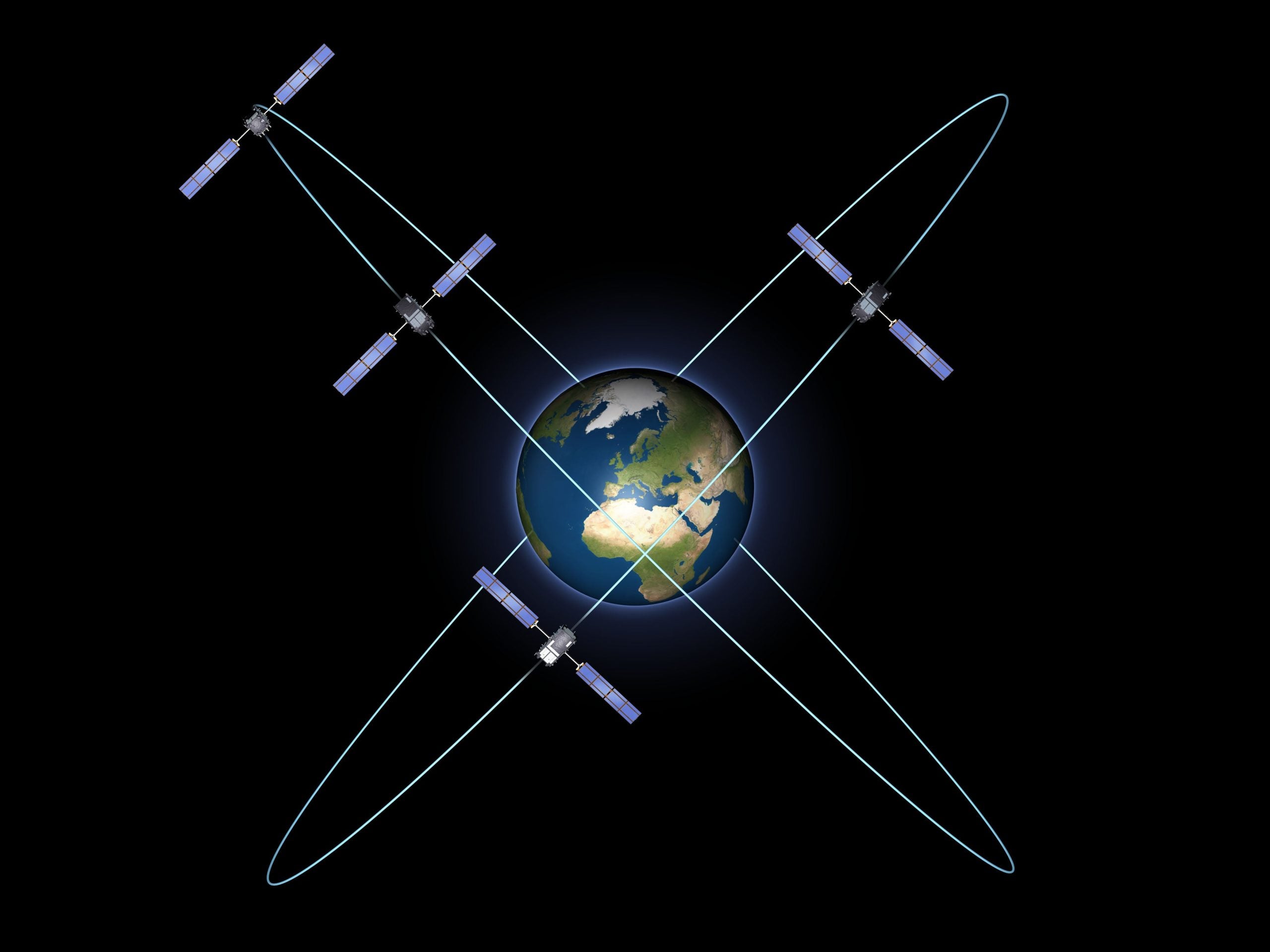
The European Space Agency’s (ESA) Galileo Flight Model 4 (FM4) satellite has been delivered to Spaceport in French Guiana, marking the commencement of the satellite’s prelaunch preparations for a scheduled shared launch with FM3 in October 2012.
Shipped aboard an Ilyushin aircraft from the Thales Alenia Space facility in Rome, the satellite has joined the third Galileo satellite (FM3) already at the preparation facility at Guiana Space Centre.

Discover B2B Marketing That Performs
Combine business intelligence and editorial excellence to reach engaged professionals across 36 leading media platforms.
Following their launch aboard a Soyuz ST-B launch vehicle, both ‘in-orbit validation’ (IOV) satellites will join the first two Galileo satellites launched in 2011, completing the deployment of infrastructure required for the IOV phase.
According to ESA, the launch will also debut the computation of on-ground position depending exclusively on Galileo satellites.
Each of the Galileo spacecraft features an atomic clock for navigation and a powerful transmitter to allow precise broadcast of navigation data globally.
Built by a consortium led by EADS Astrium, the first four Galileo IOV satellites are expected to enable the European industry to validate prototype Galileo-based receivers and services against original satellite signals.

US Tariffs are shifting - will you react or anticipate?
Don’t let policy changes catch you off guard. Stay proactive with real-time data and expert analysis.
By GlobalDataAccording to Arianespace, the whole Galileo system, composed of a 30-satellite constellation in orbit, will form an independent global satellite navigation system for Europe.
In a move to achieve full operational capability (FOC), the IOV phase will be followed by the deployment of further satellites and ground segment for provision of services.
Germany-based OHB is building the first 22 FOC satellites and is responsible for the platforms and final satellite integration, while the UK-based Surrey Satellite Technology is developing the payloads.
Image: The four Galileo IOV satellites in their orbits. Photo: Courtesy of ESA – P. Carril.


