
The European Space Agency (ESA) has helped the ‘Intermetallic Materials Processing in Relation to Earth and Space Solidification’ (Impress) project in developing a new lightweight aircraft-grade alloy.
The titanium aluminide alloy is twice as light as the nickel super-alloys used in the conventional jet engines, and can withstand temperatures up to 800°C.

Discover B2B Marketing That Performs
Combine business intelligence and editorial excellence to reach engaged professionals across 36 leading media platforms.
ESA noted that lowering aircraft weight by 1% enabled carriers to save up to 1.5% in fuel.
Scientists at the space agency helped the Impress project by solving the problem of casting the new alloy into various shapes such as turbine blades, through hypergravity.
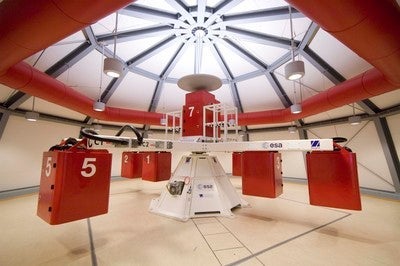
The hypergravity theory was tested at the centrifuge in the ESA’s ESTEC research and technology centre in the Netherlands, and it was found that liquid metals can be filled in moulds by creating up to 20 times normal gravity, creating alloys in complex shapes.
It was noted by the team that using titanium aluminide has the potential to reduce the weight of jet engine turbines by as much as 45%.
US Tariffs are shifting - will you react or anticipate?
Don’t let policy changes catch you off guard. Stay proactive with real-time data and expert analysis.
By GlobalDataManaged by the ESA, Impress is a multi-disciplinary consortium of 40 research groups and companies, with a five-year budget of €41m.
With a 150-strong team of researchers, Impress has been studying titanium and nickel aluminides
The high melting point, low density and high-temperature strength features of titanium aluminides makes them suitable for gas turbine blades, while the catalytic properties of nickel aluminides makes them useful in the chemical industry, as well as in electro-catalysts in alkaline fuel cells.
Image: Titanium aluminide alloy was tested at the centrifuge of the ESA’s ESTEC research and technology centre in the Netherlands. Photo: courtesy of European Space Agency.


