
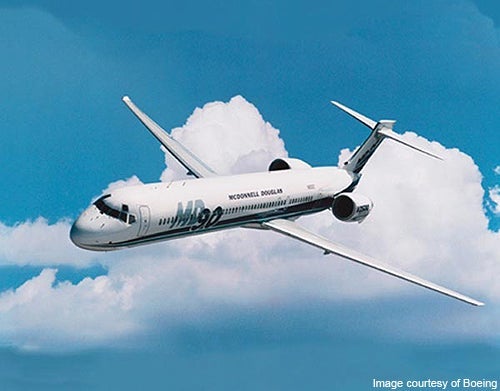
US-based Delta Air Lines is set to equip its fleet of 182 MD-88, MD-90 airliners and flight simulators with enhanced glass cockpits and GPS navigation.
The upgraded systems are expected to improve efficiency, lower environmental impact and allow the airline to take advantage of procedural improvements as part of the US Federal Aviation Administration’s Next Generation Air Transportation System.

Discover B2B Marketing That Performs
Combine business intelligence and editorial excellence to reach engaged professionals across 36 leading media platforms.
Developed by US-based avionics company Innovative Solutions & Support, the enhanced avionics suite will allow the aircraft to fly shorter flight paths and take advantage of continuous-descent, required navigation performance (RNAV) approaches, in order to reduce fuel consumption, carbon emissions and noise levels.
The addition of GPS capabilities, as well as the inclusion of Data Link and ADS-B, will allow pilots to fly safer as the three systems would enable flight crews to identify nearby air traffic, weather and terrain on flat panel displays in the cockpit, according to Delta Air Lines.
The benefits from the new lighter weight equipment include reductions in CO2 emissions by 80m pounds annually, and a 50% decrease in the aircraft noise footprint once NextGen procedures are fully implemented.
In addition, the standardised flight decks will improve situational awareness for flight crews and are expected to simplify maintenance, increase operational flexibility and improve dispatch and on-time reliability.
US Tariffs are shifting - will you react or anticipate?
Don’t let policy changes catch you off guard. Stay proactive with real-time data and expert analysis.
By GlobalDataThe installation of the enhanced flight deck technology across the MD-88 and MD-90 fleet is expected to begin in early 2014, and is slated to be completed by IS&S technicians at Delta TechOps facilities.
Delta Air Lines Flight Operations senior vice president Steve Dickson said in addition to deploying technology enhancements, Delta continues to work closely with the FAA as it advances NextGen procedures – many of which are being developed at key hub airports.
"Delta continues to invest in NextGen and looks forward to the FAA’s continued progress in systemwide implementation of these improvements, especially at these key hubs, which promise to deliver real savings as well as safety and efficiency enhancements.
"The cockpit upgrades also build on Delta’s commitment to give our flight crews the advanced technology tools they need to perform their job safely and efficiently for our customers," Dickson said.
Delta said that it will continue to enhance technology across its fleet, including upgrades on all Airbus and Boeing jets in order to achieve the performance and efficiency improvements that will be realised once the FAA fully implements the NextGen system.
Headquartered in Atlanta, Delta operates a mainline fleet of more than 700 aircraft.
Innovative Solutions & Support is a systems integrator that designs and manufactures flight guidance and cockpit display systems for original equipment manufacturers (OEMs) and retrofit applications.
Image: A MD-90 Medium Range Commercial Jet. Photo: Courtesy of Boeing.



