

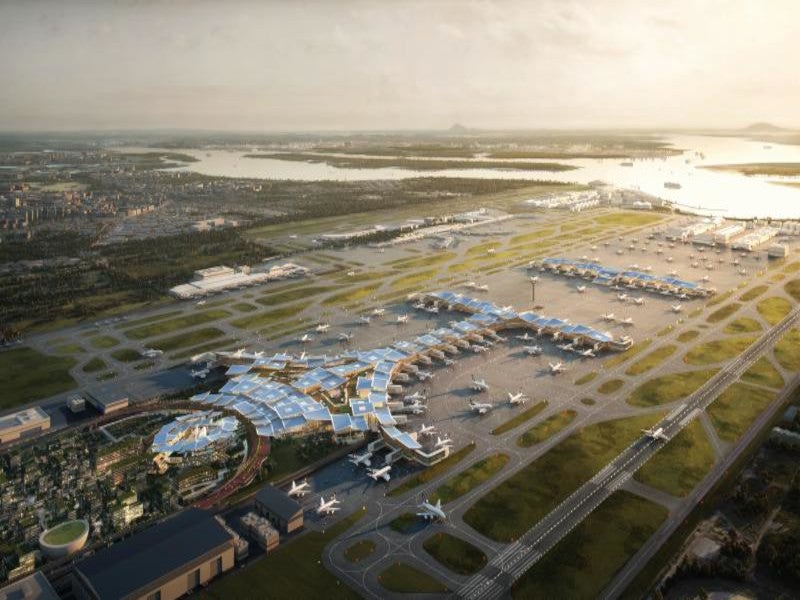
Terminal 5 (T5) of the Changi International Airport in Singapore is being developed to meet the growing passenger traffic at the airport.
Estimated to cost approximately $10bn (S$12.96bn), the project marks the biggest expansion at Changi Airport to date. It is part of the Changi East development, which also includes the development of a three-runway system and a network of inter and intra-terminal tunnels.
Recommended White Papers
Recommended Buyers Guides

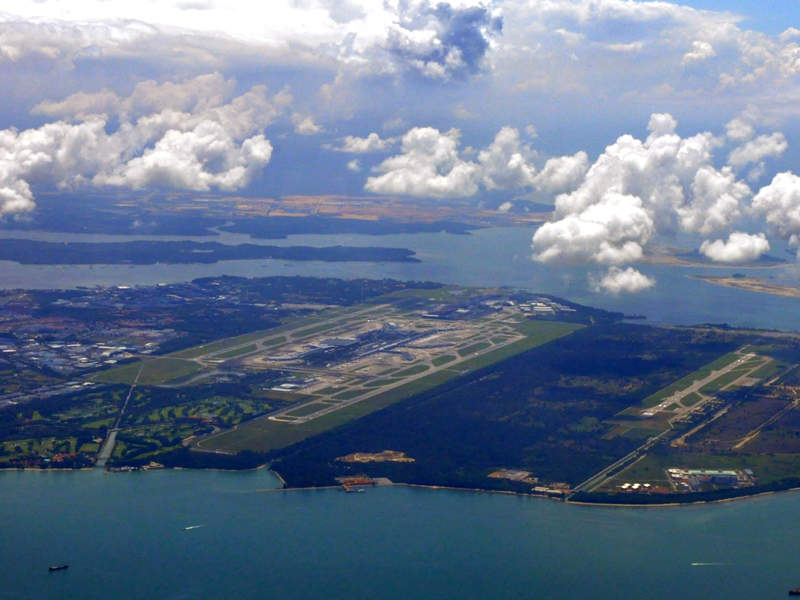
The single integrated terminal will be bigger than the existing terminals at the airport. It will be built on a 1,080-hectare greenfield site located to the east of the airport.
Construction of the terminal began with a ground-breaking ceremony in May 2025. The first phase of the project is expected to open in the mid-2030s.
T5 will be able to handle up to 50 million passengers a year in the initial phase of operation, increasing the airport’s total annual passenger handling capacity to 135 million.
T5 development details
The Civil Aviation Authority of Singapore (CAAS), Changi Airport Group (CAG) and the Ministry of Transport collaborated to build T5 at the Changi International Airport.
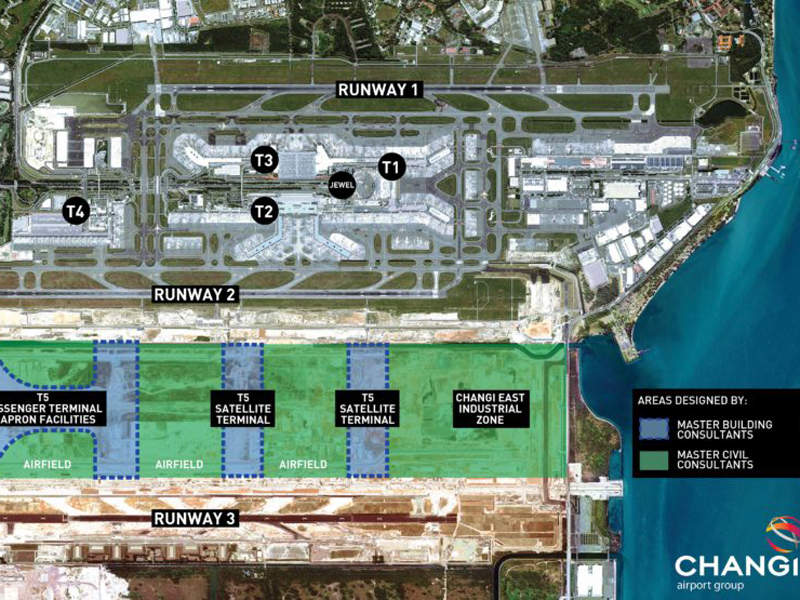
The project was first announced in 2013, with planning for T5 and land preparation for Changi East commencing the following year. Master building consultants (MBCs) and master civil consultants (MCCs) were appointed in 2018.
The project was put on hold in 2020 for two years due to the Covid-19 pandemic. In 2022, the development of the project resumed.
The two-year break enabled the Ministry of Transport (MOT), the CAAS and CAG to reassess the T5 design and make it more modular, robust and sustainable.
T5 facilities
The landside and airside facilities of Changi Airport’s T5 will include the aircraft parking stands, cargo complex, ground transportation centre, main terminal building, primary landside roadway, satellite terminal building, taxiways, and other supporting aviation infrastructure.
The developers designed the terminal to be flexible, drawing from the experiences of the Covid-19 pandemic. The terminal can operate as smaller sub-terminals when required and be adapted for use during contingencies. The space within the terminal can be used for testing operations and to separate high-risk passengers.
In addition, the terminal will feature contactless systems at passenger touchpoints to reduce the risk of transmission of diseases. It will be equipped with enhanced ventilation systems to increase fresh air and reduce the mixing of air.
The project also includes the development of aircraft maintenance, repair and overhaul facilities, roadway and drainage systems and establishing connections for utilities such as power, gas, fuel, water and telecommunications to the T5 building.
An 18km-long network of tunnels will be built to establish airside connections within T5, as well as between T5 and existing terminals 1, 2, 3 and 4 at the airport. The tunnels will allow for convenient movement of baggage, passengers and airside vehicles.
The project will also add more than 100 additional aircraft parking stands at the existing airport.
Additionally, the terminal is being designed to deploy automation and digital technologies at scale, enabling next‑generation integrated airport operations. An Integrated Operations Centre will give all stakeholders a shared, data‑driven view of airport activities, improving decision‑making and efficiency.
Technologies such as automation, video analytics, AI and robotics are being trialled for wider deployment across the airport, including T5. These include systems that track aircraft turnaround to predict delays, as well as baggage robots that can operate even in adverse weather.
Access to the new terminal
T5 will be highly integrated with Singapore’s transport network. A ground transportation centre within the terminal will provide travellers with convenient access to trains, buses, taxis and other transport services.
Furthermore, the Thomson–East Coast Line will be extended to T5, providing a direct rail connection to the city centre and, further north, to the Johor Bahru–Singapore Rapid Transit System Link terminal at Woodlands North.
The Cross Island Line is also planned to link T5 to key hubs such as the Punggol Digital District and Jurong Lake District.
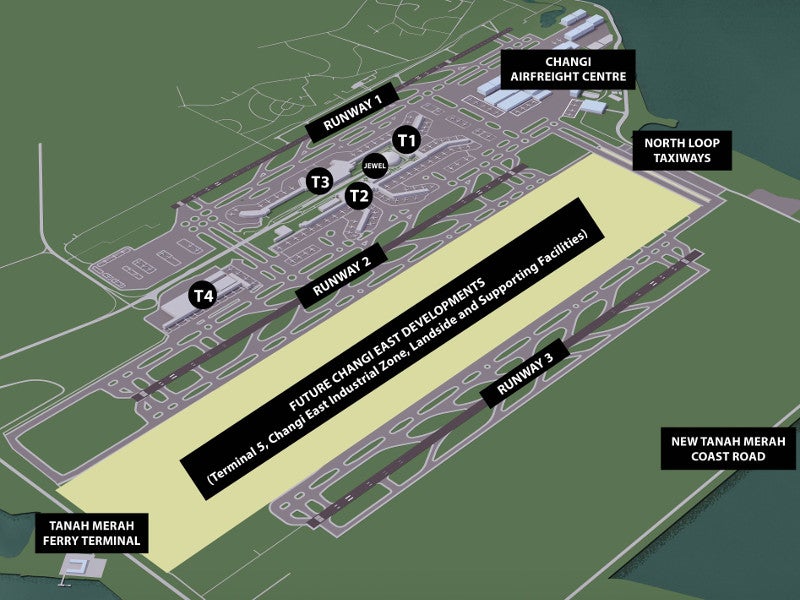
New roads along the Changi Southern Corridor will connect the terminal to Tanah Merah Coast Road, the East Coast Parkway and the Pan Island Expressway, improving road access across the island.
In terms of sea connectivity, T5’s proximity to Tanah Merah Ferry Terminal creates opportunities for seamless air-sea transfers to neighbouring destinations.
Sustainable features of T5
T5 is expected to be a Green Mark Platinum super-low-energy building certified by the Building and Construction Authority. It will feature solar panels, smart building management systems, district cooling and thermal energy storage to decrease carbon emissions.
It will also be able to handle alternative fuels such as sustainable aviation fuel, as well as fixed ground power and cooling for aircraft parked at the gates.
Three-runway system at T5
The Changi East project also includes the development of a three-runway system. The airport is currently served by two runways – runways 1 and 2. To develop the three-runway system, a third runway (runway 3), previously used by the military, will be extended from 2.75km to 4km to handle larger aircraft.
The extension will create connections between Changi Airport runway 3 and the airport’s existing airfield through 40km of new taxiways. It will also enable runway 3 to facilitate safe travel for larger passenger aircraft. The project also includes the development of supporting infrastructure and systems for the operation of the three-runway system.
The three-runway system is expected to be completed in the late 2020s.
Financing of the terminal
Funding for the Changi East development will be shared by the Singapore Government, CAG, and airport users such as airlines and passengers.
In February 2025, Singapore Prime Minister and Finance Minister Lawrence Wong announced that an additional S$5bn will be injected into the Changi Airport Development Fund to support the airport’s expansion, including T5.
Contractors involved with the T5 project
CAG appointed a group of international and local companies, dubbed MBCs, to deliver architectural design and engineering consultancy services for the development of Changi Airport’s T5.
The move included appointing a consortium of architecture practices, Heatherwick Studio, KPF (Singapore) and Architects 61 for architectural design services.
DP Architects was engaged to deliver design services for the commercial spaces. The scope of design consultancy services includes the Main Terminal Building, Satellite Terminal Building, Ground Transportation Centre and Primary Landside Roadway.
SAA Architects is part of the MBC team and is the local delivery architect for the project.
A consortium of consultancies – Surbana Jurong Consultants, Arup Singapore, Mott MacDonald Singapore and Changi Airport Planners and Engineers – was selected as MCCs.
Design consultants for the T5 project include Bruce Mau Design, Entro, the Fountain Workshop, James Corner Field Operations, Lichtvision Design and Speirs + Major.
Land preparation work at Changi East is being carried out by a joint venture (JV) of construction companies comprising Penta-Ocean Construction and Koon Construction & Transport.
Penta-Ocean Construction also won a S$999m contract to build the intra-terminal tunnels at T5 in a JV with Koh Brothers Building & Civil Engineering Contractor.
CAG tapped a JV between China Communications Construction Company (Singapore Branch) and Obayashi Singapore in May 2025 for substructure and airside infrastructure works at the terminal.
BRC Asia, which specialises in prefabricated steel reinforcement, won contracts worth S$570m in July 2025 to supply steel reinforcement for the substructure of the terminal.
Other contractors involved in the project are Dornier Consulting International, Geomotion Singapore and Shanghai Tunnel Engineering Company.
