

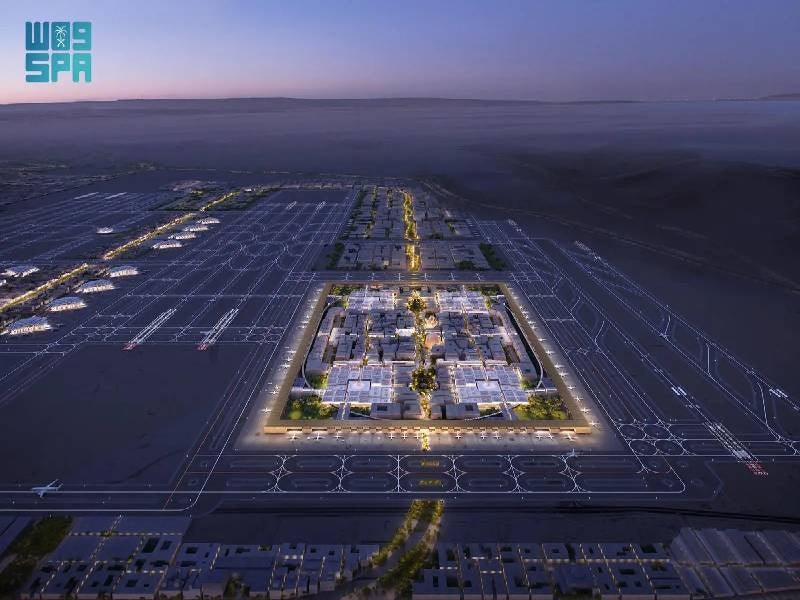
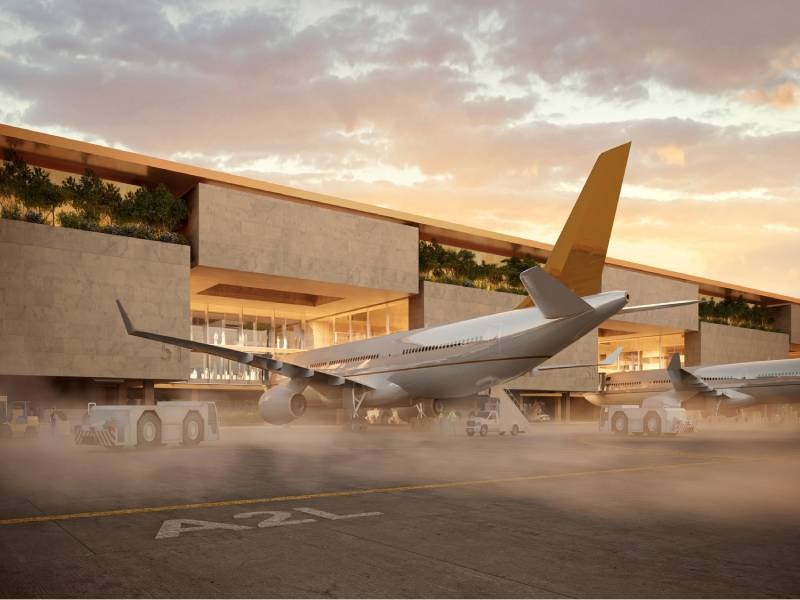
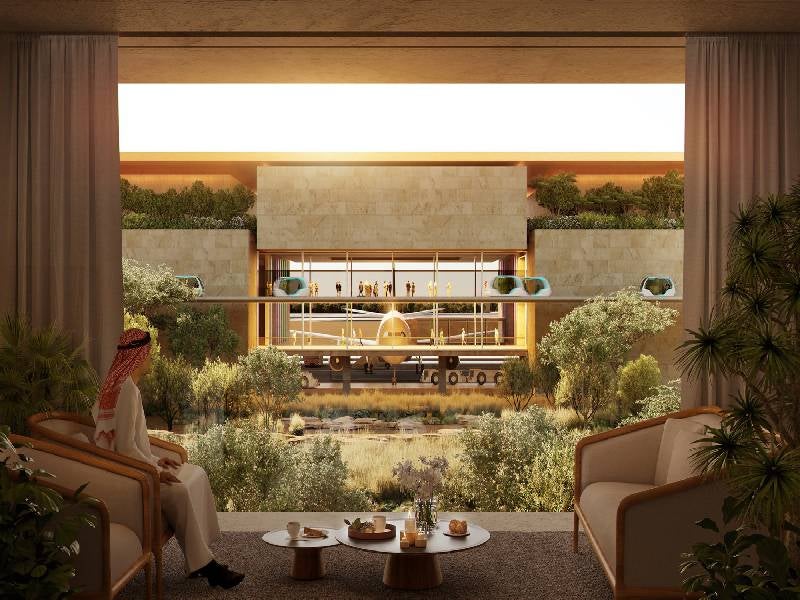
King Salman International Airport (KSIA) is being developed in Riyadh, Saudi Arabia, as part of the Kingdom’s Vision 2030 strategy to diversify the economy.
The $30bn project is being undertaken by King Salman International Airport Development Company (KSIADC), a Public Investment Fund (PIF) company.
Recommended White Papers
Recommended Buyers Guides
PIF chairman and Crown Prince Mohammed bin Salman bin Abdulaziz officially unveiled the master plan for the airport project in November 2022.
Construction works on KSIA commenced in September 2025. The new airport aims to achieve Leadership in Energy and Environmental Design (LEED) Platinum certification by focusing on renewable energy, green infrastructure and advanced airspace management.
Upon completion, the airport is expected to expand Riyadh’s logistics capacity and support activity in transport, trade, and tourism.
KSIA is expected to handle up to 120 million travellers by 2030, and up to 185 million passengers and 3.5 million tonnes of cargo by 2050.
It also promises significant economic impact, contributing SR27bn ($7.2bn) annually to nonoil GDP and creating around 103,000 direct and indirect jobs.
The airport will enable Saudi Arabia to increase aircraft traffic in the country from 211,000 to more than one million flights annually by 2050.
KSIA location
KSIA will be located north of Riyadh, adjacent to the existing King Khalid International Airport. The site will cover about 57km², positioning it among the largest airports by footprint.
The project was conceived to accommodate projected growth in passenger and cargo volumes, driven by Riyadh’s population growth and the expansion of the tourism sector.
King Salman International Airport details
The airport masterplan seeks to develop KSIA as an aerotropolis focused on passenger experience, operational efficiency, and technology adoption. The design references Riyadh’s identity and Saudi cultural context to shape the terminal environment for visitors and transit passengers.
The project will include 45km² airport area, six parallel runways and nine terminals, including a royal terminal, a commercial airline terminal, a dedicated private aviation terminal, and
Terminal 6, which will handle cargo for low-cost carriers. KSIA is also expected to use the existing terminals named after King Khalid.
Around 12km² is allocated for airport support, residential and recreational facilities and logistics real estate.
These zones will be linked together by the Wadi Loop, a green infrastructure corridor that follows the existing wadi and links the existing west midfield to the new east midfield. The corridor integrates landscape and real estate elements into the terminal precinct and enables continuous movement across the site.
Contractors involved
Architecture firm Foster + Partners won the master plan design competition for the airport in November 2022. In August 2024, the firm signed a partnership agreement to begin the next phase of design.
Engineering company Jacobs will be responsible for concept masterplan validation, detailed masterplan design, runway design and other services for KSIA.
Bechtel signed an executive partnership agreement with KSIADC in May 2025 to develop three passenger terminals at KSIA. The company will develop a commercial airline terminal, Terminal 6 and the private aviation terminal with aircraft maintenance facilities.
In the same month, Parsons was awarded two four-year Delivery Partner contracts to deliver critical airside infrastructure.
The scope includes runways, taxiways and air traffic control towers, along with key ground infrastructure including roads, tunnels, bridges, railway networks, and landscaping. comprehensive project management services. Parsons will oversee all phases from initial planning to final handover, including design, permitting, procurement, construction, and commissioning.
Mace, a consulting and construction company, will monitor the planning and construction for the airport development programme.
The services will include construction management, procurement strategy, cost and commercial management, logistics, health and safety strategy, and sustainability, among others.
Nera, a Saudi specialist in aviation technical and operational solutions, is tasked with designing the airport’s airspace to enhance traffic efficiency and operational resilience, while Saudi Icon Company will provide support during the construction phase.
A joint venture comprising Nesma and Partners, AlAyunik Limak Contracting Company and Samsung C&T was formed in February 2025 to support large-scale construction delivery. The consortium will seek to deliver key projects for the KSIA.
In July 2025, KSIADC signed a memorandum of understanding (MoU) with Biofuel Company to deploy B100 biodiesel as a substitute for fossil diesel during the construction phase. The supplier will provide sustainable fuel logistics, reducing construction phase carbon emissions in line with the project’s green targets.
Other partnerships
KSIADC formed several partnerships to support the development of the King Salman International Airport.
In October 2024, KSIADC signed an MoU with international private equity firm ewpartners to explore establishing an ecommerce and logistics special economic zone within the airport.
The airport developer also signed partnerships with the Special Integrated Logistics Zone (SILZ) and FedEx. The agreement with SILZ, Saudi Arabia’s first special economic zone, focuses on coordinating operational processes and developing infrastructure to expand air cargo capacity in Riyadh.
Under the partnership with FedEx, the parties will collaborate to strengthen logistics solutions and supply chain capabilities at KSIA.
KSIADC signed an MoU with Riyadh Infrastructure Projects Center (RIPC) in September 2025 to enhance collaboration on infrastructure and project development. The developer also partnered with the FII Institute, a nonprofit global foundation, to foster sustainable development and innovation, and with Cisco to explore the development of a smart infrastructure.
