
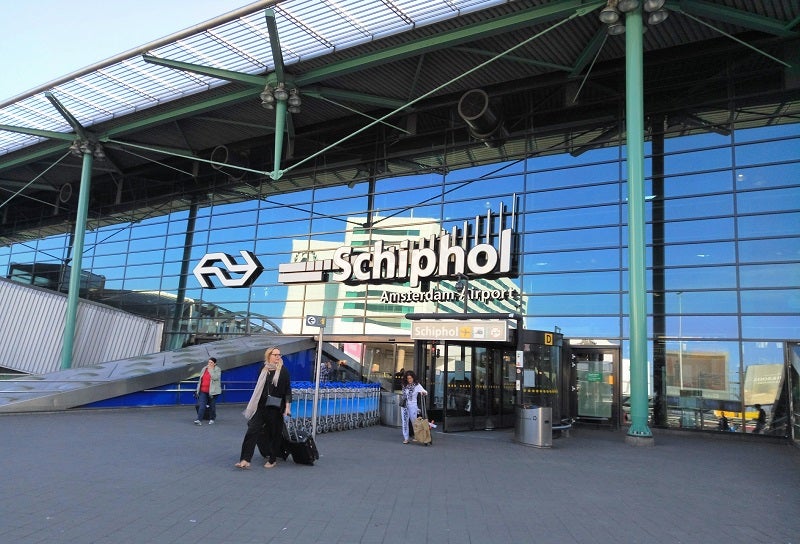
Schiphol Airport (AMS) in the Netherlands, in collaboration with Wageningen University & Research (WUR) and the Netherlands Aerospace Centre (NLR), is carrying out research for improving the quality of local air by minimising the number of ultrafine particles.
The partners are evaluating if ultrafine particles can be eliminated from the air by using ionised mist particles around the runways.
Go deeper with GlobalData


Discover B2B Marketing That Performs
Combine business intelligence and editorial excellence to reach engaged professionals across 36 leading media platforms.
Ionised mist particles clump together with ultrafine particles and become heavier.
Thereafter, it falls on the ground instead of getting disseminated.
This method has been picked from the tried-and-tested concept, which is commonly used in the construction industry for minimising dust and particulate matter.
The partners are attempting to fine-tune this approach to enable its usage in airport operations.
US Tariffs are shifting - will you react or anticipate?
Don’t let policy changes catch you off guard. Stay proactive with real-time data and expert analysis.
By GlobalDataRoyal Schiphol Group innovation head Carolijn Schoofs said: “The air quality at and around Schiphol is very important for the health of our employees and neighbours. We are continuously looking for innovative solutions. This technology is still in an experimental phase, but it has enormous potential.”
NLR spokesperson Kees de Waal said: “During previous research, we measured the ultrafine particle concentrations as a result of take-offs.
“Based on these results, we would like to further investigate whether our idea works effectively to reduce the amount of ultrafine particles by means of ionised mist particles.”
The airport is expecting to draw a conclusion on whether the researched technique has the potential to cut down concentrations of ultrafine particles produced from aircraft in early 2022.
In 2019, Schiphol introduced the ‘Ultrafine Particles Action Plan’ to lower ultrafine particles at and around the airport.
As part of the plan, the airport will take several measures to enhance air quality, including the usage of electricity to power ground activities, and sustainable taxiing.
Furthermore, it will invest in sustainable aviation fuel and research to know more about ultrafine particles.
A month ago, Schiphol Airport completed the renovation of its Departure Hall 1.



