
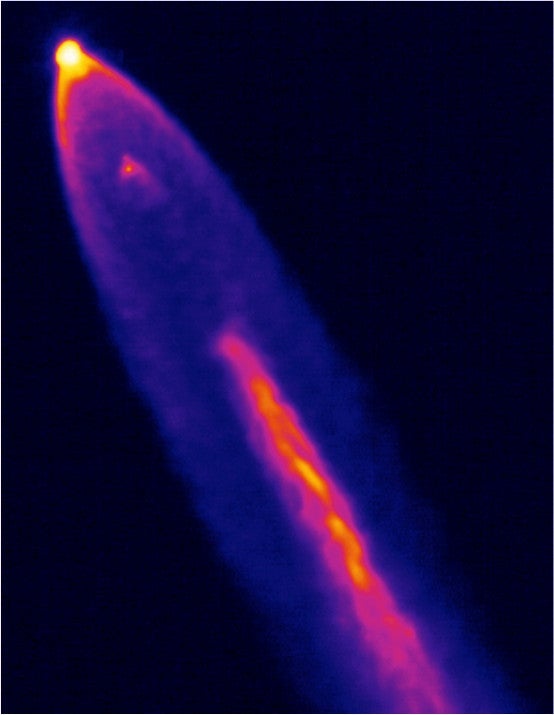
Nasa plans to use SpaceX’s propulsive soft-landing technology on the first stage of Falcon 9 rocket, to facilitate its future missions to Mars.
The agency said it has captured thermal images of the Falcon 9 on its descent at supersonic speeds.

Discover B2B Marketing That Performs
Combine business intelligence and editorial excellence to reach engaged professionals across 36 leading media platforms.
Data accumulated will provide critical engineering information for the application and infusion of supersonic retro-propulsion into future Nasa missions.
Nasa propulsive descent technologies project principal investigator Robert Braun said: "Because the technologies required to land large payloads on Mars are significantly different than those used here on Earth, investment in these technologies is critical.
"This is the first high-fidelity data set of a rocket system firing into its direction of travel while travelling at supersonic speeds in Mars-relevant conditions."
To document the re-entry of the rocket’s first stage, Nasa has deployed WB-57, a twin jet engine high-altitude research aircraft, and a Navy NP-3D Orion aircraft.

US Tariffs are shifting - will you react or anticipate?
Don’t let policy changes catch you off guard. Stay proactive with real-time data and expert analysis.
By GlobalDataThe agency has collected infrared and high-definition images, as well as monitored alterations in the smoke plume as the engines were turned on and off.
Nasa Space Technology associate administrator Michael Gazarik said: "Through our partnership with SpaceX we’re gaining access to real-world test data about advanced rocket stage design and retro-propulsion."
The study has been backed by the development programme, which is part of Nasa’s space technology mission directorate (STMD).
STMD engages in developing, testing technologies for the future aerospace missions.
Image: Thermal imagery of the Space X Falcon 9 first stage performing propulsive descent. Photo: courtesy of Nasa.



