

Ramp and Baggage Make-Up Area MSD Risk: The Ergonomics of AKE Loading and Open-Cart Transfer
The ramp and baggage make-up area represents the highest-volume baggage handling environments at any commercial airport. They are also the environments where engineering controls have historically been least consistently applied. CBRA rooms have attracted significant ergonomic investment — partly because TSO injuries attract regulatory scrutiny. The ramp and make-up area, handled by ground handling agents and airlines with varying safety programme rigour, have received less systematic attention despite generating comparable MSD exposure.
This article covers the specific physical demands of ramp and make-up area operations, the cumulative injury evidence, and the engineering controls that have been independently validated to reduce spinal loading in these contexts.
What is an AKE and why does loading one create MSD risk?
An AKE is a standardised air container — a unit load device (ULD) used to transport baggage in the lower deck of a wide-body aircraft. Loading an AKE requires repeatedly lifting bags from a baggage cart or conveyor and placing them into the container. The height mismatch between the cart/conveyor (lift origin) and the optimal AKE stacking height (lift destination) — combined with extended horizontal reach when placing bags deep in the container — creates the biomechanical conditions for elevated spinal loading.
The challenge is that the handler has no control over the effective height of the lift origin as the cart empties or fills. A cart that is full presents bags at cart-top height — approximately knee-to-waist height for most handlers — requiring a lift with significant trunk flexion at the origin. A nearly empty cart requires the handler to reach down near floor level. Neither extreme represents an ergonomically optimal working height, and handlers encounter both extremes within a single cart-loading task.
A laboratory study (Lu et al., 2018, Applied Ergonomics) evaluated vacuum lift assistance in a simulated AKE-equivalent loading task using the industry average bag weight of 14.5kg (32lbs) on a two-shelf baggage cart. The vacuum lift system reduced average spinal compressive forces by 39% and kept them below the 3,400N spinal tissue damage threshold. Without lift assistance, compressive forces exceeded this threshold for a proportion of the handlers tested, particularly at lower shelf heights requiring greater trunk flexion.
Note: this 39% figure is specific to the ramp-and-make-up area context measured by Lu et al. (2018). It should not be conflated with the 63% reduction measured in CBRA screening operations (NIOSH EPHB 010-22a, 2014) — different studies, different task geometry, different applicable contexts.
How does open-cart transfer create spinal loading?
Open cart transfer — moving bags between AKEs, conveyor systems and open baggage carts on the ramp — involves repeated lifts at variable heights throughout the working period. The unpredictability of load weight is itself a risk factor. Bags arrive with declared weights that do not always match actual weights. A handler who reaches for a bag expecting 12kg (26lbs) and encounters 20kg (44lbs) responds with an uncontrolled muscular loading event that generates peak spinal forces significantly above what a planned equivalent lift would produce.
Carrier baggage handlers process five to ten bags per minute during aircraft loading and unloading operations. At this frequency, the shift accumulates very rapidly into a cumulative total. Bern et al. (2013, BMJ Open) documented approximately 4t to 5t lifted per shift by handlers at Copenhagen Airport. Over a 220-day working year, that is 880t to 1,100t of manual lifting per handler — a volume that makes chronic degenerative MSD an expected outcome of an unmanaged career rather than a statistical possibility.
Make-up area conveyor work and sustained repetition
In the make-up area, cleared bags arrive on conveyors and must be sorted onto carts for transport to the ramp. The task — identify the bag’s destination from routing information, lift from the conveyor, place on the correct cart — is performed repeatedly across an entire shift. During peak departure banks, the conveyor runs continuously, and the handler must maintain pace with the throughput rate.
Research on Swedish flight baggage handlers found that sorting-area tasks were associated with particularly high levels of upper-arm elevation above 60 degrees — a key posture risk factor for subacromial shoulder disorders — compared with ramp operations (Bergsten et al., 2015, BioMed Research International). The repetitive overhead reach involved in placing bags on higher cart positions, combined with the speed requirements of peak-period sorting, drives cumulative shoulder loading in make-up area work.
Make-up area handlers also tend to have less task variety than ramp staff, who rotate between loading, unloading, driving and ground support activities. A handler who performs the same reach-lift-place cycle for the majority of a shift accumulates a higher per-task cumulative exposure than a handler with more varied duties.
↗ TAWI airport baggage handling solutions https://www.tawi.com/industries/airports-ports
What engineering controls are effective in ramp and make-up area environments?
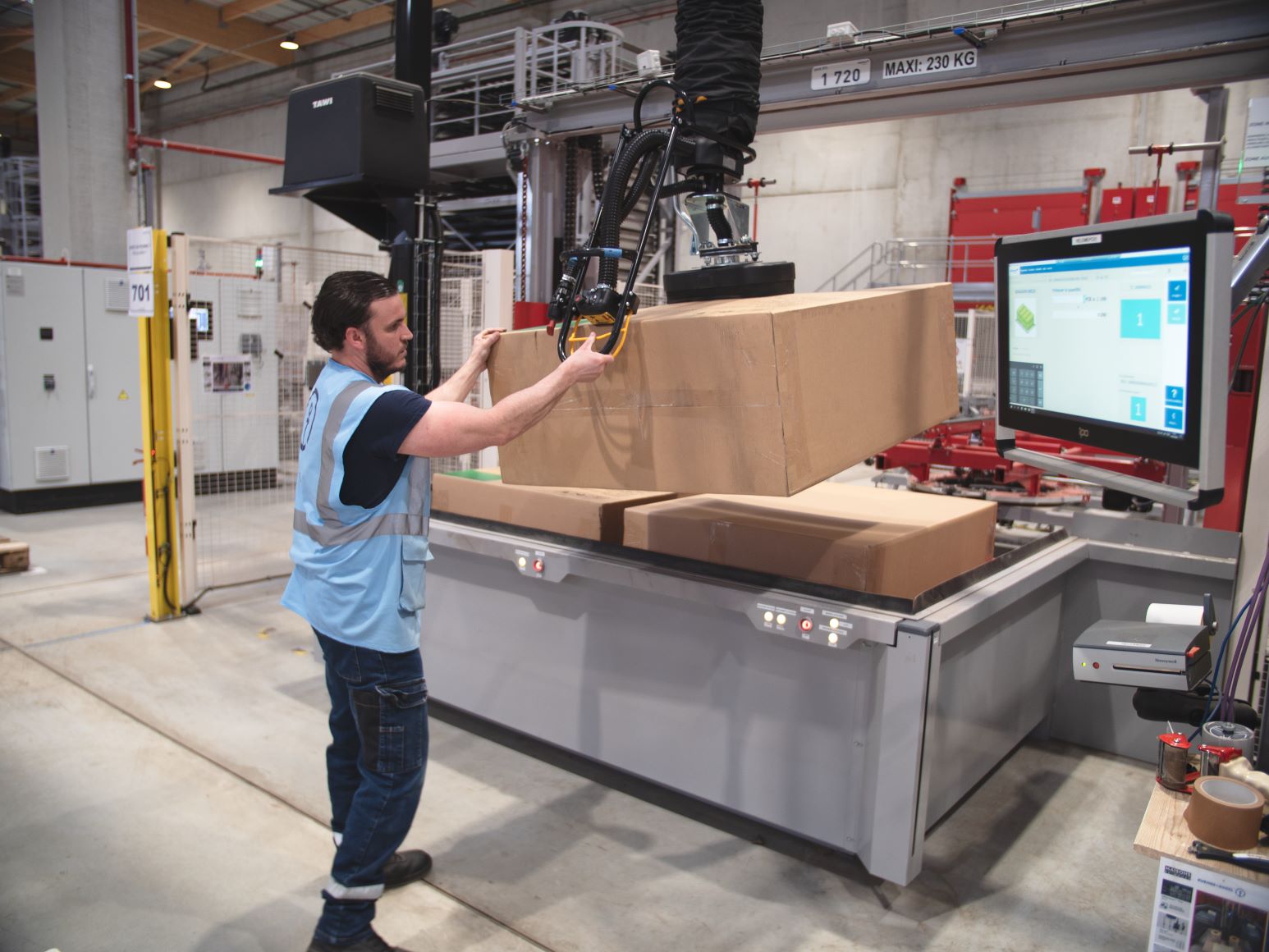
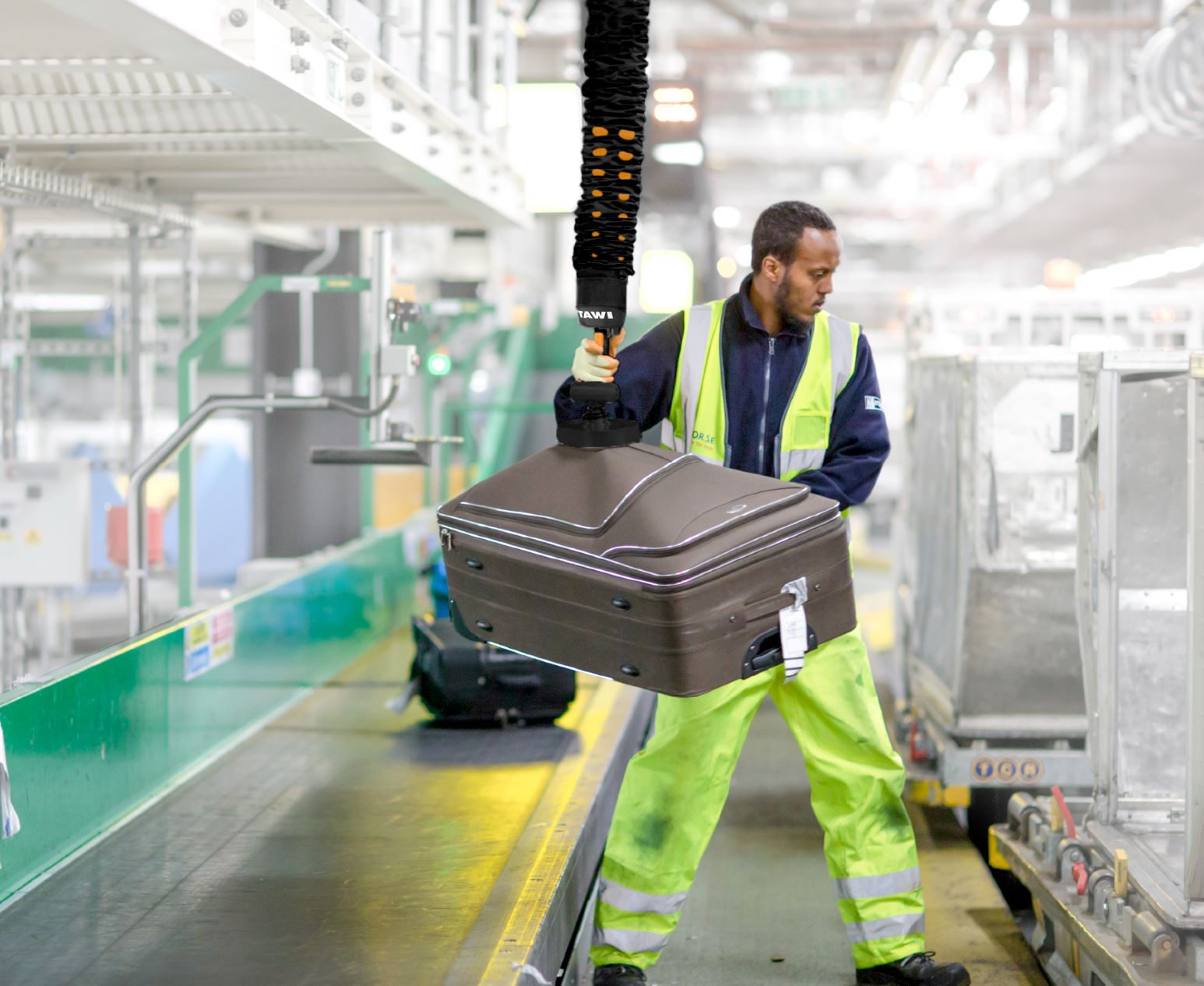
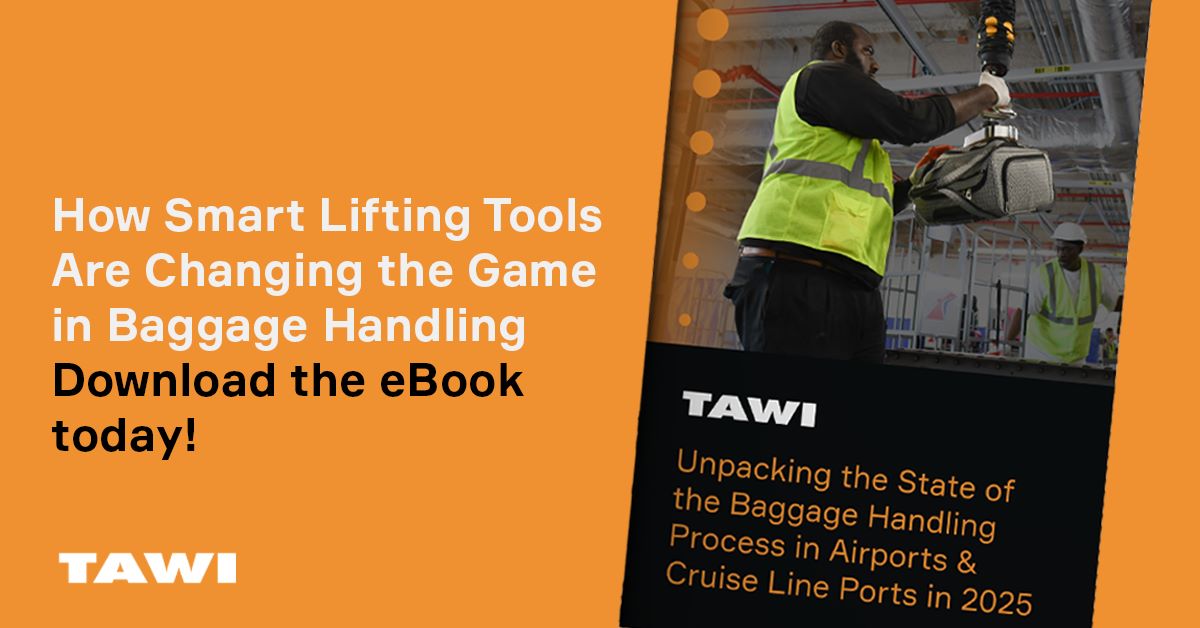
Vacuum lift systems mounted to overhead rail structures cover the handler’s working area from above, allowing them to transfer bags between cart, conveyor and AKE heights with minimal vertical force. The vacuum system carries the bag’s weight; the handler guides it horizontally. The 39% reduction in spinal compressive force measured by Lu et al. (2018) reflects this biomechanical change: eliminating the vertical load component substantially reduces the compressive force at the L4/L5 disc, regardless of working height.
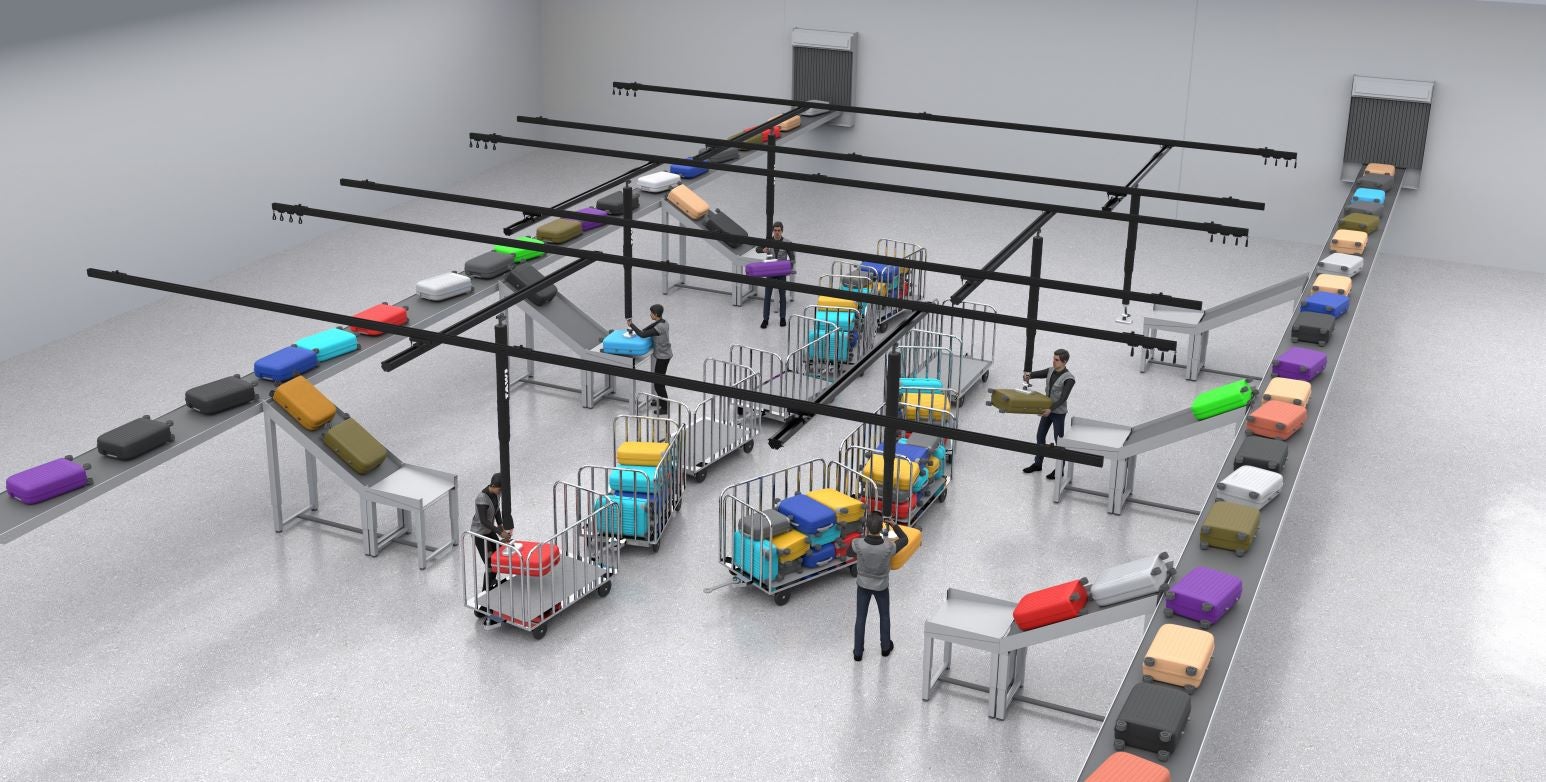
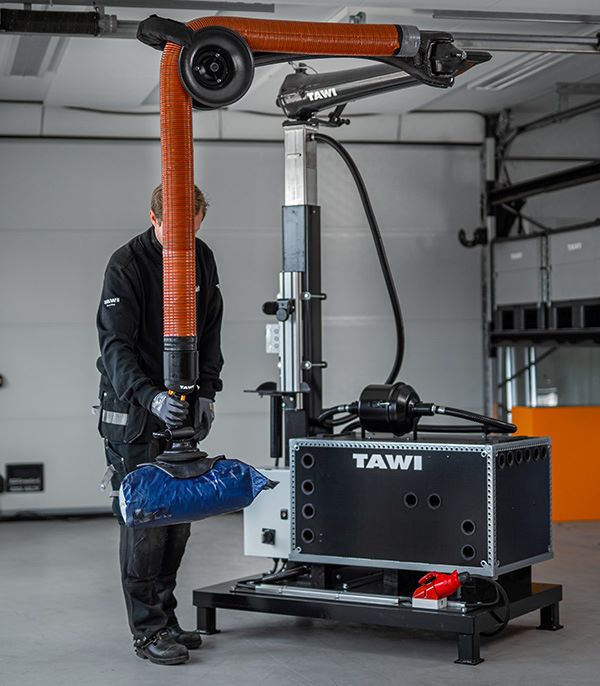
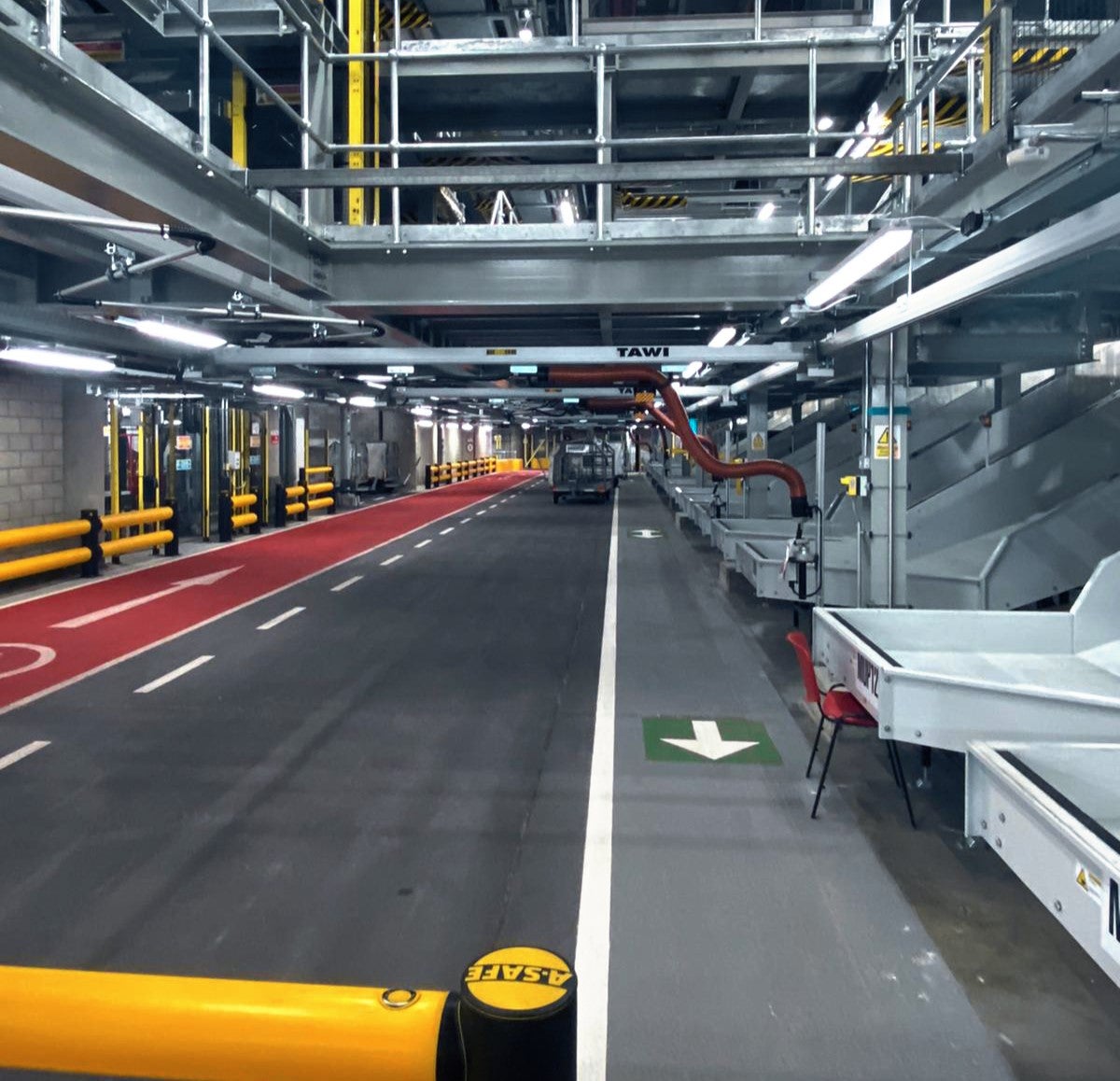
In make-up areas, overhead rail systems can be designed to follow the conveyor layout, giving handlers access across the full working area. In ramp environments, covered loading positions adjacent to belt loaders or AKE cart positions can be equipped with overhead rail systems. Outdoor ramp positions present a more challenging installation context — freestanding mounting structures may be required where ceiling mounting is not possible.
TAWI’s timed operational data from make-up area and ramp deployments shows 20% faster baggage throughput and 30% less labour per task. When handlers are not physically lifting each bag, they can work at a consistent pace throughout the shift without the fatigue-related performance decline that characterises late-shift manual handling. Throughput consistency improves; so does safe working posture maintenance.
↗ TAWI high-frequency vacuum lifter for fast baggage handling https://www.tawi.com/vacuum-lifters/high-frequency-vacuum-lifting