
Back Injuries in Airport Baggage Handlers: Causes, Statistics and What Employers Must Know
One in twelve baggage handlers suffers a back injury every year. That statistic comes from Dell’s survey of airline safety professionals (Dell, 1998) and has proven durable: subsequent research on handler cohorts across Europe and the US consistently confirms elevated back injury rates relative to other occupational groups.
In the US, the airport passenger transportation sector’s injury incidence rate of 5.1% — three times the private industry baseline and third-highest across all Bureau of Labor Statistics job classifications — reflects how physically demanding this work actually is (BLS, 2016).
If you are responsible for the people who handle baggage in your operation, understanding why these injuries happen, who is at greatest risk, and what your organisation’s legal and operational obligations are is not a compliance checkbox. It is essential operational knowledge. Back injuries in baggage handling are expensive, preventable, and disproportionately common. This article covers the evidence.
Why does baggage handling create such high back injury risk?
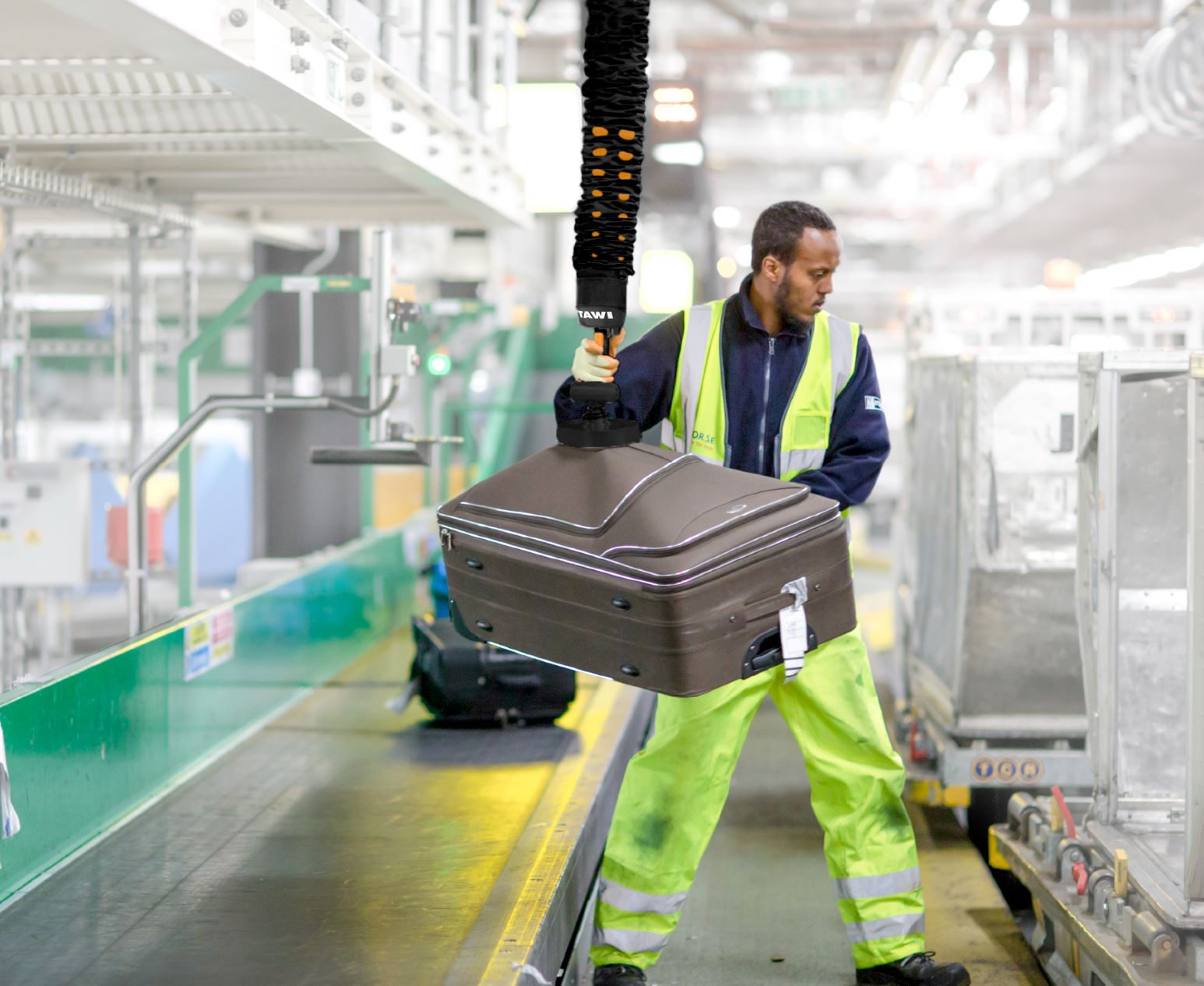
Baggage handling combines the four primary mechanical risk factors for low back disorders: heavy loads averaging 14.5kg–15kg (32lbs–33lbs), high handling frequency reaching five to ten bags per minute at peak throughput, sustained awkward postures in confined environments, and cumulative spinal loading that builds over every shift and every year of a handler’s career.
The biomechanical mechanism is well understood. Every manual lift generates a compressive force on the L4/L5 intervertebral disc — the junction between the lumbar spine and the sacrum, and the site of most occupational back disorders. This force is a function not just of the bag weight but of the horizontal reach distance from the handler’s spine to the load, the degree of trunk flexion and rotation, and the frequency of the task.
A handler who lifts a 23kg (50lb) bag from a table at a distance of 40cm (16in), with 20 degrees of trunk flexion, generates a spinal compressive force that NIOSH measured at up to 857lbs (389kg) in individual cases in CBRA screening operations — above the NIOSH 770lbs action limit (NIOSH EPHB 010-22a, 2014).
Frequency multiplies the risk. Individual moderate lifts are manageable. Repeated at the frequency required in make-up area and ramp operations — hundreds of lifts per shift — cumulative loading drives the chronic disc and soft-tissue pathology that eventually becomes career-ending injury.
What are the main types of back injury in baggage handling?
Acute muscle and ligament strain
The most common acute injury. A sudden uncontrolled loading event — a bag heavier than expected, a slip, an awkward posture at the point of maximum effort — causes muscle or ligament damage in the lumbar region. Recovery is typically measured in days to weeks for minor strains; months for significant tissue damage.
Intervertebral disc injury
Repeated compressive loading accelerates disc dehydration and can cause disc herniation — when the nucleus of the disc protrudes through the outer annular fibres and contacts a spinal nerve root. This produces the characteristic radiating leg pain of lumbar disc herniation. Surgery may be required in cases that do not resolve with conservative treatment.
Chronic low back pain
The long-term consequence of cumulative exposure without adequate engineering controls. Research tracking 3,092 handlers at Copenhagen Airport found that the risk of musculoskeletal symptoms in the lower back increased directly with years of service as a handler — consistent with chronic degenerative damage rather than isolated incidents (Bern et al., 2013, BMJ Open).
Who is most at risk in your operation?
Seniority is a significant risk predictor. The Copenhagen cohort study found elevated MSD symptom rates across six anatomical regions in handlers compared to a reference population — and the risk increased with every additional year of service. A handler’s injury risk is not solely a function of what they lift today; it is a function of everything they have lifted throughout their career. Your most experienced handlers carry the highest cumulative exposure.
Task type also predicts risk. CBRA screening handlers and make-up area handlers performing repetitive conveyor work face higher sustained exposure than handlers with more task variety. Handlers working in older terminal infrastructure — where working surface heights are not ergonomically designed and ceiling constraints prevent standard lifting aids — face higher risk than those in purpose-built screening areas.
Individual characteristics interact with task demands. Shorter handlers face greater horizontal reach distances for the same bag position. Handlers with prior back conditions are at elevated risk of re-injury. Handlers working through fatigue in the latter part of long shifts show measurable postural deterioration — trunk flexion increases, and technique consistency decreases as fatigue accumulates.
↗ Safe airport baggage handling — the challenge explained https://www.tawi.com/lifting-insights/the-challenge-of-safe-airport-baggage-handling
Why 55% of airline employee back injuries come from baggage handling
Dell’s research found that 55% of all airline employee back injuries are specifically attributable to baggage handling — not other ground support activities, vehicle operations or terminal tasks. The concentration of risk in the lifting task itself, rather than across all aviation ground activities, vehicle operations or terminal tasks, makes it both tractable and urgent to address through focused engineering controls.
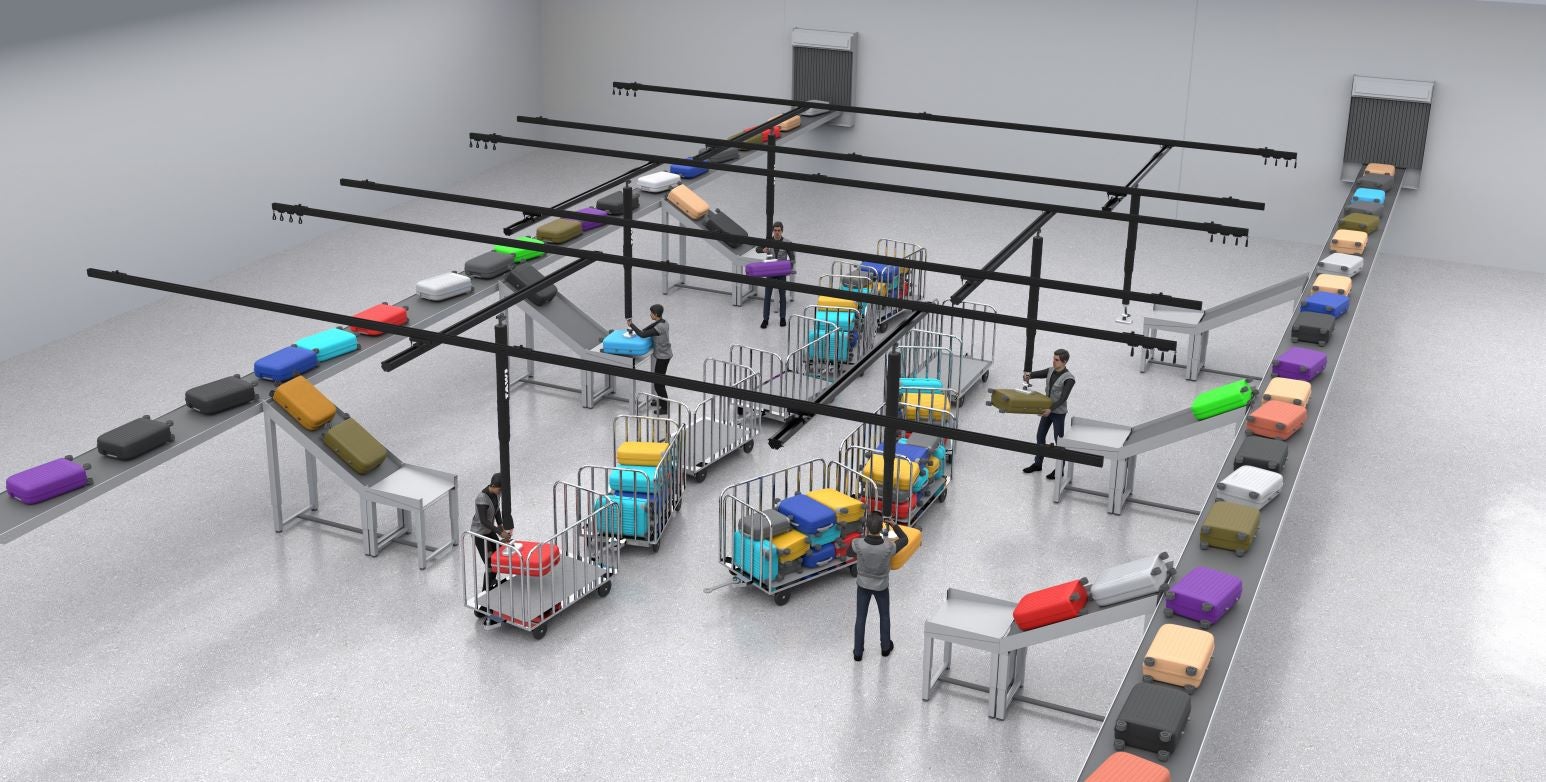
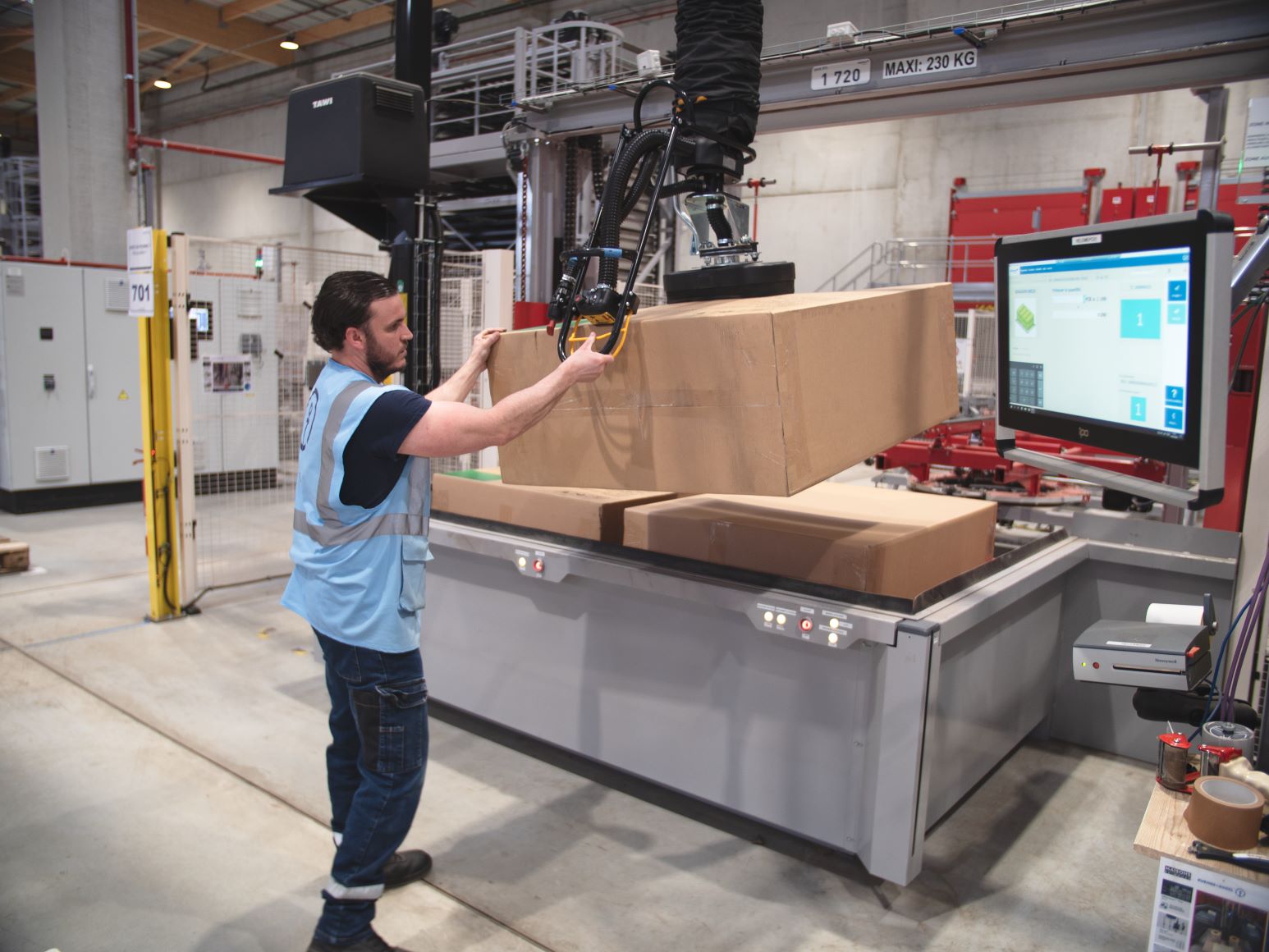
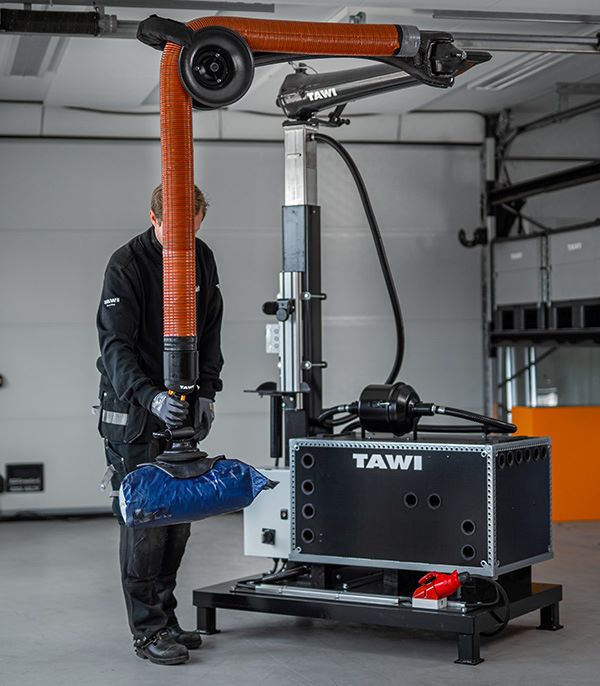
This concentration has an important operational implication. It means that a targeted engineering control programme for baggage-handling tasks — vacuum lifting systems in CBRA rooms, ramp AKE loading positions and high-frequency make-up area conveyor points — addresses more than half of all back injury events in the operation. You do not need to fix everything simultaneously. Fixing the places where baggage is manually lifted addresses most of the risk.
What are employers legally required to do?
In the US, OSHA’s General Duty Clause requires employers to provide a workplace free from recognised hazards likely to cause death or serious physical harm. Ergonomic hazards in baggage handling are explicitly recognised: OSHA publishes a Baggage Handling eTool that identifies risk factors and recommends engineering controls as the primary mitigation. An employer who documents high injury rates in manual baggage handling tasks and takes no engineering control measures is accumulating liability.
In the UK, the Manual Handling Operations Regulations 1992 (MHOR) require employers to, in order: avoid manual handling where reasonably practicable; assess the risk of any manual handling that cannot be avoided; and reduce the risk to the lowest reasonably practicable level. HSE guidance for the air transport sector specifically cites baggage handling as a priority area and recommends mechanical handling aids — vacuum lift systems and belt loaders — as the primary controls.
In EU member states, Council Directive 90/269/EEC sets minimum requirements for manual handling. Employers must take appropriate organisational measures or use mechanical means to avoid the need for manual handling of loads by workers, where this is not practicable, or reduce the risk. This is a compliance obligation, not a recommendation.
Across all three frameworks, the direction is consistent: engineering controls before administrative measures. Training in safe lifting technique, task rotation and rest scheduling all have a supporting role — but they cannot substitute for controls that physically reduce the forces acting on the handler’s spine.