
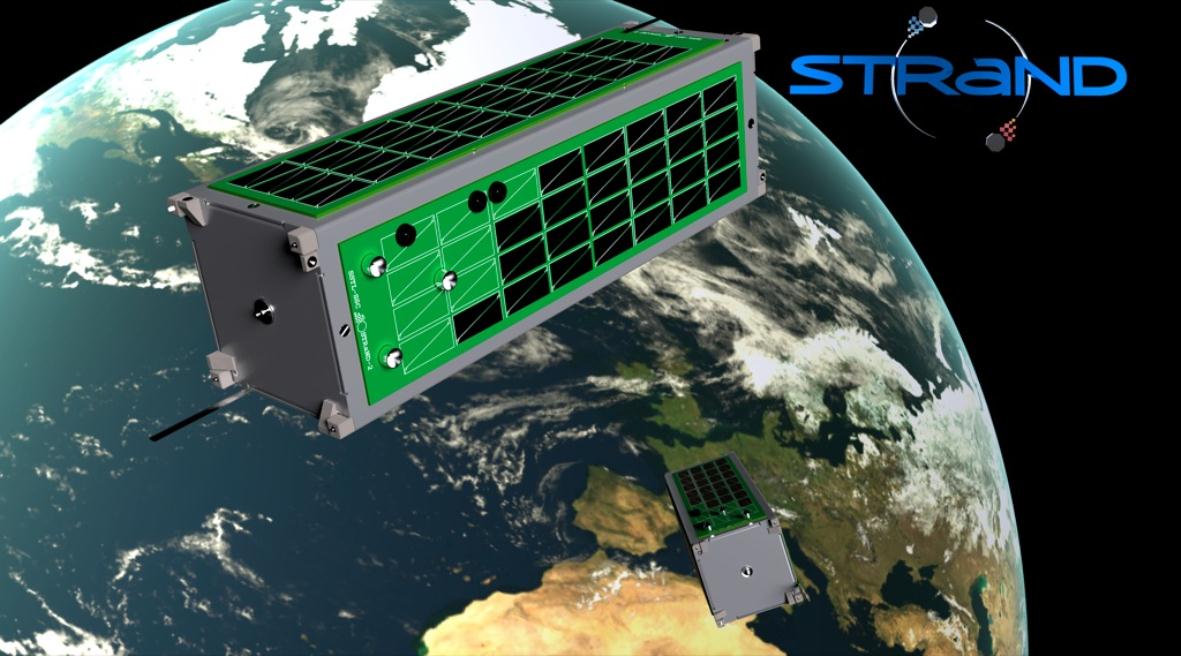
 Scientists at the University of Surrey and Surrey Satellite Technology (SSTL) are making use of the Xbox Kinect to develop a twin nanosatellite mission to perform in-orbit docking.
The mission is called Surrey Training, Research and Nanosatellite Demonstrator (STRaND-2); and according to SSTL, the new gaming technology is expected to change the way space assets are built, along with maintenance and decommissioning.

Discover B2B Marketing That Performs
Combine business intelligence and editorial excellence to reach engaged professionals across 36 leading media platforms.
Surrey Space Centre (SSC) project lead Chris Bridges acknowledged that the concept might seem far-fetched, but low-cost nanosatellites could dock to build large and sophisticated modular structures such as space telescopes.
"Unlike today’s big space missions, these could be reconfigured as mission objectives change, and upgraded in-orbit with the latest available technologies," he said.
After the completion of the initial phase of the system, both the satellites will be ordered to perform the docking process. Following the launch STRaND-2, equipped with two 30cm-long nanosatellites, will be separated and the Kinect-based docking system will provide the team with 3D spatial alertness to align and dock.
Designed for the Xbox 360 gaming console, Kinect is a webcam-based motion-sensing tool that allows users to operate it through their movements and without a physical controller.
The new mission follows the launch of STRaND-1, a nanosatellite equipped with a smartphone payload, which was sent into orbit earlier this year.
According to SSTL, docking systems are usually set aside for expensive space missions to the International Space Station (ISS) or the Mir space station and the Apollo programme.
The STRaND team said that the low-cost nanosatellites could be stacked and reconfigured, leading to the formation of larger modular spacecraft. The satellites could also be deployed to safely clean the space debris and spacecraft maintenance.
Image: The new Xbox Kinect technology is expected to allow both the nanosatellites to perform scans in the nearby area following their separation. Photo: courtesy of SSTL.


