

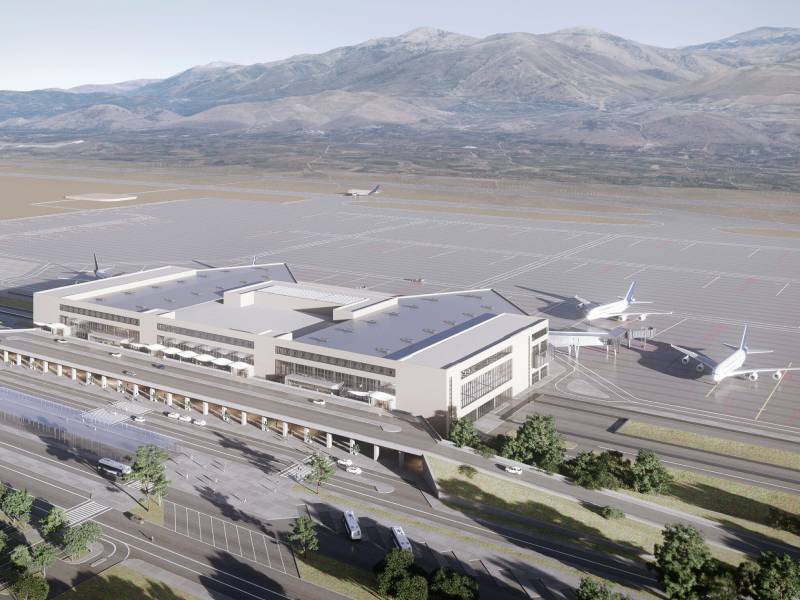
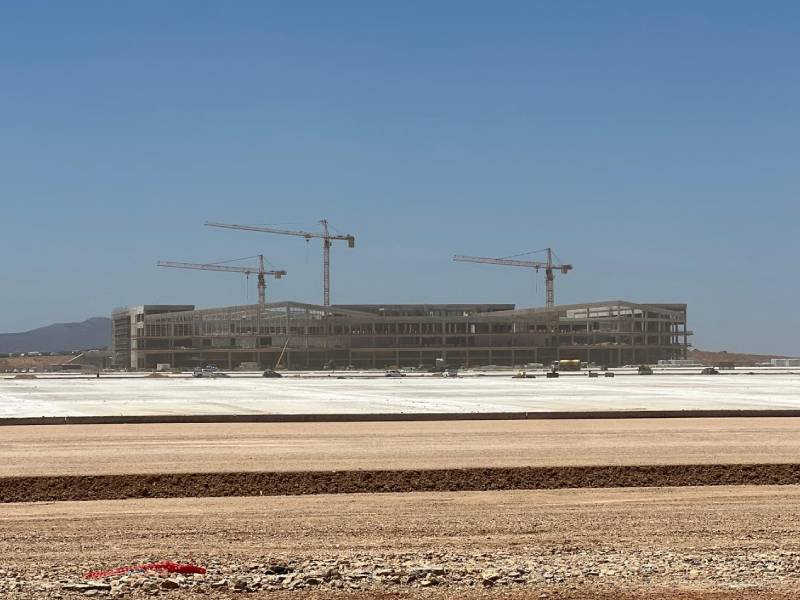
The New International Airport of Heraklion, Crete, also referred to as Heraklion International Airport, is a new international airport being built on the Island of Crete, Greece.
International Airport Heraklion Crete Concession (IAHCC), a special purpose entity established under a 35-year concession agreement, is responsible for the design, construction, financing, operation and maintenance of the new airport.
Recommended Buyers Guides

IAHCC is jointly owned by the Greek state (45.9%), Terna (32.46%), an infrastructure company based in Greece and a subsidiary of GEK Terna Group, and GMR Airports (21.64%). Terna will carry out the entire construction of the project.
The airport will replace the existing Nikos Kazantzakis International Airport in Heraklion, which has been operational since 1937.
The airport will have a capacity of approximately 15 million passengers per year. It is being developed with an estimated investment of €500m ($585m).
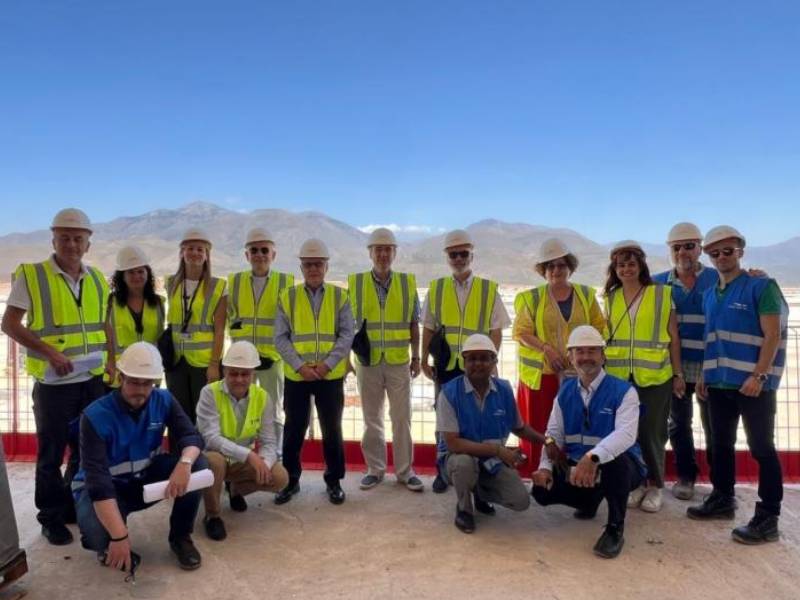
The foundation-laying ceremony of the project was held in February 2020, and the airport is scheduled to be operational in 2027. As of November 2025, the project is 60% complete.
The project is expected to create 2,000 jobs during the study and construction phase and up to 7,500 permanent jobs during operation.
Location of New Heraklion International Airport
The new international airport is being constructed on a 600-hectare site situated 360m above sea level in Kastelli village in the north-west of the city of Heraklion.
Located adjacent to Kasteli Hellenic Air Force Base, the new airport will be 35km away from the existing international airport.
New Heraklion International Airport details
The New International Airport of Heraklion will feature a primary runway that measures 3,200m and meets ICAO category 4E standards.
Alongside the runway, there will be a parallel taxiway of the same length and eight rapid exit taxiways. Crossfield taxiways will connect the main taxiway to the military runway.
The airport apron will provide 27 remote parking positions for aircraft, as well as facilities classified under ICAO category 5 + 1 for MARS type parking or 10 + 2 fixed contact stands classified as Category C.
The terminal building will consist of five levels and cover a total area of 93,000m². Approximately 13,000m² will be allocated for commercial activities, while around 1,000m² will be designated for permanent exhibition spaces.
Additional infrastructure will include a control tower, fire department, police station, airport maintenance facilities and ground service installations.
The project will also incorporate a 150kV power plant substation, water tanks, biofuels facilities, a fuel farm and an aircraft refuelling hydrant system.
A waste treatment plant will be included, along with car parking stations and related facilities.
The internal road network will feature a two-branch access road with four roundabouts, while a commercial use area will span 400,000m².
The airport replaces linear check-in counters with islands and includes three separate ramps to boarding bridges to enhance operational flexibility and support passenger distancing.
Sustainability features of the airport
Sustainable features include the pursuit of LEED certification, water recycling, reforestation, solar power generation, electric vehicle charging infrastructure and source-separated waste management.
Regional planning and stakeholder engagement are integrated into project development to align connectivity, mobility and public utilities with local needs and support community integration.
Financing for New Heraklion International Airport
The state government will provide €180m ($200m) for the construction of the airport. The project will also receive up to €220m ($260m) from the European Investment Bank (EIB).
In 2022, the Greek subsidiary of GMR Airports, GMR Airports Greece Single Member, issued a common secured bond loan with a total value of €60.5m ($69.2m), which was subscribed by the National Bank of Greece.
Contractors involved
The Greek Ministry of Development and Infrastructure, Transport and Networks, in co-operation with the Hellenic Civil Aviation Authority, selected engineering and consulting firm DENCO to develop the master plan for the new international airport.
DENCO collaborated with the Greek company CNWAY Engineering Consultants to conduct a study on the airport site in 2004.
Greek engineering company TEKEM provided consulting and preliminary design services for the project in 2009.
Spanish state-owned engineering company INECO, in collaboration with Fairbanks Arquitectos, designed the new airport.
INECO appointed Greek engineering company ADT Omega to deliver both the preliminary and detailed designs for external roads, the airport access road and the overall drainage system.
GKRINTZOS CWC was engaged to offer consultancy services during the design and construction phases of the project.
Hill International was selected as an independent engineer to provide project management, construction management and consulting services.
Dimark, a Polish airport logistics company, has been appointed to supply and integrate a complete baggage handling system for the new airport.
Penelis Consulting Engineers and Concept Consulting Engineers form the joint venture responsible for the structural design of all building works across the airport site.
Plastiki Group is the exclusive supplier of waterstops, and KEMETA will install the FK-5-1-12 fire suppression system for the project.
UK-based engineering company CCL has been engaged to prepare shop drawings for post-tensioned slabs, provide the post-tensioning system and supervise its installation.
Dynapac supplied Terna with construction equipment for the project, including highway pavers and compactors.
Smiths Detection has been chosen as the security technology provider for the airport.
ADB SAFEGATE will supply and install advanced airfield ground lighting systems, along with the SAFEDOCK visual docking guidance systems.
Johnson Controls, in collaboration with IFSAS, a specialist in integrating security and fire safety systems, will supply CCTV, access control and public address systems.
The Koutalidis law firm provided legal advice to GMR Airports on the common secured bond loan.
