
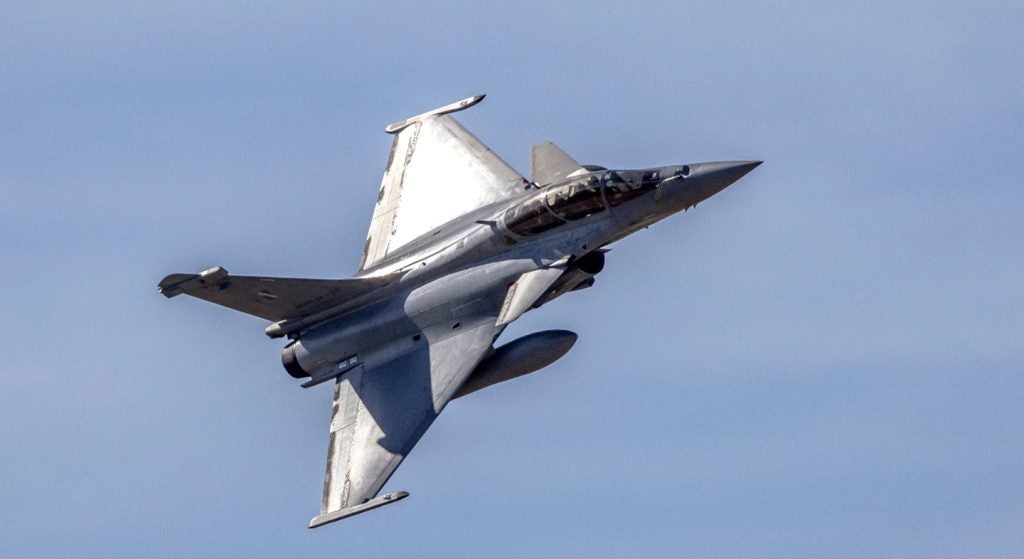
A couple of days after the European Union (EU) struck a deal to soften the blow of US tariffs, Éric Trappier, the chief executive of Dassault Aviation, France’s foremost aerospace manufacturer, a builder of fighter and business jets alike, welcomed the exemption of aircraft from the grasp of America’s protectionist policy.
What’s in the deal?
As an untouchable “strategic product”, the European Commission confirmed on 29 July 2025, that US tariffs on European aerospace products will go back to pre-January levels, unaffected by the 15% tariff baseline on all other competitive goods.
Although, it should be noted that this 15% tariff has been reduced from the initial 20% tariff touted during US president Donald Trump’s infamous White House Rose Garden policy unveiling in April.
“This will provide immediate tariff relief for key EU industries, while the EU and US agreed to keep working to add more products to this list,” Brussels explained.
Meanwhile, the White House boasts the new tariff regime will generate “tens of billions of dollars in revenue annually." This alludes to the EU pledge to buy up to $750bn of American liquified natural gas, oil, and unspecified nuclear products in the next three years, as well as a promise to invest at least $600bn in the US economy.
However, these conditions will be difficult to enforce according an expert at the Council on Foreign Relations in New York.
Anatomy of the French Rafale
Of course, the deal comes as a blessed relief to defence and aerospace suppliers such as Dassault, whose Rafale fighter jet, although largely indigenous, still relies upon certain US parts and components.
This includes HiRel Connectors and Collins Aerospace, an RTX company, who contribute components such as electrical and electronic connectors, pitot probes, and air data sensors.
Qatari Rafales also use the Lockheed Martin sniper advanced targeting pod, unlike the French variant, which opts for the European-made Thales TALIOS pod.
France has always prized its own defence industrial independence which demonstrates just how difficult it is to secure global supply chains in the aerospace industry. Still, due to its substantial efforts to that end, France is in a relatively strong position from which to cultivate its domestic defence production even further at a time of strategic autonomy in Europe.
Other countries are more dependent. For example, the UK has decided to lean closer to the US defence industry as the country looks to bring back its aerial nuclear capability with the purchase of F-35A fighter jets while British manufacturing sites for the Typhoon, a pan-European programme, are at risk of closing.
While European aircraft are safeguarded by the agreement, other European countries and industry suppliers will no doubt deride the condition that the EU must purchase more American weapon systems, contradicting their ambition for defence industrial sovereignty.