
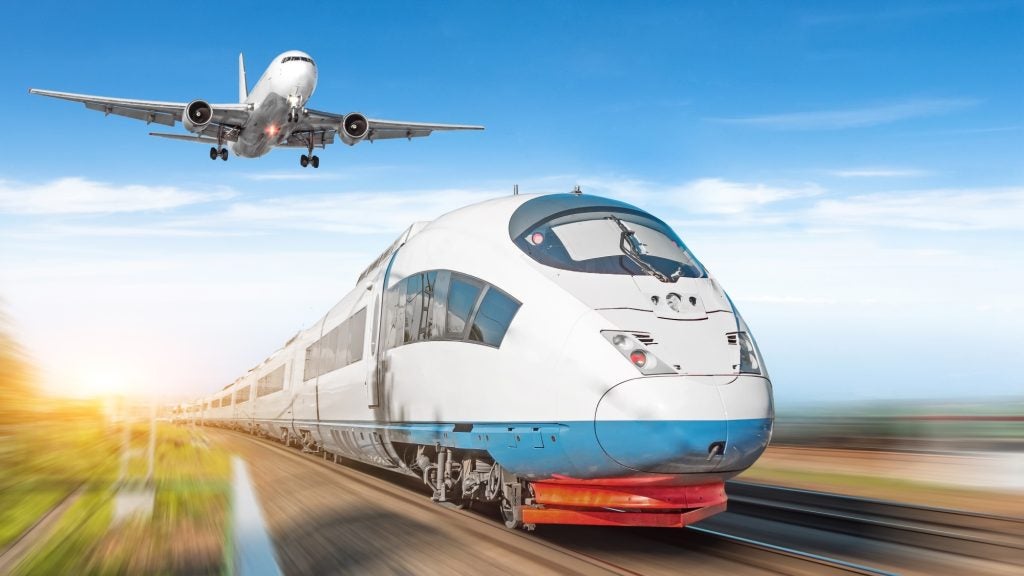
Global environmental pressure group Greenpeace has found “a slightly positive trend” in transport ticket pricing, but the difference between rail and air prices is still “distorted” in favour of cheap flights.
Flying Cheap, Paying Dear is the second investigation comparing the low price of budget air carriers with the equivalent train journeys across Europe. The group said the effect of cheap air travel is “creating a perverse incentive that encourages polluting air travel” over less polluting rail travel.
The 2025 version has examined 109 routes between 31 nations, which is slightly fewer than the 112 routes assessed in 2023, and 33 domestic routes. This year Greenpeace found a significant difference in cross-border journeys and internal journeys, with domestic routes much more likely to be cheaper by train. But overall, fewer than 50% of the journeys analysed were cheaper on the railways.
“While in 2023, only 27% of the 111 analysed routes were cheaper by train… this figure increased by 14 percentage points to 41%,” Greenpeace said. It explained that one reason behind this change was the drop in cheap connecting flights.
For example, in 2023 “the cheapest way to travel from Venice to Budapest was to take 2 Ryanair flights via London, and the cheapest way to travel from London to Brussels was to take 2 Ryanair flights via Dublin. In 2025, such high-emission connecting flights were far less commonly identified as the cheapest travel option.”
It also found that inflationary pressures have affected airfares more than rail fares in the past two years. That, along with some improvement in direct rail connections across Europe, meant some rail journeys effectively remained stable in price while the comparative air journey became more expensive.
But the biggest reason for the continuing gap is the tax exemptions given to airlines.
"While climate impacts like heatwaves, droughts and wildfires are causing devastation across the UK and the rest of Europe, the government should not reward the most polluting form of travel through subsidies and tax exemptions," said Greenpeace UK’s head of politics Ami McCarthy.
"If ministers are serious about tackling the climate and cost of living crises, they need to stop rewarding pollution, end tax breaks for aviation and make rail travel affordable. Train passengers should not have to pay a premium for choosing the greener option."
Geographic disparity
The gap between rail and air fares varied significantly from country to country, but there were some general trends across the continent. Much like in 2023, Western Europe was significantly weighted towards aviation, but in Eastern Europe, rail is far more affordable.
France, Italy, Spain and the UK had the largest gaps in 2023, and that’s the same in 2025.
“The most expensive country for cross-border rail travel compared to flights is France, where 95% of all routes were more expensive by train on at least 6 out of 9 days. For Spain, the figure is 92%; for the UK, 90%; and for Italy, 88%,” the report found.
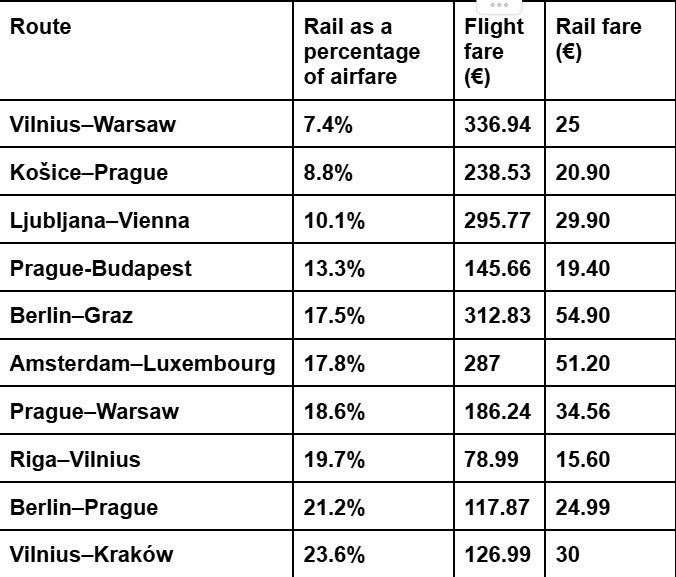
The Baltic nations (Estonia, Latvia and Lithuania) are the opposite, with trains always cheaper than flying. But it’s not just those nations that made Eastern Europe different from its Western neighbours. 89% of journeys in Poland were cheaper by train, and so were 80% of trips in Slovenia. Moving West, the German-speaking nations (Germany, Austria and Switzerland) were nearer parity, with around 50% of cross-border journeys more affordable by rail, but that often depended on the destination country.
While Greenpeace said it tried to look at a mix of domestic and international journeys for the countries it examined, this wasn’t always possible. This could be due to the size of some of the nations, where commercial internal flights aren’t viable, such as Belgium or Montenegro.
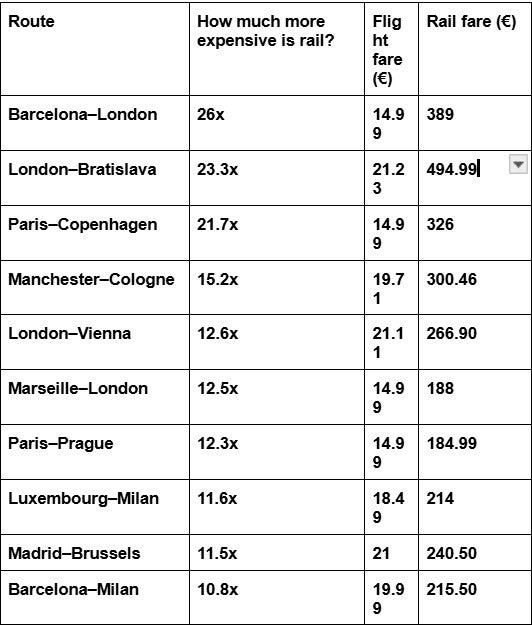
Biggest price differences
Cheapest trains vs flights
Why?
The reason for the disparity between what customers pay for air and rail services can be explained, according to Greenpeace, by the tax regimes across Europe.
“Airlines pay neither kerosene tax nor VAT on international flights, and benefit from subsidies funded by taxpayers… rail operators are subject to energy taxes, VAT and high track access charges in many countries,” its report said.
Herwig Schuster, transport campaigner at Greenpeace: “Even as the climate crisis worsens, Europe’s tax system continues to favour the most polluting way to travel. It is absurd that a flight from Barcelona to London can cost just €15 while the train on the same route is up to 26 times more expensive. Aviation enjoys unfair tax privileges, while train passengers are left to pay the price. These prices don’t reflect a functioning market – they reflect a rigged system.”
You can read the full Greenpeace report here.