

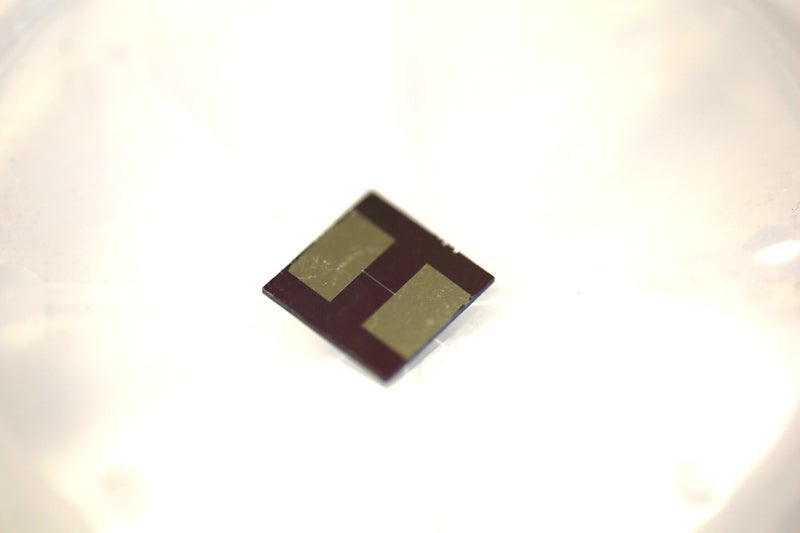
A team of researchers at Purdue University in the US has developed a new micropropulsion system that uses ultra-purified water as a propellant.
The new Film-Evaporation MEMS Tunable Array (FEMTA) thruster system features small nozzles that release precise bursts of water vapour to manoeuvre miniature satellites known as CubeSats.

Discover B2B Marketing That Performs
Combine business intelligence and editorial excellence to reach engaged professionals across 36 leading media platforms.
The thruster uses 10mm-diameter capillaries to harness the microscopic properties of water. Since the capillaries are small in size, the surface tension of the fluid keeps them from flowing out, even in the vacuum of space.
The new technology also ensures that small heaters near the ends of the capillaries are activated to create water vapour and thrust.
This process makes the capillaries function as valves that can be turned on and off by activating the heaters.
According to researchers, the FEMTA thruster is similar to an inkjet printer, which uses heaters to eject ink droplets.

US Tariffs are shifting - will you react or anticipate?
Don’t let policy changes catch you off guard. Stay proactive with real-time data and expert analysis.
By GlobalDataPurdue University school of aeronautics and astronautics professor and research lead Alina Alexeenko said: “Water is thought to be abundant on the Martian moon Phobos, making it potentially a huge gas station in space.
“Water is also a very clean propellant, reducing the risk of contamination of sensitive instruments by the backflow from thruster plumes.”
CubeSats are being increasingly used in various missions, ranging from high-resolution imaging and internet services to disaster response, environmental monitoring and military surveillance.
However, in order to achieve their full potential, the satellites will require micropropulsion devices to deliver precise low-thrust ‘impulse bits’ for their destined missions.
Image: This tiny engine is part of the new micropropulsion system. Photo: courtesy of Purdue University.


