
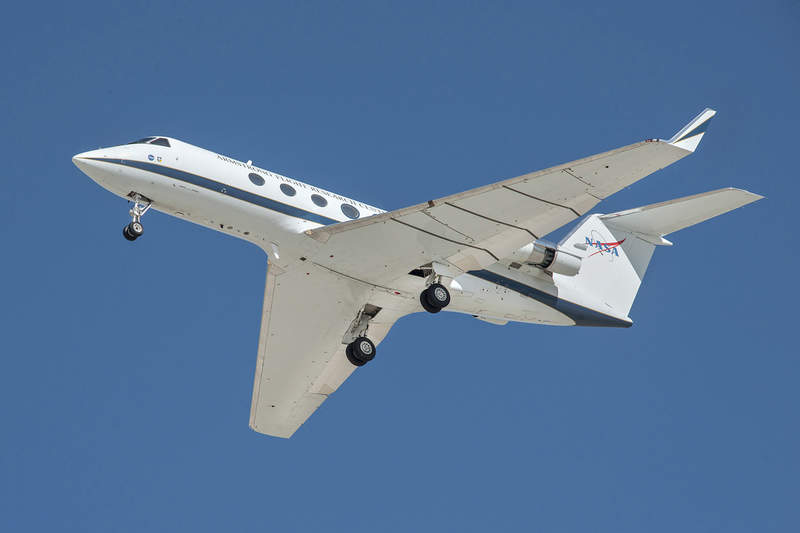
Nasa has tested three new noise reduction technologies on a series of Acoustic Research Measurement (ARM) flights in a bid to reduce aircraft noise.
Nasa combined three technologies, including landing gear noise reduction, landing gear cavity treatments, and the adaptive compliant trailing edge flexible wing flap, and successfully reduced airframe noise by more than 70%.
Go deeper with GlobalData


Discover B2B Marketing That Performs
Combine business intelligence and editorial excellence to reach engaged professionals across 36 leading media platforms.
Airframe noise is produced by wind rushing past the frame of the aircraft during landing and not by the engines. The reduction technology will help to reduce this noise for communities that live near airports.
The ARM flights were flown last month at Nasa’s Armstrong Flight Research Center in California, US.
Nasa Langley Research Center aerospace scientist Mehdi Khorrami said: “The number one public complaint the Federal Aviation Administration receives is about aircraft noise.
“Nasa’s goal here was to reduce aircraft noise substantially in order to improve the quality of life for communities near airports.”
During the test, three experimental designs were mounted on a Gulfstream III research aircraft, which was flown at an altitude of 350ft over an array of 185 microphones installed at the Rogers Dry Lake at Edwards Air Force Base.
Nasa used landing gear with many tiny holes that allowed air to pass through the fairing and also deflect some of the airflow around the landing gear for maximum noise reduction without increasing aerodynamic drag.
The agency used two concepts to deal with noise caused by landing gear cavities.
A series of chevrons were placed near the front of the cavity with sound-absorbing foam at the trailing wall, and a net that stretched across the opening of the main landing gear cavity. This mechanism changed the airflow and reduced the noise.
To reduce wing flap noise, Nasa used an experimental flexible flap. Built by FlexSys, the ACTE flap eliminated the gaps found in conventional wing flaps. Besides reducing noise, the new flap increased aerodynamic efficiency.



