
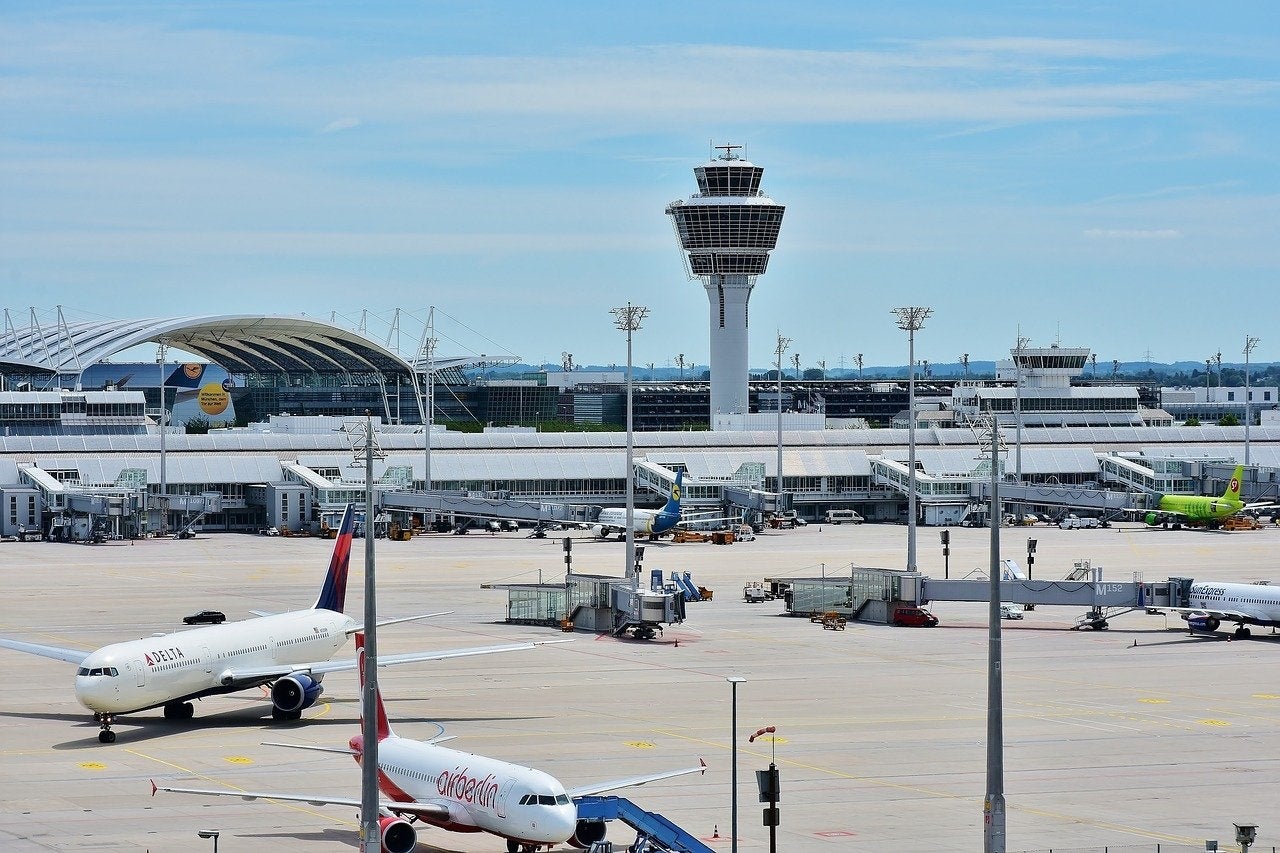
Munich Airport (MUC) in Germany has started using the all-electric de-icing vehicle named Elephant e-BETA.
The vehicle has been incorporated by the EFM de-icing and aircraft towing firm at the airport.

Discover B2B Marketing That Performs
Combine business intelligence and editorial excellence to reach engaged professionals across 36 leading media platforms.
Danish manufacturer Vestergaard has developed the new electrically operated de-icing unit, which features spray arms and nozzles run by electric motors, enabling it to de-ice the aircraft effectively and noiselessly.
Equipped with an OEM lithium-ion battery, the vehicle can de-ice around ten to 15 aircraft in about two to three hours of operation without a recharge.
Furthermore, the vehicle can be used flexibly with a conventional diesel engine.
However, the engine is turned off after the commencement of the process at the de-icing area.
The airport stated that the de-icing unit is currently being tested for sensitive aeroplanes.
In addition, Elephant e-BETA can also help reduce greenhouse gas emissions (GHG) compared to other conventional de-icing vehicles as it can avoid around 87% of CO₂ emissions.
Last month, aviation services specialist Menzies Aviation commenced the trial of Vestergaard Elephant e-BETA at Oslo Airport (OSL) in Norway.
The company claimed that this was the first time for such a trial in the EU and the second internationally on ground-handling sustainability.
If the trial is successful, around 97% of Menzies’ Oslo-based ground support equipment will be electrified.
Menzies Aviation operates 11 Vestergaard rigs as part of its de-icing fleet at the airport.


