
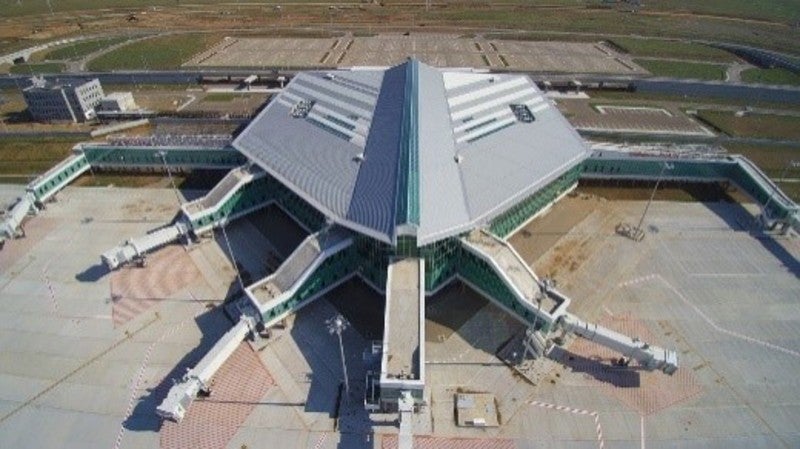
Mitsubishi is participating in new Ulaanbaatar International Airport (NUBIA) operation project in Mongolia.
The NUBIA joint venture (JV) has been established by Mitsubishi, Narita International Airport (NAA), Japan Airport Terminal Co, and Jalux.
Go deeper with GlobalData


Discover B2B Marketing That Performs
Combine business intelligence and editorial excellence to reach engaged professionals across 36 leading media platforms.
A 15-year concession agreement has been signed by the JV and the National Development Agency of Mongolia for the operation of the new airport, which will be situated about 50km south of Ulaanbaatar.
The new geographical location of the airport allows aircraft to take-off and land from both ends of the runway.
Mitsubishi said this is a drawback for the existing airport, where only one end of the runway is utilised and flight schedules are also impacted by weather conditions like wind direction.
After completion of pre-operation work and relocation from the existing airport, the new airport is anticipated to open in the first half of 2020.
The new airport is being seen as a symbol of bilateral cooperation between Japan and Mongolia. The Government of Japan has provided official development assistance to the project.
NUBIA will take advantage of the new airport’s capacity to introduce additional routes and flights, as well as increase airport revenues by developing in-terminal commercial facilities.
It is claimed to be the largest project ever between Mongolian and Japanese governments. Initial planning for the new airport was carried out in 2006 with Japanese support.
Mongolia is experiencing increased demand for air transport, with its capital Ulaanbaatar contributing the majority of the share.
The number of passengers using the existing airport reached 1.42 million in 2018, a 14% increase from 2017.
The new airport is designed with a capacity of up to three million passengers per annum, with enough space for a potential future expansion. It will also feature a 24-hour all-weather air traffic control system.



