
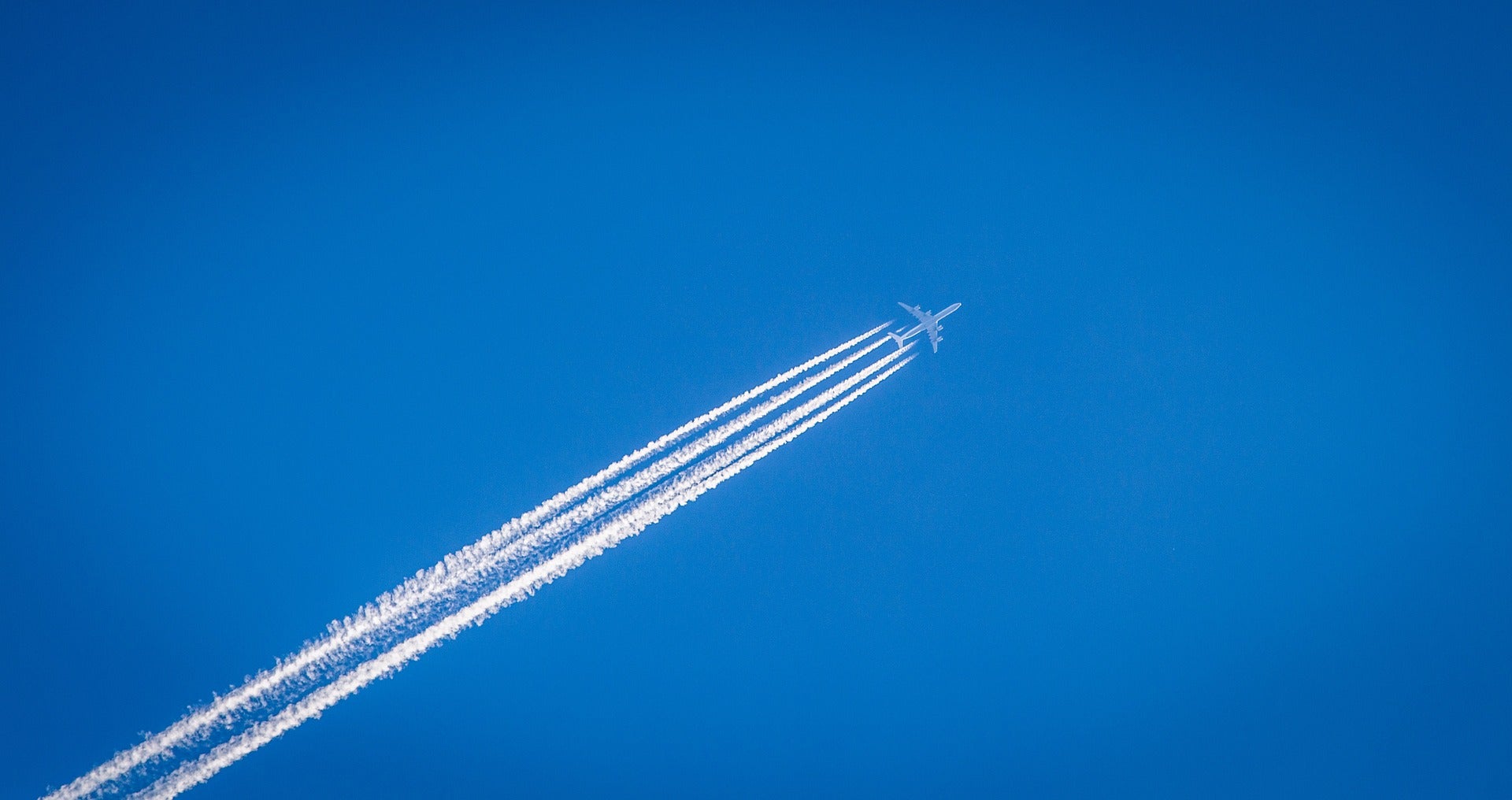
Carbon emissions per passenger have more than halved since 1990 thanks to improvements in fuel efficiency, a report from the International Air Transport Association (IATA) has found.
Annual fuel efficiency has improved by 2.3% since 2009, a decrease that is 0.8% ahead of target. According to the study, over the past ten years, airlines have pumped more than $1tn in new aircrafts and have signed forward purchase agreements for sustainable aviation fuel (SAF) estimated to be worth $6bn.
Go deeper with GlobalData

Discover B2B Marketing That Performs
Combine business intelligence and editorial excellence to reach engaged professionals across 36 leading media platforms.
Commenting on the report, IATA director general and CEO Alexandre de Juniac said the company has “even bigger ambitions” for the years to come. “From 2020, we will cap net emissions and by 2050 we will cut emissions to half 2005 levels,” he said. “Accomplishing these targets means continued investment in new technology, sustainable fuels, and operational improvements.”
In addition, IATA reiterated the importance of the Carbon Offsetting and Reduction Scheme for International Aviation (CORSIA) scheme to achieve carbon-neutral growth on international flights from 2020.
The scheme, which was developed by the International Civil Aviation Organization (ICAO) in October 2016, requires airlines to report their carbon emissions on an annual basis as of 1 January 2019.“The CORSIA scheme’s effectiveness lies in its global scope,” the report said.
IATA’s study also predicted that CORSIA will help reduce emissions by around 2.5 billion tonnes in due course and generate over $40bn in climate finance between 2021 and 2035.
However, the report warned that the global response to its implementation is being “compromised by governments introducing a patchwork of carbon taxes”.
IATA warned that “deliberately suppressing air travel through punitive passenger taxes is inefficient and largely ineffective at reducing carbon”, and therefore urged global governments to support the CORSIA scheme instead of increasing taxes.
The report further called out countries like France, Germany, the Netherlands and Switzerland as examples for introducing an air travel tax, with de Juniac urging the respective governments to “focus their efforts correctly”.
“Taxation aimed at stopping people from exercising their freedom to fly will make travel more expensive but do very little to reduce emissions,” he said.
“It is a politician’s feel-good solution, without taking responsibility for the negative impact it has on the economy or the mobility restrictions it imposes on people with lower incomes.
“Flying drives prosperity. It is not the enemy. Cutting carbon must be at the forefront. And government leadership is needed to incentivise the commercialisation of sustainable aviation fuels, drive efficiencies in air traffic management and support research into next-generation low-carbon energy sources.”
In the coming years, the report said that the only solution to carbon emissions lies in “cleaner technology”.
In addition, IATA suggested biofuels as a possible longer-term answer to making the sector more sustainable, and urged the EU to support sustainable aviation fuel (SAF) as part of its Green Deal.
“We want to be part of Europe’s building of a new energy economy and we will do everything we can to make sustainable aviation fuels a priority for aviation in Europe and around the world,” de Juniac said.



