
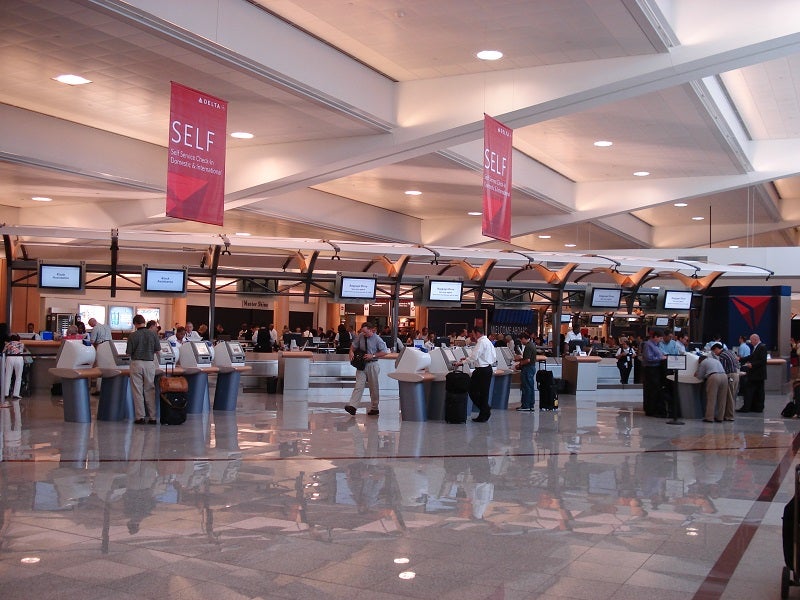
Hartsfield Jackson Atlanta International Airport (ATL) in the US has unveiled its first carbon policy, incorporating various green measures to reduce emissions.
The airport has committed to reaching the City of Atlanta’s 100% Clean and Renewable Energy by 2035 objective and the ACI Net Zero goal by 2050.
Go deeper with GlobalData


Discover B2B Marketing That Performs
Combine business intelligence and editorial excellence to reach engaged professionals across 36 leading media platforms.
Hartsfield-Jackson will disclose a blueprint to lower its contribution to climate change under its 2035 Sustainable Management Plan that will be published this year.
Scope 1 and 2 emissions will be controlled by enhancing the airport’s energy efficiency with the help of energy retrofits, timely maintenance and all-electric building systems.
Atlanta Mayor Andre Dickens said: “To effectively combat climate change, we must address this challenge in all facets of City government.
“The airport’s plan to achieve net-zero carbon emissions by 2050 is both ambitious and necessary. Accomplishing this goal will allow us to position the Airport as the world’s leader in passenger volume, efficiency, and sustainability.”
US Tariffs are shifting - will you react or anticipate?
Don’t let policy changes catch you off guard. Stay proactive with real-time data and expert analysis.
By GlobalDataATL general manager Balram ‘B’ Bheodari added: “ATL is committed to positioning the airport for the future. We have a responsibility to make sure we create a clean, sustainable environment for the generations that come after us. It won’t be easy, but nothing worth pursuing is ever easy. We look forward to this challenge.”
Furthermore, the airport will team up with Georgia Power using the arbnco platform.
This platform evaluates metred energy data and delivers recommendations on energy conservation measures, renewable energy and load-shedding prospects.
Through this programme, ATL will also assess its energy baseline, recognising opportunities for efficiency that will result from energy audits of its buildings.
The new infrastructure is purposed to meet a minimum of LEED Silver certification, along with a commitment to surpass the energy code.
For controlling its CO₂ emissions, ATL will establish a minimum efficiency standard, integrate advanced building systems and minimise construction-related emissions by raising vehicle and equipment standards.
The airport will introduce energy efficiency at its current buildings and spot opportunities for alternative energy by lowering its fossil fuel usage.
In 2019, Atlanta City Council in the US sanctioned legislation banning the city and contractors from using non-compostable single-use plastic items.
This ban was applicable to all terminals of ATL.



