
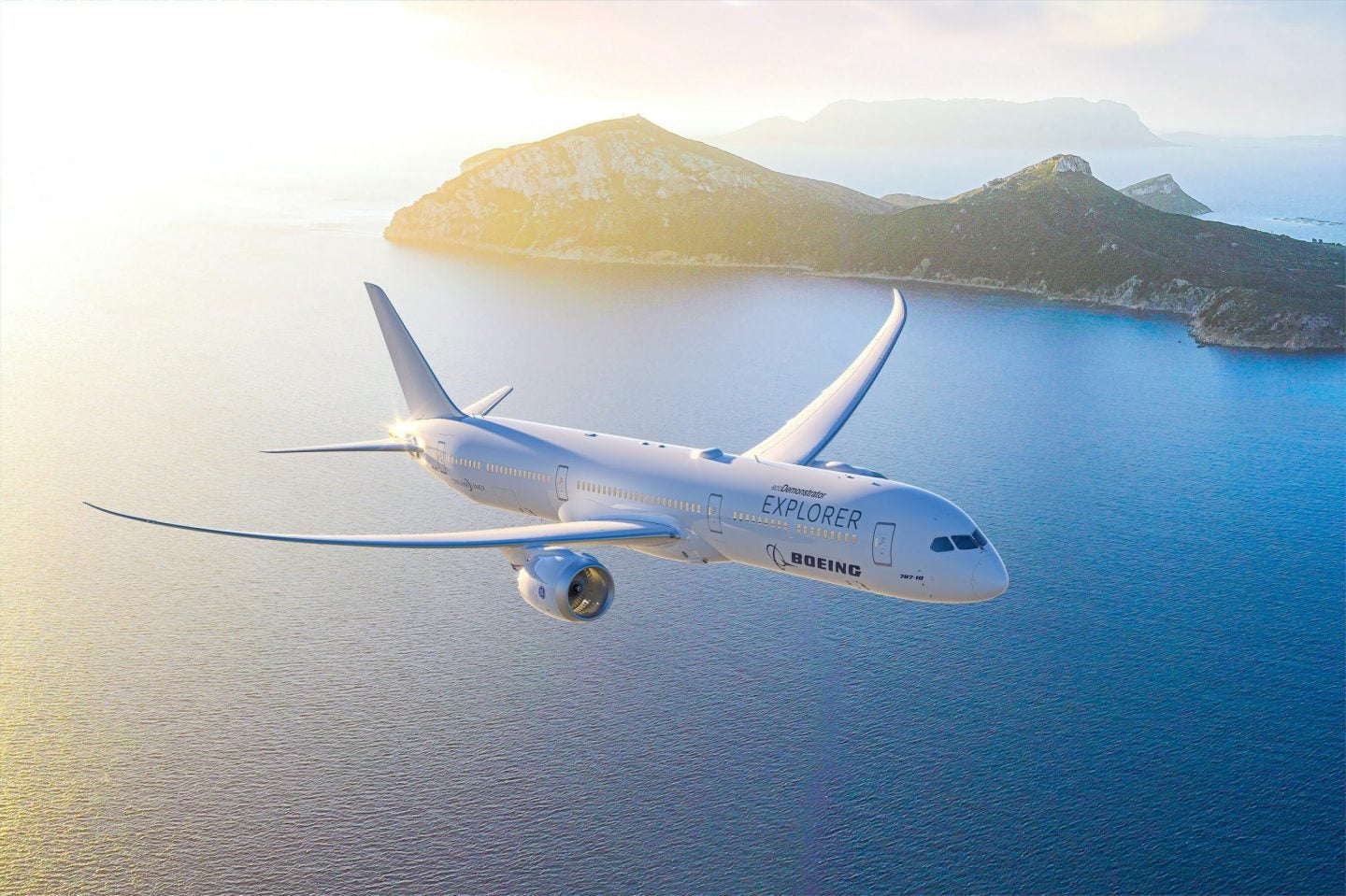
Boeing will expand its ecoDemonstrator flight-test programme with the use of “Explorer” aeroplanes to explore a range of new technologies.
The aerospace company will use the Boeing 777 ecoDemonstrator to assess 19 technologies in 2023 whilst utilising a range of Explorer planes to test specific ideas and innovations.
Go deeper with GlobalData


Discover B2B Marketing That Performs
Combine business intelligence and editorial excellence to reach engaged professionals across 36 leading media platforms.
Boeing Commercial Airplanes CEO and president Stan Deal claimed that exploring new technology with the programme will help the company to aid the aircraft industry’s goal of achieving net zero carbon emissions by 2050.
“We continue to invest in innovation that reduces fuel use, emissions and noise on our products and to partner with governments and industry to make progress on sustainability during each phase of flight.”
First launched in 2012, the ecoDemonstrator programme will have tested nearly 250 technologies by the end of the 2023 plan with about a third of those tested being progressed to the company’s wider products and services.
The first Explorer flight will see a 787-10 Dreamliner conducting fight tests in June to “demonstrate how coordinating navigation across global airspace jurisdictions can improve operational efficiency” and therefore reduce fuel use and emissions by up to 10%. The flights will be conducted between Seattle and Tokyo and Singapore and Bangkok.
US Tariffs are shifting - will you react or anticipate?
Don’t let policy changes catch you off guard. Stay proactive with real-time data and expert analysis.
By GlobalDataAlongside using the highest available blend of sustainable aviation fuel (SAF) at each airport it fuels at, Boeing’s flagship ecoDemonstrator 777-200ER craft will be testing 19 technologies including:
- Sustainable wall panels made of 40% recycled carbon fibre and 60% resin from a bio-based feedstock in the cargo hold.
- An electronic flight bag application featuring smart airport maps that can reduce operational costs and improve the safety of taxi operations with contextual airport data
- A fibre optic fuel quantity sensor that can be used with 100% sustainable aviation fuel (SAF)
SAF is seen by many as a key way of reducing the aviation industry’s high emissions with the International Air Transport Association predicting that the range of fuels could contribute 65% of the industry’s emissions reductions needed to reach net zero.
Boeing’s chief sustainability officer Chris Raymond said: “The industry will need continued fleet renewal, efficiency gains, renewable energy carriers such as sustainable aviation fuel and advanced technology to meet the civil aviation industry’s commitment to achieving net zero carbon emission by 2050.
“Our initial Explorer testing in partnership with aviation stakeholders in four countries is a great example of how we can work together to optimize operational efficiency and reduce emissions.”
Achieving net zero was the focus of an announcement by the Jet Zero council at the sustainable Skies World Summit recently where it outlined a two-year plan for aviation decarbonisation in the UK.



