
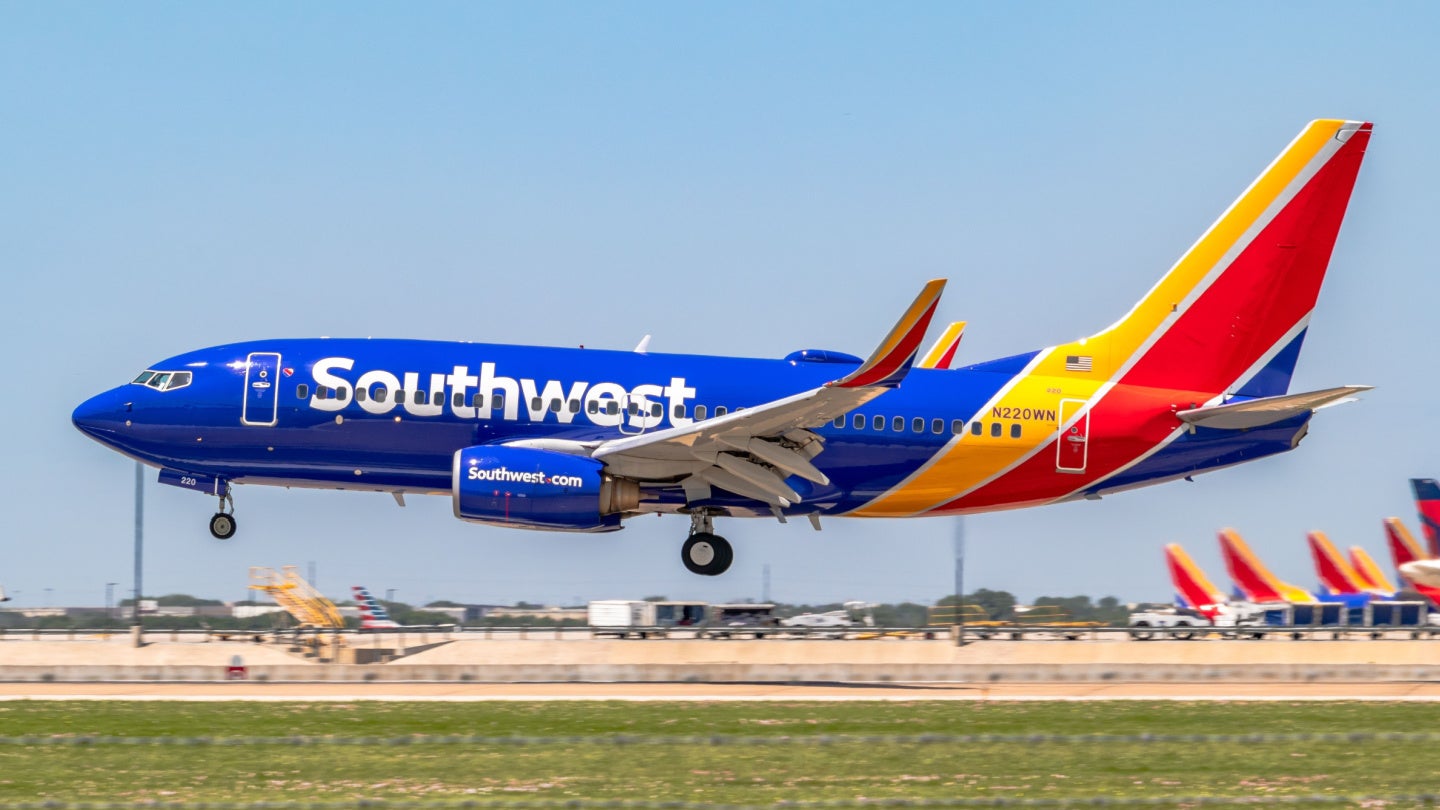
The first insights into the investigation of the near collision between a FedEx and a Southwest aircraft in Texas earlier this year have been released, with the air traffic controller in charge citing a slower than expected take off and dense fog during the close call.
Released by the National Transportation Safety Board (NTSB), the transcript of the investigators interviews with a number of participants have given an overview of some of the factors behind the close call, which saw the FedEx plane come within 30-45m (100-150ft) of the Southwest aircraft at Austin-Bergstrom Airport.
Go deeper with GlobalData

Discover B2B Marketing That Performs
Combine business intelligence and editorial excellence to reach engaged professionals across 36 leading media platforms.
Controller Damian Campbell told the NTSB that a lack of ground radar at the airport and “dense ground fog” meant that the ATC tower did not have any ground visibility on 4 February when the incident occurred.
Campbell told investigators that while he could see FedEx’s 767 Freighter as it approached the airport, he had no vision of the runway itself and could not see the Southwest 737’s progress after he had cleared it for take off.
Additionally, the controller, who has four years of experience at the airport, said that Southwest was the “most ready carrier”, saying “when they call ready, they are actually ready. They turn the corner and they churn and burn, they’re going,” leading him to believe there would be enough time between their takeoff and the FedEx plane’s landing.
However, the pilot on the cargo plane, Hugo Carvajal III, said he had been “perplexed” and “irritated” by the call to clear the 737 for takeoff when his aircraft was around 3 miles out of the runway but believed the plane “was going to be well down the runway” by the time he was landing.
Carvajal told NTSB investigators that it was his first officer who spotted the silhouette of the Southwest plane as they were coming into land, leading him to execute a go around before they were able to spot the plane’s position on the Traffic Collision Avoidance System once the 737 was airborne.
While the NTSB investigation is yet to publish its final findings, the transcripts and initial reports provide a greater look at the incident which was one of many that lead the Federal Aviation Administration (FAA) to invest $121m into preventing close calls on runways.
The FAA’s investment followed a safety summit in March of this year responding to a number of other close calls at US airport, with the New York Times reporting that near incidents involving commercial airlines were taking place several times a week.



