
Nasa is set to invest in 22 early-stage technology proposals put forward by various US-based institutes that can transform the future human and robotic exploration missions.
The selected concepts could also bring in new exploration capabilities and have the ability to improve current approaches to build and operate aerospace systems.

Discover B2B Marketing That Performs
Combine business intelligence and editorial excellence to reach engaged professionals across 36 leading media platforms.
The concepts were selected under this year's Nasa Innovative Advanced Concepts (NIAC) programme, the first phase of which includes 15 proposals. The second and final phase of the NIAC programme includes seven concepts.
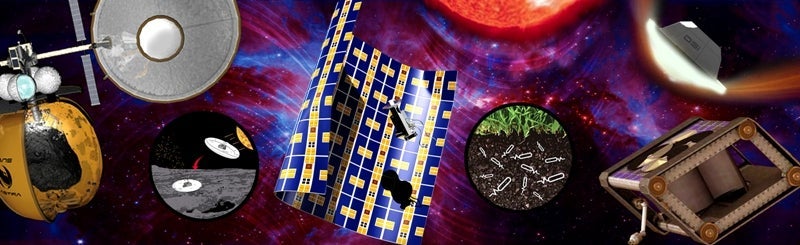
The proposals chosen under the first phase of the NIAC funding includes the development of soft robotic spacecraft with flexible surfaces that can anchor to an asteroid, an artificial gravity device for long-duration, deep space missions, and others.
A synthetic biology architecture concept to detoxify and enrich mars soil for agriculture from the University of California, Berkeley, and other deep space exploration concepts from the Nasa’s Jet Propulsion Laboratory (JPL), Langley Research Center and others are also covered in the funding.
A concept entitled Venus interior probe using in-situ power and propulsion from JPL, as well as a proposal to develop remote laser evaporative molecular absorption spectroscopy sensor system from California Polytechnic State University in San Luis Obispo and others were included in the second phase of the NIAC grant.
Nasa Space Technology Mission Directorate associate administrator Steve Jurczyk said: “The NIAC programme engages researchers and innovators in the scientific and engineering communities, including agency civil servants.
“The programme gives fellows the opportunity and funding to explore visionary aerospace concepts that we appraise and potentially fold into our early stage technology portfolio.”
In the first phase of the NIAC grant, around $125,000 will be given for nine months, while the second phase includes around $500,000 in funding for a two-year period.
Image: Montage of innovative concepts selected for 2017 NIAC Phase one and Phase one funding. Photo: courtesy of Nasa.


