

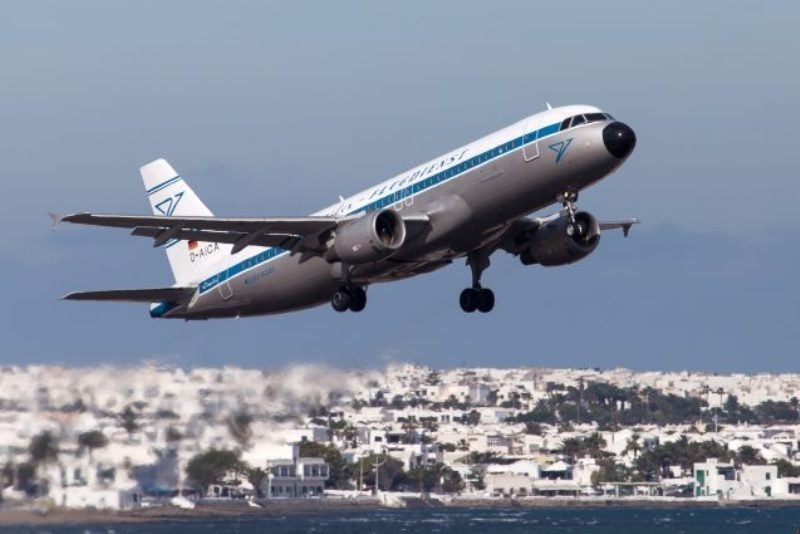
A new study conducted by a unit of Columbia University in the US has found that increasing temperatures due to global warming will make it more difficult for many aircraft to take-off over the next few decades.
The study also said that during the hottest parts of the day, between 10% and 30% of fully loaded aircraft may have to either postpone flights until cooler hours or offload fuel, cargo or passengers.

Discover B2B Marketing That Performs
Combine business intelligence and editorial excellence to reach engaged professionals across 36 leading media platforms.
The researchers have estimated that if the global emission rate continues to grow, fuel capacities and payload weights for some aircraft will have to be reduced by as much as 4% on the hottest days.
Lead study author Ethan Coffel said: “Our results suggest that weight restriction may impose a non-trivial cost on airline and impact aviation operations around the world.”
According to the study, average temperatures are expected to go up as much as another 3°C worldwide by 2100 because of climate change.
Heatwaves could also become more frequent and the annual maximum daily temperatures at airports will increase between 4°C and 8°C by 2080.
The study also noted that smaller regional jets will face a more difficult take-off as warm air is less dense, which makes the aircraft wings generate less lift.
Climate change has already affected some flights. Last month, American Airlines had to cancel more than 40 flights in the US, due to daytime highs of around 120°C.
Co-author of the study and Columbia University Lamont-Doherty Earth Observatory climatologist Radley Horton said that some effects of climate change could be mitigated with the adoption of the new engine or body designs, or expanded runways.
Image: A jet takes off from the Canary Islands, Spain. Photo: courtesy of Bruno Gelger via flickr.


