

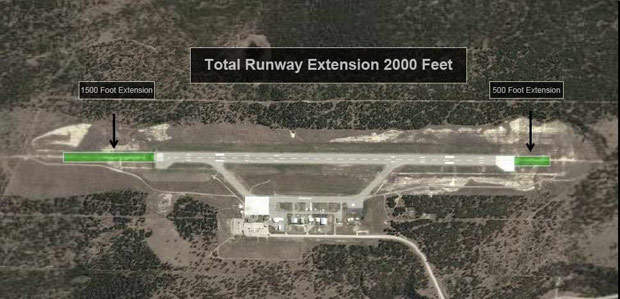
Cranbrook / Canadian Rockies International Airport is a small regional airport located 9.3km north of the city of Cranbrook and 20km south-east of Kimberley in British Columbia, Canada. The airport is owned and operated by the City of Cranbrook (who took over from Transport Canada) and YVRAS (YVR Airport Services). Cranbrook Airport Services has operated the airport since 1997.
The sole runway at the airport (16/34) is a 6,000ft long, 150ft-wide asphalt-paved runway. In 2004 the airport served around 81,000 passengers and had about 13,000 aircraft movements. In the same year the City of Cranbrook began the first two phases of a three-phase expansion of the airport.
Recommended White Papers

Recommended Buyers Guides

In April 2006 Federal funding of $4.5m was announced by the Canadian government and in November 2005 Western Economic Diversification agreed to fund 95% of a $130,000 international strategic marketing initiative to promote the airport in advance of the scheduled Spring 2007 completion date. There was some boost for the airport due to the 2010 Winter Olympics in Canada. The largest plane that can land in Cranbrook now is a Boeing 737. The extended runway could land the 757 and 767 series of Boeings and equivalent Airbuses that could bring passengers directly from Europe, Asia or the US.
Phases one and two
In phases one and two, Cranbrook Airport’s runway was extended by 2,000ft to 8,000ft and the terminal more than doubled in size, from 9,400ft² to about 22,000ft². The runway added 1,500ft to the north end and 500ft to the south end to facilitate direct flights from North America and limited European operations.
The construction costs were estimated at $14m and were financed by a partnership of Federal, provincial, regional and municipal governments.The first phases of the project were operational by early 2007 and accommodate non-stop flights from anywhere in North America. The expanded facilities are aimed primarily at the charter-flight tourist market. Passenger estimates forecast an additional 50,000 passengers in the airport’s fifth year of expanded operation and for 100,000 additional passengers by year nine.
Cranbrook Airport contractors
In October 2006 the runway project was completed by Associated Engineering with no delays or cancellations to scheduled air traffic as a result of the expansion programme and the runway was fully opened. The instrument landing system (ILS) commissioning was also completed by NavCanada.
Construction commenced on the new air terminal’s international arrivals area including Canada Border Services Agency’s new customs facility in May 2006.
The air terminal building contract was awarded to Tri City Contracting of Kamloops. The phase two runway paving and electrical contract was awarded to Interoute Construction of Crescent Valley.
In March 2006 the phase one earth works and utilities contract was awarded to Mackay Contracting of Cranbrook. McFarlane Green Architects were the architects responsible for the renovated terminal building design and the value engineering study.
Terminal building
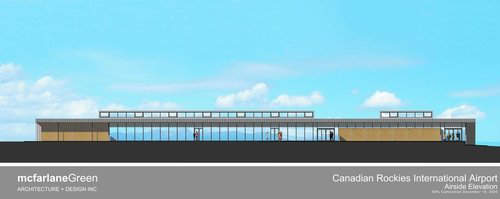
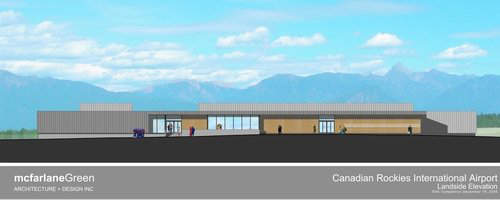
The new air terminal building covering 2,100m² was completed in 2008. The new international arrival was opened in October 2007 and the international departure in April 2008.
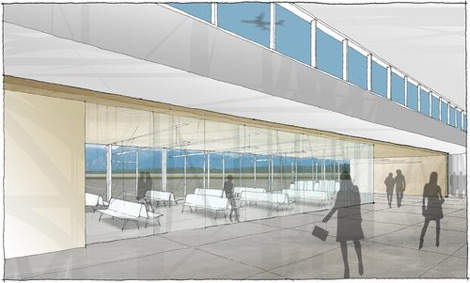
The state-of-the-art facility is constructed of mostly glass and wood to ensure the views of the Rocky Mountains from all areas of the facility.
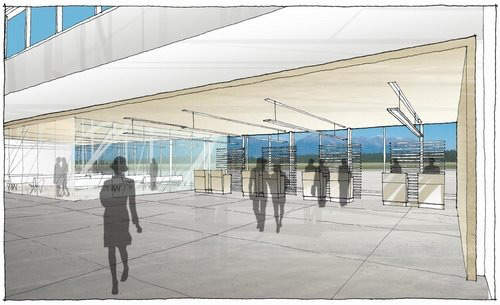
The arrivals area has been designed to handle international and domestic arrivals concurrently to ensure passengers complete a quick transition from airside, through customs to ground transportation in an efficiently manner.
The air terminal building includes Canada Border Services Agency (customs and immigrations with four CBSA agents that will be able to process and clear an Airbus in less than 45 minutes), outbound security hold bag screening (ICAO International Standards) and the hold room capacity in phase one will be 140 passengers.
