

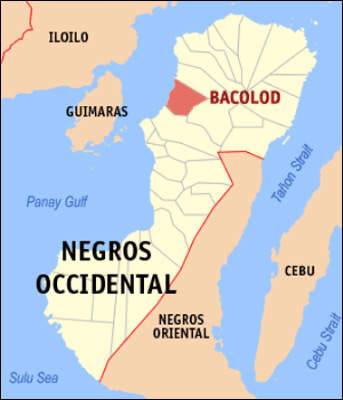
New Bacolod Airport, which opened on 18 January 2008, is a new domestic airport that was constructed from scratch on a 187ha greenfield site in Barangay, Bagtic, Silay City; located 24km north of the 72-year-old existing airport that it has now replaced – also called Bacolod Airport – in Bacolod City on Negros Island. The first commercial flight to arrive at the airport was Cebu Pacific Flight 5J 473 from Manila, an Airbus A319-100 which landed at 5:22am.
The airport was constructed as part of a major Philippine government transport infrastructure development plan covering air, road and sea transport.
Recommended Buyers Guides

The new Bacolod Airport is the first stage in the air transport infrastructure development strategy of the Department of Transport and Communications (DOTC) – air transportation office – to improve air transport and safety in compliance with international standards, and which includes a major contribution by private companies towards finance.
The airport is for domestic flights in an effort to trigger business and tourism for the central Philippines (Visayas) area; this area includes Negros Island, where the new airport is situated, and Cebu Island, a popular tourist destination.
The new 2km runway (03/21) is now expected to be extended by 500m in order that the airport can accept international flights as well in future operations (A340 and B747).
Construction work for the project started on schedule in August 2004 following the appointment of the major contractors in July 2004. The construction and outfitting contract for the new airport was worth an estimated ¥8.2bn (5.6bn Peso).
Much of the required finance for the airport project (77%) came from the Japan Bank for International Cooperation (JBIC) (24th Yen loan package) and the national government provided the rest (23%).
The construction was completed by July 2007, and the airport buildings were inaugurated, but operations were delayed by access roads not being finished and a debate over whether the runway should be extended prior to operations starting for safety reasons. The owners of the new airport are the government of the Philippines, Department of Transportation and Communications – air transportation office.
Department of transportation and communication strategy
In 1997, the Japanese International Cooperation Agency (JICA) conducted a study on selected airports’ master planning projects and set out the long-term development requirements of four trunk-line airports.
The new Bacolod Airport was among the four identified as key trunk-line airports. The three other airports in this category were in Iloilo (completed), Tacloban (in planning) and Legaspi (in planning). It was with these that JICA found the highest rate of growth of air passenger numbers and cargo volume.
In addition, the DOTC implemented the selected airports development project in the same year and recommended a medium-term development plan for the new Bacolod Airport within the framework of future longer-term plans.
The study (JICA) found the existing facilities of the old Bacolod Airport insufficient to accommodate even the 1997 volume of air traffic.
The passenger terminal buildings are owned by the airlines operating in the area, and this limited the possibility of other operators using the facilities. In addition, the area surrounding the existing airport has been densely urbanised so that to carry out any significant expansion plan would be difficult, time-consuming and costly.
Finally the study recommended that Bacolod Airport be relocated and a new site was identified in Negros Island, Bagtic, Silay City. The old airport is expected to be redeveloped for housing and light industrial use.
In February 1999, the Philippine government (through the DOTC) requested that Japan (through JICA) undertake the detailed design study of the selected airport development project. This study was funded by a grant by JICA of ¥430m and was completed in March 2000.
Upon completion, JICA commissioned Pacific Consultants International as project consultants to supervise the project and advise on the design. On 25 August 2003, the proposed new airport was put out to bid-tender and was awarded to the lowest complying bidder, Takenaka-Itochu joint venture (TI JV).
Contractors
The lowest tendered bid for the construction of the new airport was from TI JV, which was comprised of two Japanese engineering and construction companies – Takenaka Corporation and Itochu Corporation (Hanjin Construction were the subcontractors on the project). The project was started with preliminary works in August 2004, but by September 2004 full-scale construction work was underway.
The airport has a 2,000m runway and incorporates design specifications including an instrument landing system (ILS) that are on par with international standards. Part of the longer-term plans are now to complete the 500m runway extension, which is costing 285m Peso so that the airport can be allowed to carry out international operations. The runway extension began construction in January 2008 and will be completed by October 2008.
As previously mentioned, design and supervision was carried out by Pacific Consultants International (PCI), although detailed design of some of the air traffic control, lighting, meteorological and aviation fuel facilities were handled solely by TI JV.
TI JV was responsible for all construction works, including terminal buildings and facilities, special airport buildings and facilities (fire stations and airport services buildings), and all civil engineering work including construction and paving of the main runway and taxiway areas and terminal aprons.
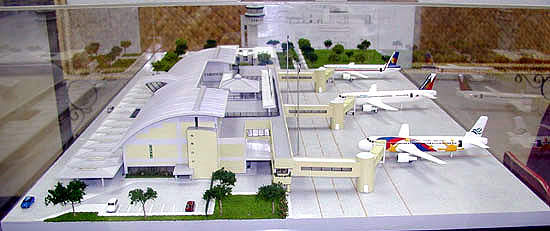
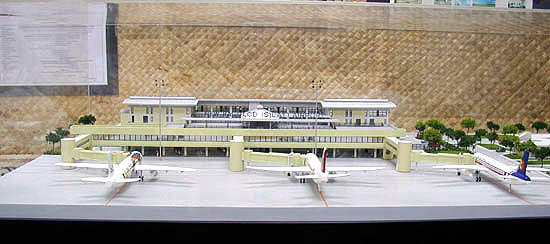
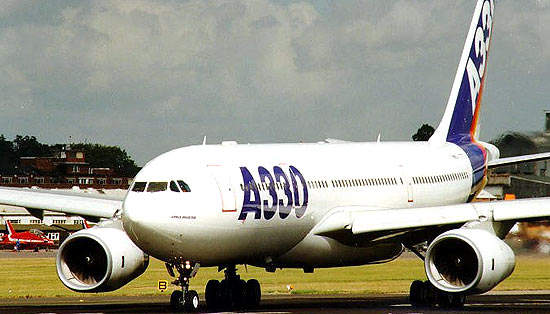
The terminal and other associated administration buildings were constructed of reinforced concrete (partly steel) structure. The terminal has three floors and incorporates three air-bridges designed to accommodate aircraft of a size up to and including the Boeing 737 and the Airbus 330. The ground floor houses the check-in areas the public concourse, the arrival area and the information counter, the second floor has three departure holding areas and administration offices and finally the third floor has a viewing deck, retail areas and airport plant areas.
The airport site actually includes 21 buildings with a total floor space of 10,075m² and the total site area including the runway and taxiways totals 187.2ha. The terminal building has an area of 6,187m² and also has parking space for 350 cars.
The McKinley access road to the airport (cost 68m Peso to construct) was completed (widened and new lighting installed) by November 2007 in readiness for the airport to open.
Following an earthquake in April 2008 in the Western Visayas the new terminal building has shown some superficial cracks which are now the subject of a report by Takenaka Corporation and will be repaired. The airport has remained fully open since the event.
New Bacolod future plans
The carriers that will initially use the new Bacolod Airport include Philippine Airlines, Air Philippines and Cebu Pacific Airways.
In addition, mixed passenger / cargo services are being provided by RG Air Charter Services, Gumayan Air Charter Services and Pacific Airways, while cargo-only service is provided by Aboitiz Air Transport.
The new airport, which officially began operations in January 2008 (the airport was thoroughly tested during flying operations conducted in October 2007), was designed to handle over one million passengers and 16,715t of cargo per year.
Security equipment such as X-ray equipment which was procured for the new airport was loaned to the old Bacolod airport and was then transferred back and installed at the new airport.
The Philippines government intends to promote a new growth centre for commerce and tourism – the San Carlos Corridor Development Plan – the objective of which is to develop a 45,000ha agro-industrial zone with an integrated satellite micro-city to serve as a gateway linking the capital cities of the Visayas region (San Carlos City, Bacolod, Cebu City and Dumaguete).
The new Bacolod Airport will play an active role in the new transportation infrastructure required for the success of this plan.
New access
In February 2008 the NEDA Board approved the construction of the New Bacolod Airport Access Road (Bacolod-Silay Road), which will help to reduce traffic congestion on the Bacolod Coastal Road.
The new 972m Peso road project proposed by the Department of Public Works and Highways (DPWH) will connect the airport in Silay City to Bacolod City. The two-lane road will have a total length of 10.12km and will be opened in 2011. It will then be widened into a four-lane road by the end of 2018. Construction is expected to start by the end of 2008.
