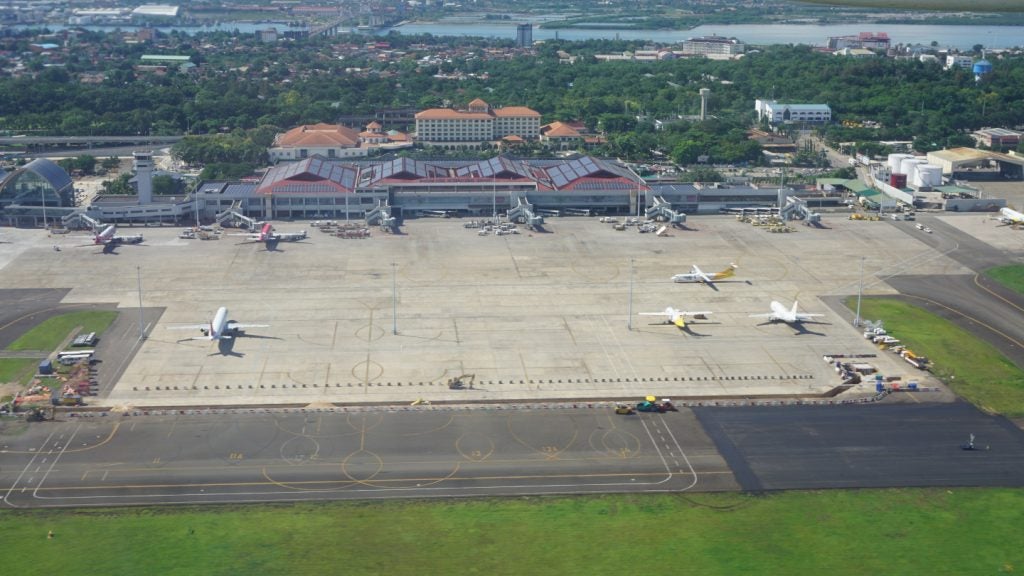


Netaji Subhash Chandra Bose (Kolkata) International Airport is a civil airport located in West Bengal, India, about 17km from the centre of Kolkata (formerly Calcutta), named in the honour of the Bengali Indian patriot Netaji Subhash Chandra Bose. The airport handled around 22 million passengers in 2019-2020.
The airport, which is one of the top ten airports in India, handling around 310 flights a day, has three terminal buildings, which include a domestic terminal that was opened in the early 1990s (three aerobridges, 23,000m² with 42 check-in desks), an international terminal (one aerobridge, 30,000m² with 27 check-in desks) and a cargo terminal (10,000m² with special facilities, two parking bays and 1,000t capacity).
Recommended White Papers

Recommended Buyers Guides

The existing international terminal and domestic terminal were integrated into a single passenger terminal with an area of 233,000m². The new integrated L-shaped terminal was inaugurated in January 2013. It has six levels and can handle 20 million passengers a year.
The airport is controlled and operated by the Airports Authority of India (AAI). AAI awarded a contract to Landrum & Brown to develop a 20-year master plan for enhancing the capacity and efficiency of the airport in September 2017.
Kolkata airport expansion
The airport saw the opening of a new Centre for Perishable Cargo (CPC) in September 2008. It is the first of its kind in West Bengal, India. The 742.5m² facility has a 12,000 million tonne annual storage capacity. It has been constructed with an aid of Rs67.5m ($1.5m) from the Agricultural and Processed Food Products Export Development Authority (APEDA). The CPC has been carrying out trial operations since June 2008.
In November 2008, an airport modernisation and renovation contract was awarded by Airports Authority of India (AAI) to Italian-Thai Development (ITD) Corporation and Sikka Associates. The project included construction of an integrated passenger terminal building to enhance capacity and passenger facilities at the airport. The new terminal was opened in 2013.
The terminal building consists of 128 common user terminal equipment (CUTE) check-in counters, 78 immigration counters, 12 customs counters, 18 aerobridges, 30 elevators, 18 escalators and 15 travelators. It is also equipped with 30 conveyor belts for baggage handling operations. There are two underground parking lots with 3,000 parking spaces, and an outdoor parking lot with 2,000 parking spaces. Additionally, the terminal also provides 57 remote parking bays.
The total cost of the project was estimated to be around $433.7m (Rs2,325Cr). The project also included construction of 11 parking bays and installation of ventilation, air-conditioning, illumination, power supply, electric cabling and fire-fighting systems.
In addition to the terminal expansion, the project involved extensions to runways, taxiways and parking bays, which were completed in 2013. The secondary runway was extended by 400m on the north side and by 308.4m (1,000ft) on the south side, where a new taxiway has been built.
New expansion plan at the Kolkata airport
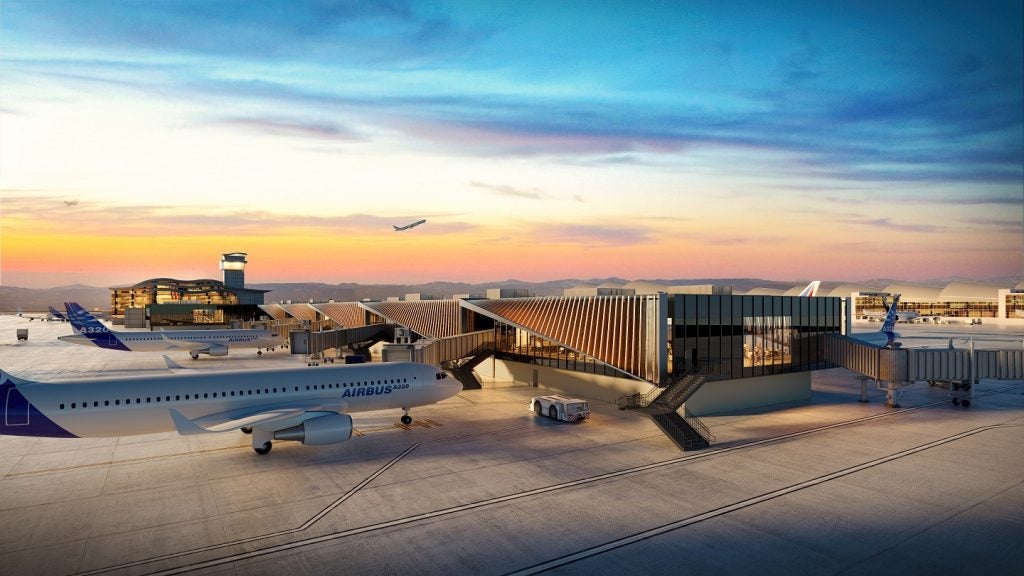
The new terminal is planned to be expanded and upgraded in two phases to increase its passenger capacity.
The phase one expansion includes demolition of the existing terminal, construction of a new 7,000m2 terminal and expansion of the existing runway.
The phase two involves demolition of the existing ATC tower and construction of an 86m ATC tower for a better view of the planes at the new terminal. The construction work on the 51.4m-high ATC tower and 33.2m-high ground plus five-level technical block started in July 2017.
The instrument landing system of the primary runway was planned to be upgraded to CAT-IIIb. The number of parking bays will be increased to 105 by 2024.
Kolkata airport runways
The airport has two parallel runways: 01R/19L (11,900ft, 3,627m) and 01L/19R (9,240ft, 2,800m). As the longer one of the two, 01R/19L is now used for take-offs and landings, and 01L/19R is used primarily as a taxiway.
The second runway 01L/19R was equipped with an instrument landing system (ILS) CAT-I facility.
The construction is underway on three ‘C’ category hangars and connecting apron with link taxiway on the eastern side of the main runway, with completion scheduled for January 2021. The extension of air side infrastructures, F taxi track and new apron bays is also underway.
Connectivity
The airport is planned to be connected to the city of Kolkata through two new Kolkata Metro lines, which are planned to be developed as part of the current Kolkata Metro expansion plans.
One of new lines will run from Noapara and the other from New Garia. As part of the Kolkata metro expansion, 24 elevated stations will be constructed on the rail line.
The 29.87km long Airport line of Kolkata Metro, called New Garia – Airport Metro Corridor (Line 6), will connect New Garia with Netaji Subash Chandra Bose International Airport through two satellite towns New Town and Salt Lake.
Kolkata construction contract
In April 2008, following a design competition, the Airports Authority of India appointed RMJM and Sikka Associates of Delhi to design the new integrated domestic terminal at Kolkata.
The first phase design shows a linear designed terminal building making full use of natural light and cooling systems (sustainable) and also incorporating features such as rainwater recycling for irrigation and the incorporation of existing trees and vegetation into the landscaped areas.
The terminal incorporates the writings of Rabindranath Tagore of Bengal (first Nobel Prize winner for literature in Asia) into the roof decoration (inside) and also into the forecourt landscaping.
The construction of the new terminal building began on 29 December 2008. Other contractors involved include NACO, Netherlands Airport Consultants, STRATA for landscape design and Benaim as the structural engineer. ADPI, in a joint venture with RMJM and other Indian based contractors, is acting as the consultant for the project.