

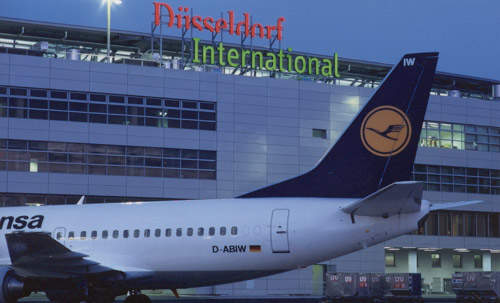
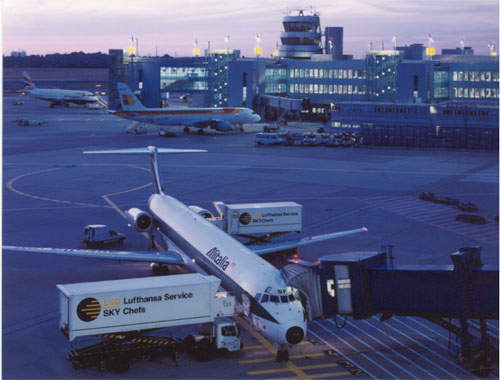

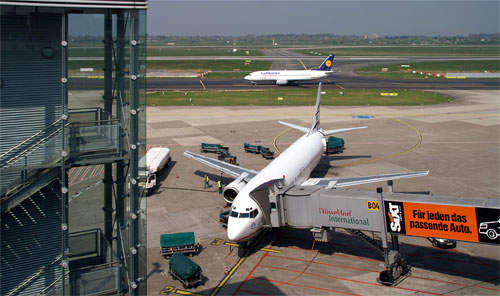

Düsseldorf Airport is the third biggest airport in Germany (after Frankfurt Main and München; above Hamburg), and the 14th largest in Europe, handling around 750 take-offs and landings each day. The airport has handled 17.8 million passengers in 2009. The aircraft movements during the year were 214,024 and the cargo passed through was 76,916t.
The modern development of the airport has been in the wake of a devastating and tragic fire. The fire on 12 April 1996 killed 16 people and injured over 100. It was caused by hot glowing particles from a welding operation, which dropped into a part of the building where PVC cables and insulation material immediately caught fire.
Recommended White Papers
Recommended Buyers Guides

The the city of Düsseldorf owns a 50% stake in Düsseldorf International, with the remaining 50% in the hands of Airport Partners GmbH (comprising 40% Hochtief AirPort GmbH, 20% Hochtief AirPort Capital KGaA and 40% Aer Rianta International, a Dublin Airport Authority subsidiary).
Düsseldorf airport
In early 1997, JSK Perkins & Will architects were appointed to design the new terminal, a competition-winning design chosen for ‘featuring the largest expansion potential, both air side and land side, to be implemented in several stages’.
The airport remained resolutely operational throughout the work. It continued to service 45,000 passengers daily throughout the first phase, which was completed in March 2001. Once the first phase was opened, the second phase of the new terminal commenced costing €38m for the expansion and improvement of concourse C.
In 2002 Düsseldorf International was listed in a top-ten comparison of German airports, judged the best and safest. A few months later, it was placed second as the ‘most improved airport’ in a worldwide survey by the International Air Transport Association (IATA).
In August 2002, the airport’s cargo arm, Düsseldorf Cargo GmbH, founded only the year before in a joint venture with D.Logistics AG, became a full subsidiary of Düsseldorf Airport GmbH.
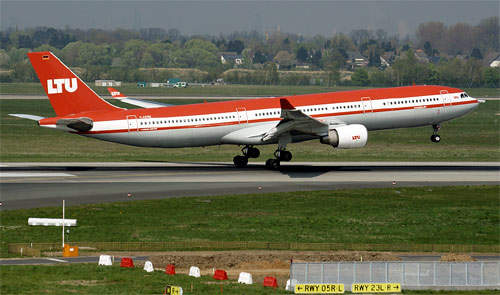
With the takeover of Düsseldorf-based LTU by Air Berlin in 2007, the Air Berlin group supplanted Lufthansa as the biggest operator at the airport.
Düsseldorf airport terminal construction
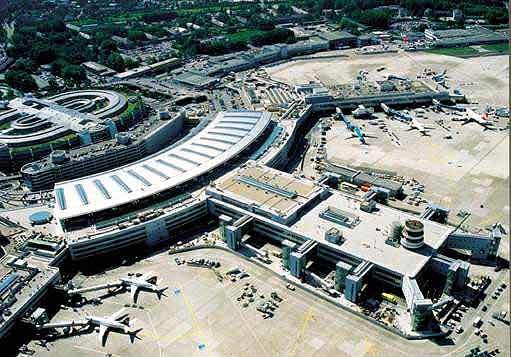
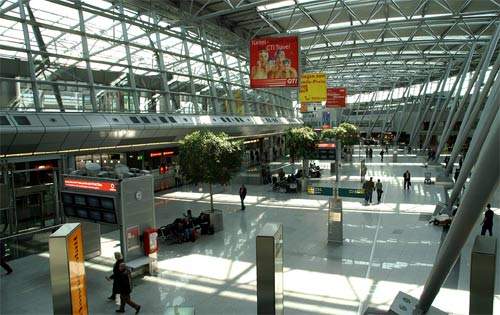
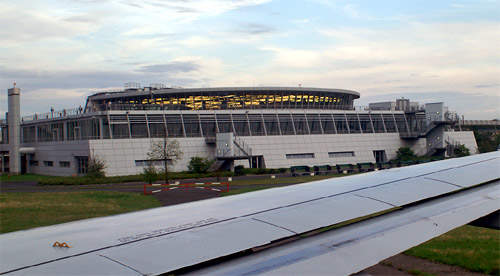
Construction began in March 1997 and the project was completed on schedule during summer 2002. An integrated complex, the terminal comprises piers A, B, C and the east hangar. The project involved the redesign of concourse A, the demolition and rebuilding of concourse B, the expansion and reconstruction of terminal B, the expansion of concourse C as well as the construction of an underground garage with 800 parking spaces and an access road.
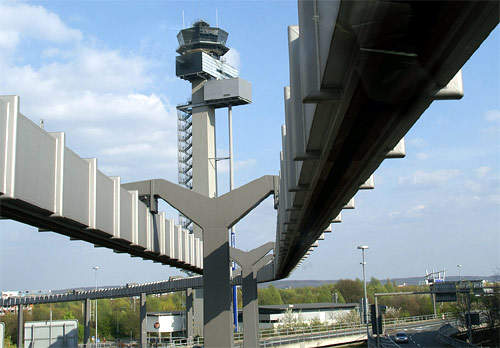
Airport passengers enjoy the convenience of two rail connections, one at either end of the site. Opened in 2000, Düsseldorf Flughafen station with ICE, IC, EC and regional services is at the eastern end. It is part of another terminal complex, which although it no longer offers check-in, is one end of the 2.5km ‘Skytrain’ (suspended railway) connection with the main terminal complex.
The airport promotes its viewing facilities (one above each terminal) for tourism and education.
The skytrain is integrated at a high level in the terminal complex with two stops (A/B and C), with another serving the central parking zones. For local travel and onward connections at Düsseldorf Hauptbahnhof, there is an S-Bahn station beneath the main terminal. Just over one-fifth of the airports passengers arrive / depart by public transport.
Airport redevelopment investment programme
The redevelopment project formed a major part of the 1998-2002 investment programme, worth a total of $780m. The first phase share of this was $408m. In order to tide the airport over while the new terminal was built, the 18,000m² three-storey terminal A was rebuilt at a cost of $54.4m and now includes state-of-the-art safety features such as 2,000 automatic fire alarms, 150 additional fire alarms, eight fire-reporting systems and six smoke-clearing systems.
Concourse A was completed in 1998. A purpose check-in area was completed and installed over the winter period of 2000/2001, and opened to the public in summer 2002. In July 2001, concourse B reopened. In 2006, the baggage handling system at the airport was optimised by the airport research centre to put in place future-proof operating procedures.
Contractors
The first phase of the project, costing €330m, was built by the consortium of German companies including Philip Holzmann, Hochtief and Bilfinger and Berger.
In 1998, Lufthansa Systems Berlin GmbH was awarded the contract to install air cargo handling systems. Lufthansa Systems installed its Elwis system, offering integrated management for handling export and import freight, supported electronic communications with airlines and forwarders, and enabled automatic customs clearance. Users can scan barcoded shipment information into the central system to speed up data processing enabling faster trans-shipment times.
As part of the second phase, Fläkt Woods provided nearly 50 JM Aerofoil car park fans for the main supply and extract of the car parking area. Emseal provided flooring for the new terminal.
Landesbank Baden-Württemberg closed a $590m financing project to part fund the $780m redevelopment. Banks and institutions committing to the 20-year amortising term loan include KfW as co-arranger and Landesbank Berlin Girozentrale and Landesbank Hessen-Thüringen Girozentrale as lead managers.
Düsseldorf airport terminal features
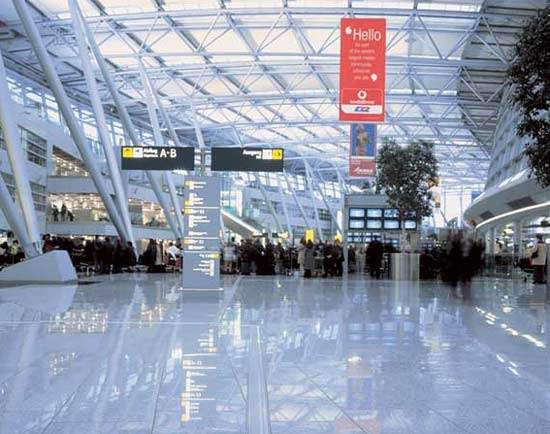
The terminal is equipped with a conference centre measuring 2,600m². There are 24 conference rooms, which can accommodate a total of 250 people. The terminal also features banks, information desks, internet, laundry, meeting point, observation deck and pharmacy. The terminal also has hotels, lounges and duty-free shops.
Airport parking facilities
The airport features multi storey and underground parking spaces for a total of 20,000 vehicles. Both free and paid parking spaces are available.
Future Düsseldorf airport plans
Unlike many of its European counterparts, Düsseldorf International is operating within its current design capacity and has excellent connecting infrastructure in place. Competition in the region is mainly from Köln-Bonn, resurgent with new direct rail links and the expansion of low cost operations.
At the eastern end of the Ruhr, the very modern Dortmund is also developing as a low cost hub. The owning company’s secondary airport, at nearby Mönchengladbach, no longer hosts scheduled carriers.
On a 230,000m² site at the south-western end, the Düsseldorf Airport City business park project is under development, which will create mixed office space, retailing, research, hotel and conference facilities.
The first phase of the project, which involved the construction on one-third of the total area, has already been completed and the complete site is anticipated to be sold to investors by 2016. Düsseldorf International will be available as a diversionary airport for Frankfurt Main for the Airbus A380.
