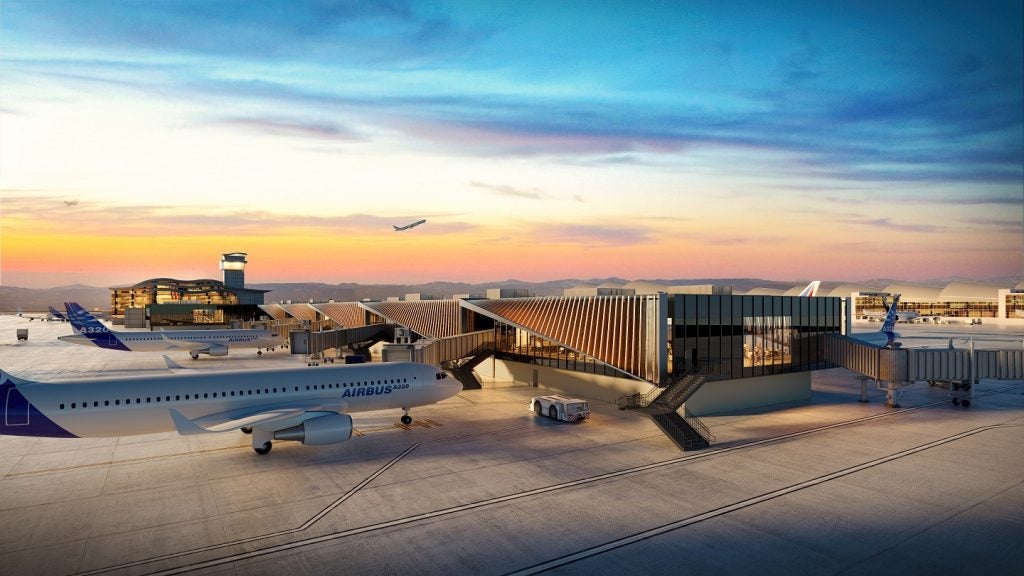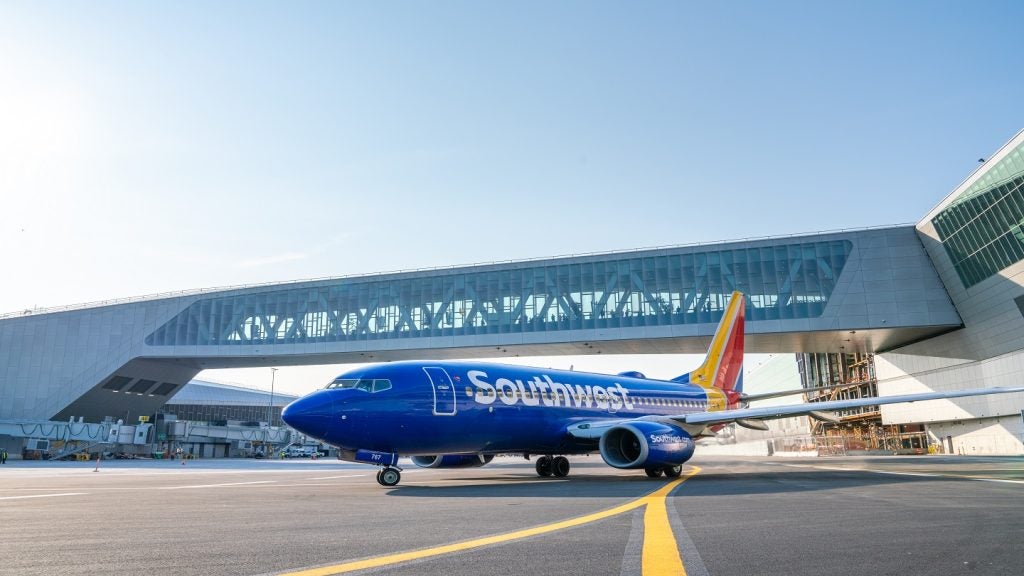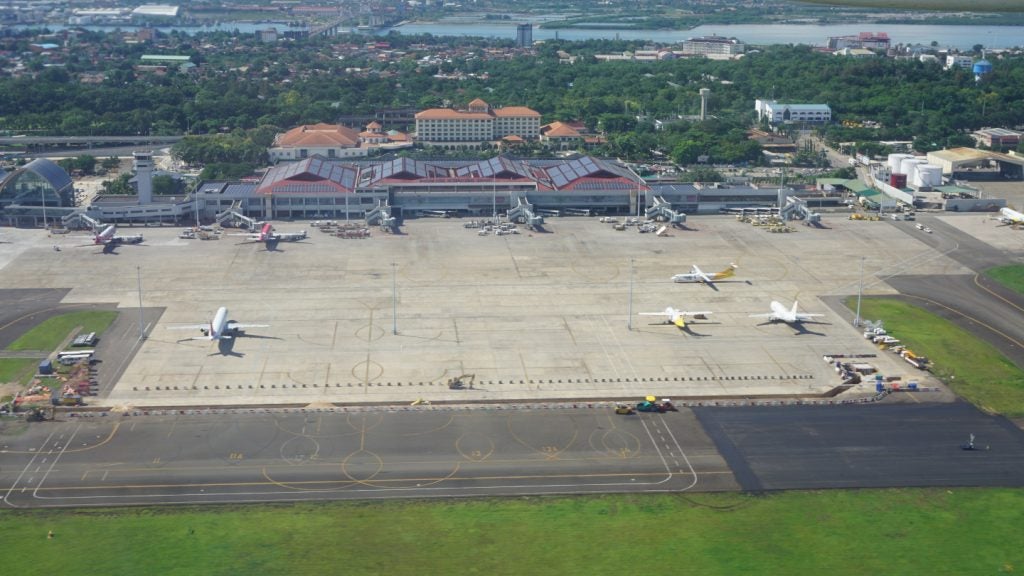


King Khaled International Airport is located 35km north of Saudi Arabia’s capital city Riyadh. It was designed by the US-based architecture-engineering firm Hellmuth, Obata and Kassabaum (HOK).
The airport is currently operated by Riyadh Airports Company (RAC), which was established as part of the privatisation programme of the aviation sector in Saudi Arabia in 2016. International airport management company Fraport previously operated the airport under a six-year contract from 2008 to 2014.
Recommended White Papers
Recommended Buyers Guides
When the airport opened in 1983, it became the largest in the world in terms of ground area, originally covering 225km², only to be surpassed in 1999 by another Saudi Arabian airport, Dammam’s King Fahd International.
With a total of five terminals, 40 passenger boarding bridges, one of the world’s tallest air control towers, a mosque and two parallel 4,205m-long runways, King Khaled Airport serves as the gateway to Saudi Arabia’s largest city.
Terminal 5 (T5) was inaugurated in 2016 to handle more than 12 million passengers per year. Riyadh Airports Company launched an advanced airport operations control centre at the airport in July 2022, followed by the opening of the newly refurbished Terminal 3 (T3) in November 2022.
King Khaled International Airport expansion project
The joint venture (JV) of Hochtief, Shapoorji Pallonji Mideast and Nahdat Al Emaar was selected as the technical and commercial lead of the expansion project in June 2015. The $1.45bn contract included the redesign, upgrades, and expansion of Terminals 3 and 4, as well as the demolition and refurbishment of the other airport infrastructure.
The project was a part of the Riyadh Development Projects and included 22 travel gates and 95 check-in counters. It also included 30 counters for departure and 48 counters for passport control.
The expansion was part of a larger $4.4bn development and expansion programme by the Kingdom of Saudi Arabia’s General Authority of Civil Aviation (GACA).
Design of King Khaled International Airport
King Khaled Airport is designed with all five terminals within one main building, which are connected to each other by walkways.
Each of the triangular-shaped terminals has eight gates, which all have air bridges installed to facilitate transfers between the terminal buildings and waiting aircraft. The triangular base of each terminal measures 47,500m².
King Khaled International Airport has witnessed a steady increase in passengers during the last three decades. In 1998, it handled more than eight million passengers and had 60,000 aircraft movements.
By 2003, this figure had almost doubled to more than 14 million passengers and 124,516 aircraft movements. The airport handled 18.58 million passengers and had 160,000 aircraft movements in 2013.
By 2023, this figure further increased to more than 28.5 million passengers and 217,000 aircraft movements.
Terminals of King Khaled Airport
Four of King Khaled’s five terminals are currently used for international flights while one is for domestic routes. As many as 58 international and domestic airlines operate at the airport.
Terminal 1 (T1) is used for international flights by a number of major airlines, except those operated by Air France, Saudia and Nas Air, and Middle East Airlines.
Terminal 2 (T2) is used for international flights operated by Air France, Saudia, Nas Air and Middle East airlines.
T3 is used for international flights by airlines, including Flynas, Flyadeal and Sky Team, with Terminal 4 (T4) predominantly used for international flights by Saudia.
T5 is used for domestic flights and links with five different destinations in Saudi Arabia.
The terminal complex also includes restaurants, airline offices, government departments, hotels, banks commercial shops and a modern VIP terminal. Heads of state or other high-ranking VIP visitors are greeted in the Royal Pavilion, which features fountains, garden areas and a 12.5m-wide ceremonial hall.
Riyadh Airports launched a new private aviation terminal at the airport in December 2018, which occupies an area of 2,617m² and has doubled the apron area to accommodate more aircraft.
The first phase of the development projects for indoor parking at T5 was completed in October 2019. The airport currently provides parking space for more than 11,600 cars.
Riyadh Airports inaugurated the Model Cargo Village in the support area at the airport in January 2020, which handles 600,000tpa of cargo.
Distinctive features at King Khaled Airport
King Khaled Airport possesses one of the world’s tallest air control traffic towers. Standing 81m tall, the tower has 19 separate storeys, including an operations area on its base level that has a total of 1,230m² of floor space.
One of the airport’s most defining features is a mosque located in the centre of the passenger terminal. Capable of accommodating 5,000 worshippers inside and another 5,000 in its outside plaza, the mosque has a dome measuring 33m in diameter and several 44m-tall towers.
Also notable is the airport’s 500,000m² of landscaping, which includes more than 225,000 trees, vines, shrubs and ground cover plants. All the plants selected for the site are tolerant to the region’s arid climate.
Future developments at King Khaled International Airport
In August 2008, the GACA signed a consultancy contract with Dutch airport consultancy company Netherlands Airports Consultants BV (NACO), which has been present in the region for more than 40 years.
NACO was employed to help determine the technical and strategic guidelines for future improvements at both King Khaled Airport and King Fahd International Airport in Dammam.
The plan involved increasing the capacity at the airport to 40 million passengers a year by 2038. It is part of Saudi Arabia’s much broader goal of becoming a major aviation gateway for both domestic and international demand.
In June 2021, Riyadh Airports collaborated with Belgium-based ADB Safegate for a digital transformation project at the airport that includes a state-of-the-art integrated airport management platform to optimise operational efficiency and enhance the passenger experience.
GACA is also planning to build Terminal 6 (T6) at the King Khaled Airport. With a handling capacity of 35 million passengers, the new terminal could be the largest in the Middle East.
Contractors involved
The JV between ACC and TAV Construction was awarded a $400m design and construction contract for T5 in May 2013.
Work included the construction of a 100,000m² terminal building area, a 90,000m² multi-storey car parking with 3,000 spaces, a fire station, an operation centre, elevated roads, apron and airside facilities.
Turkish firm Akfa Contracting was awarded a $109m contract for the mechanical, electrical and plumbing works on T5 in July 2014.
In January 2013, HOK and NACO’s Saudi Arabian branch SADECO were awarded a design-build contract for the expansion of T3 and T4 of the airport. This expansion was made to increase the airport’s capacity to handle between 20 and 25 million passengers a year.
A JV between AECOM Technology Corporation and other partners was awarded a $72m five-year contract for the expansion of the terminals in March 2013. AECOM provided programme support, and project and construction management services under the contract.