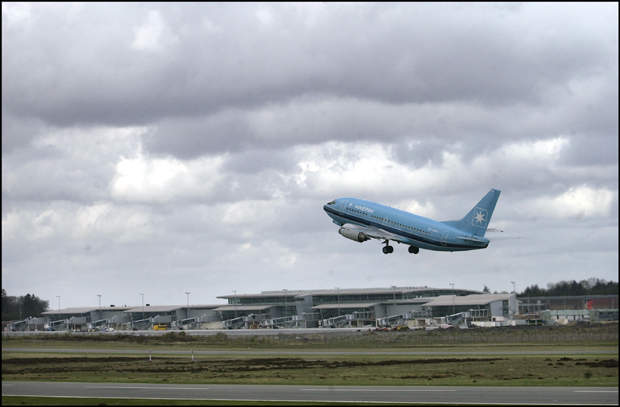
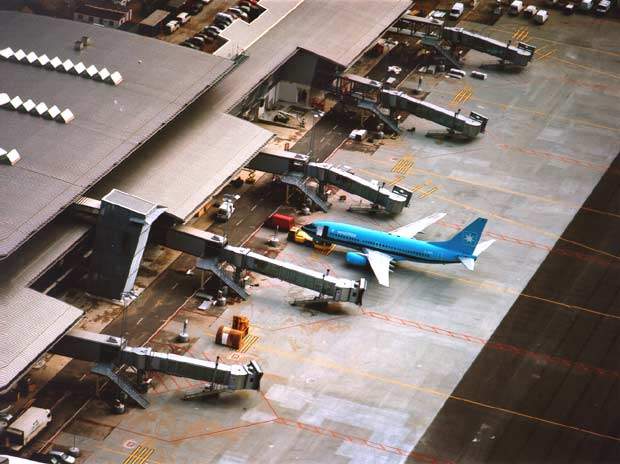
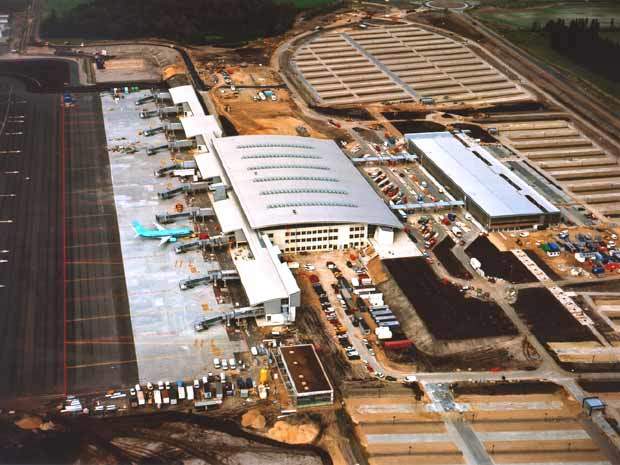

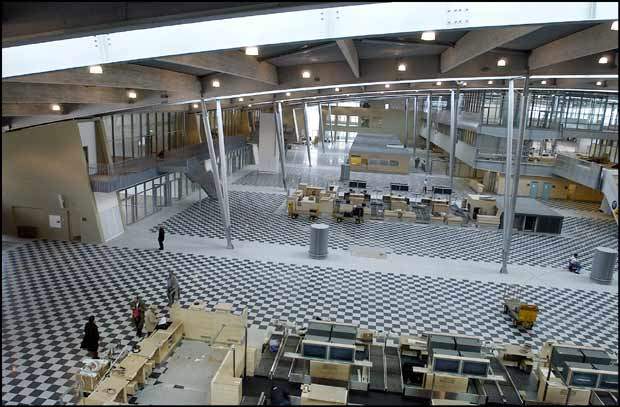
Billund Airport chose the French supplier Teleflex-Gallet to design and supply a fully automated baggage handling system for its new terminal. The baggage handling system is part of a comprehensive, Kr850m ($106m) extension of West Denmark’s international airport. The first flight from the new terminal took off on 29 May 2002, and the inauguration occurred the following day.
The airport handled about 2.3 million passengers in 2009, aircraft movements in the same year were 48,695. The airport is a busy cargo centre of Denmark; in 2009, 45,477t of cargo passed through the airport.
Recommended White Papers
Recommended Buyers Guides

Billund airport upgrading
Billund Airport first opened its doors to commercial airline traffic in 1964. Since then many changes have taken place. The constant upgrading of the airport (the runway, for instance, has been extended several times to its present 3,100m length) and the installation of a Cat 3 automatic instrument landing system means that the facility offers reliability to those airlines using the airport.
Passenger throughput showed a steady increase in the seven years from 1993 to 1999, from just over 1.1 million to 1.89 million.
Billund airport expansion project
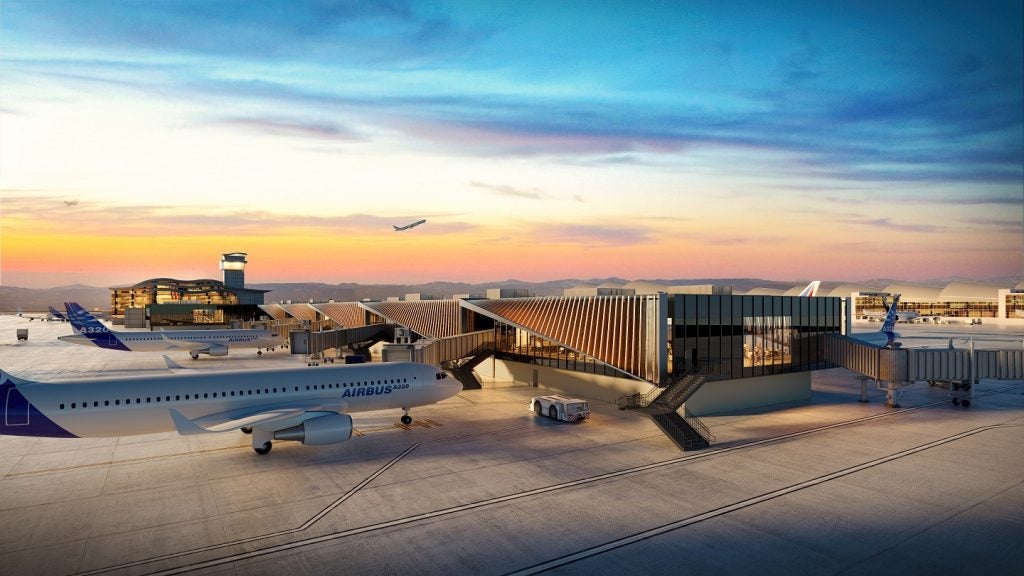
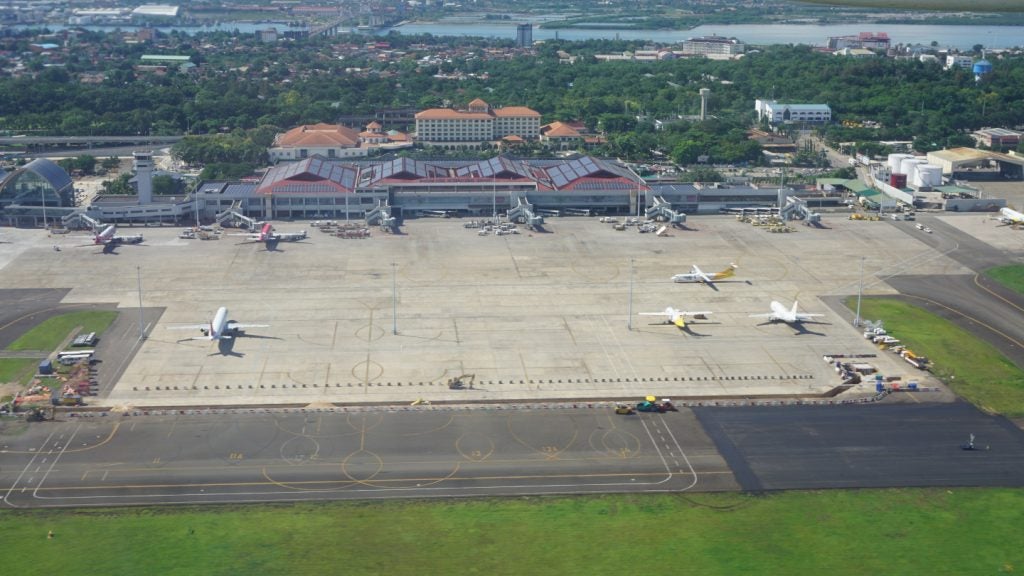
Phase one of the project comprised of a new 3.5-million-passenger-a-year-capacity, 40,440m² passenger terminal, which is more than double the size of the previous terminal. The new terminal has ten aircraft parking stands linked by airbridges to the building, new taxiways and an apron area with 16 remote parking stands. The master plan also provides for the addition of further terminals if traffic growth justifies such developments.
The construction time took just over two years and the new terminal was inaugurated in May 2002. The terminal is on a site north of the runway that has plenty of space for further terminals and other future airport facilities.
With the new passenger terminal opened, the previous one was made available for the use of the Cargo Centre Billund’s air freight activities. The air cargo centre was therefore expanded south of the runway, with a dedicated apron for freight handling. Cargo Centre Billund is equipped with IT systems and tools, such as Lufthansa Systems Elwis.
Billund airport runway
The airport features a single runway (09/27), which is 3,100m (10,172ft) long and has an asphalt surface. The runway can accommodate large aircraft such as the Boeing 747.
Billund airport terminal features
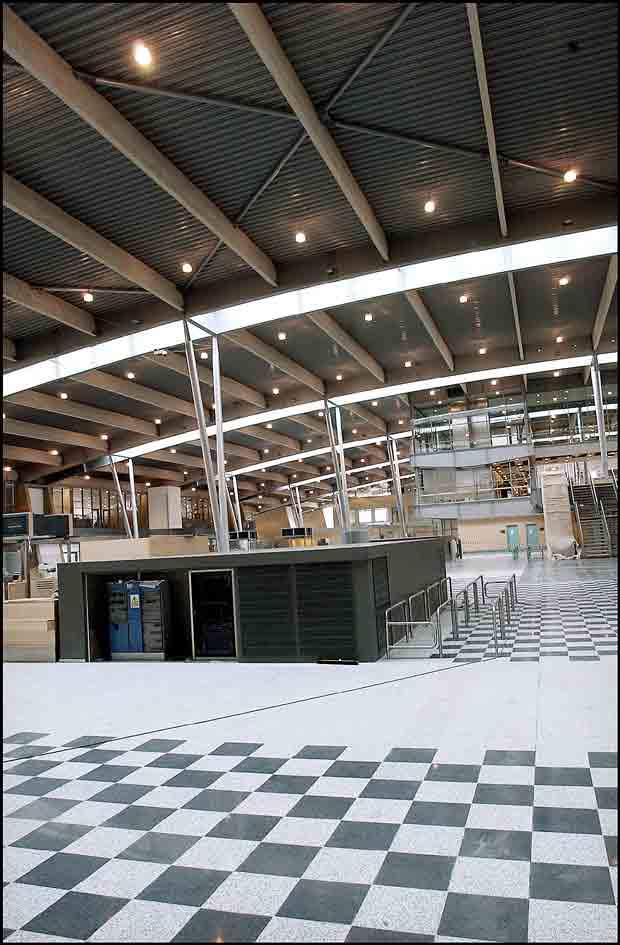
The terminal building has three floors – level 1, level 2 and level 3. Level 1 houses international and domestic baggage claim areas, arriving and departing passengers, self check-in service, travel agencies, three cafés and a car rental service. Level 2 provides lounges, shops, money exchange, tax free counters, and other bars and restaurants. Level 3 features meeting room, lounges (including a kids lounge) and a café.
In addition to these facilities, the airport features short-term and long-term parking (including parking spaces for disabled people), free shuttle bus, airport and public buses, airport limousine service, taxi, car rental, etc.
Airport baggage handling system
The baggage handling system, installed by Teleflex-Gallet, is able to automatically sort the baggage to a large number of different destinations simultaneously. Passengers are able to check-in from any desk to any destination without limitation.
The system also incorporates a 100% hold baggage-screening programme using equipment from the US supplier, Vivid. The system is able to process up to 2,400 items of baggage per hour with high reliability. It also offers extension possibilities to tackle the expected traffic increase.
Lead contractors
Two Danish companies, Ove Arkil and Per Aarsleff, were awarded the contracts for two major parts of the expansion programme at Billund Airport. Their part of the contract comprises design and construction of taxiways, an apron including 26 aircraft parking stands and an extra platform for de-icing activities. The companies subcontracted Phoenix AS to handle the paving (asphalt work) of the taxiways and aprons. ABB was subcontracted to handle any technical installations required.
The architect of the new terminal is Ove Neumann from KHR AS in Copenhagen.