
Rarely out of the news during decades of civil strife, Northern Ireland and its capital, Belfast, is now undergoing a welcome transformation. Belfast's population was in long-term decline through the 20th century, and until the ending of 'the troubles', had not enjoyed the resurgence apparent elsewhere in the island of Ireland that had earned it the 'Celtic Tiger' tag.
With high educational standards, 46% of the population under 30 and costs for business premises substantially below the competition, Northern Ireland has similar potential to exploit. Greater social and political calm has brought inward investment and the best conditions for many years to promote the area's considerable attractions to an international market accustomed to efficient air links.
Recommended White Papers

Recommended Buyers Guides

Belfast International (Aldergrove, north-west of the city near Lough Neagh) and George Best Belfast City Airport (BCA) together account for over 95% of Northern Ireland's air transport.
With a passenger numbers ratio of around 5:2, the former remains the main airport. However, BCA's rapid growth into mainstream operation with front-line carriers, largely based upon domestic services, is noteworthy.
Dominating the province, the wider Belfast metropolitan area has a population of approximately 700,000. Historically dependent upon ferry routes to south-west Scotland and north-west England, deregulation and the low-cost boom has made air travel between Belfast and the UK's main population centres a mass market. Even so, that a relatively small city sustains development of two airports with comparable operational capabilities and, in the main, similarity of markets is unusual.
BCA infrastructure
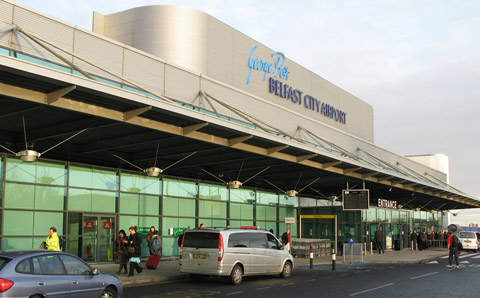
Opened for passengers in 1938 as Belfast Harbour Airport, the site that in part is based on land reclamation went through a mix of uses involving the military and aircraft construction by its owners, Shorts. It reopened for civilian flights during 1983, this in practice being the starting point of the airport's current role.
Capitalising upon its location, the title changed to Belfast City Airport and was changed again in March 2006 to George Best Belfast City Airport in honour of the footballing idol who had been brought up in the area (ceremony to change the name occurred on 22 March 2006 on George Best’s birthday).
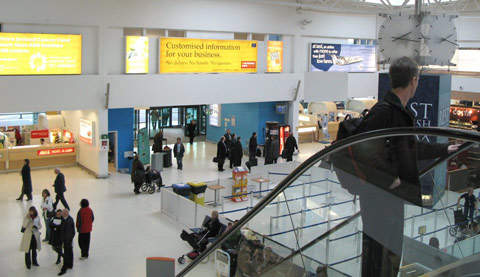
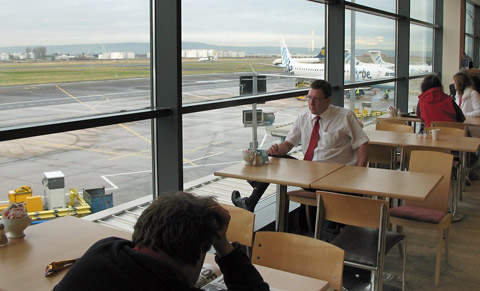
Replacing the previous building and on a new site, the current terminal and apron with fixed ground power for ten aircraft was opened in June 2001. Airport improvements over recent years have required investment of around £30m.
In May 2003 ownership of BCA passed for £35m from Shorts’s successors, Bombardier (a Canadian aircraft manufacturer still active adjacent to the site), to the Spanish construction giant Ferrovial. This was a forerunner of the Spanish group’s much greater presence in the UK airport sector when it acquired BAA in 2006. Another Spanish group, TBI/Abertis, is responsible for Belfast International.
In April 2008 unconfirmed reports indicated that Ferrovial wanted to sell the airport for an estimated £100m as part of its refinancing of a $30bn debt. By September 2008 Ferrovial had sold the airport to ABN Amro Global Infrastructure Fund for £132.5mn (sale completed in late September).
Belfast Airport operations
For access to the city, south and east, BCA's principal attraction over Belfast International is that the former is only two miles (3.2km) from the city centre, the latter being 20 miles away.
Traffic problems beset both, but the proximity of an airport that can handle aircraft (albeit with hours and take off restrictions) up to the size of an A321 is a great selling point for operators.
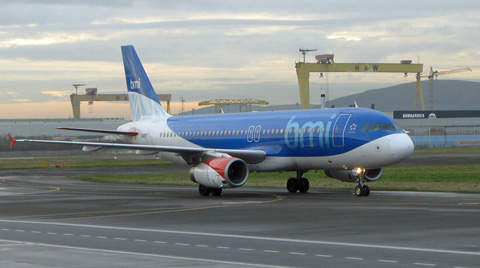
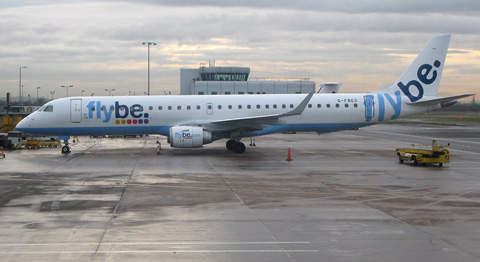
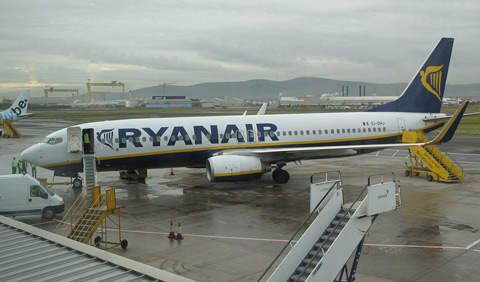
BMI relocated to BCA in 2001, although in 2008 Aer Lingus restored the Belfast International–Heathrow service with a BA codeshare service. Largest operator is Flybe, with significant presences by BMI, Air Arann, Cityjet (Air France) and from October 2007, Ryanair.
The airport was used by 2.2 million passengers in 2007 but an increase to around 2.7 million is expected as the final figure for 2008.
Future expansion plans
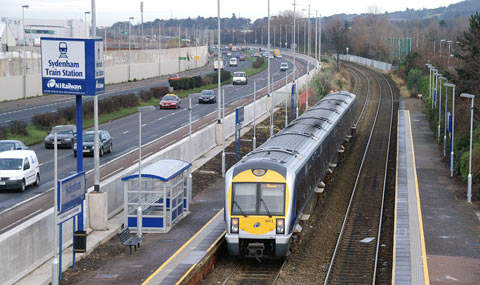
A minor downside of the new terminal building site was the extra 500m for anyone wishing to walk to/from the Sydenham halt on the Bangor–Belfast railway line. With more independent travel, calls for integrated transport and greatly improved rail services including for onward travel, there have been expressions of interest in a new halt closer to the airport's current centre and more user-friendly access.
The main expansion issue exercising interested parties such as the owners, airlines, residents and local media is a proposal to extend the single runway (the airport has recently been sold so this plan will have to be revisited).
In late 2007, airport chief executive Brian Ambrose said that the airport was evaluating feasibility studies and the wider business case for a £10m project to add 600m at the Holywood (non-city) end which could be accommodated within the current perimeter.
The extra length would give comparability with the longer of Belfast International's two runways. To gather data for a future formal application, a new £250,000 noise monitoring system was installed in the winter of 2007/8.
Of great appeal to current operators of larger aircraft, it would most importantly offer higher take-off weights, allowing more seats to be sold on departing flights – such restrictions don't apply for arrivals – for aircraft like Ryanair's 737-800s (currently restricted to 140 of the 189 capacity). Not about providing access for bigger aircraft, the runway extension would also bring more of the popular 'sun' destinations within range, thereby extending BHD's portfolio of destinations in the year-round leisure market. Although aircraft operations are strictly limited to 45,000 a year at the most and 2007 saw 43,000 operations.
The BCA projection is for passenger numbers to grow from the current approximation of two million a year to four million (where it would plateau) well before the 2030 limit of the airport's current master plan.
There is also a proposal to build an airport hotel on a site occupied by the cargo terminal or short stay carpark. This is because the nearest hotels at present are in the centre of the city and the terminal needs an integrated hotel to stimulate further growth in passenger traffic (the hotel would be linked by a walkway to the terminal).